
The box is a plain oblong rectangle of clear plastic. There is a cardboard insert that obfuscates the bottom of the product, so you can only see the mouse and not the other goodies that are included. The top lid is secured with plastic tabs inserted into cut slots, which is easily opened.
Once opened, a plastic tray slides out that houses the mouse itself, a small wireless USB host nub, a plastic mounting clip, and a paper manual. Genius includes two AA alkaline batteries, with the “Golden Power” label (not to be confused with Golden Shower, which is something else entirely).
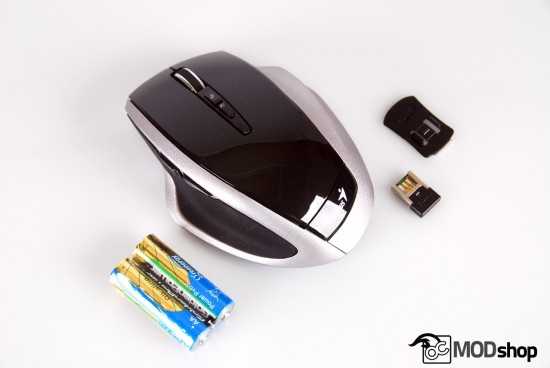
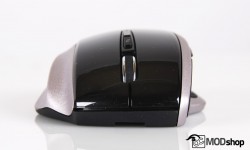
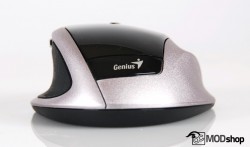
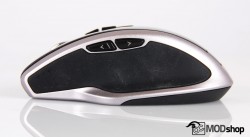
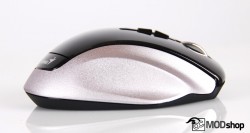
The mouse is made of two different types of plastic and rubber, although the scroll wheel is composed of a metal alloy. The base of the device is a matte plastic that has been painted a silver tone, which in my experience erode from continued use. The top base of the mouse is made of shiny black plastic, which not only makes your hand sweat but picks up scratches and dust like a magnet.
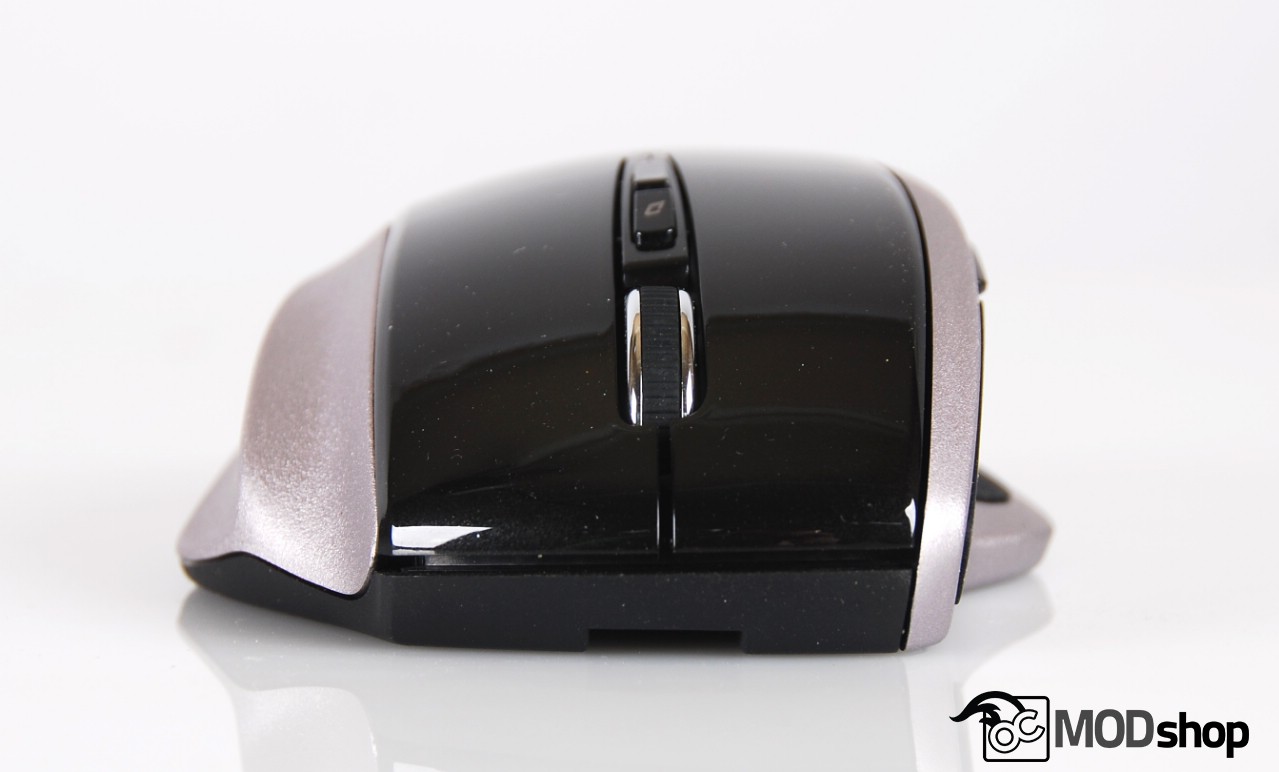
The left side of the mouse has a nice thumb rest and has grippy rubber, which really helps secure the mouse in your hand. One of the thumb buttons has two notches so it is easy to identify the button by feel. The right side of the mouse has tapered finger grooves so your right hand cradles the mouse gently.
Wheelhouse
The center of the mouse has a weighty metal scroll wheel that is rimmed with notched black rubber. The wheel movement is notched, which feels soft rather than rigid, so the scroll wheel is not free-flowing.
The patent for this mouse’s scroll wheel (see here and here) is “Roller mouse for implementing scrolling in windows applications. This basically interprets scrolling with “weight”, so that the page continues to scroll after the wheel stops, the duration of which depends on how fast the wheel was moving. This patent was issued in 1996… so Genius does not appear to be the inventor of said patent; they are just saying their scroll wheel is patented.