

Technology
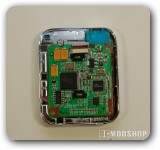
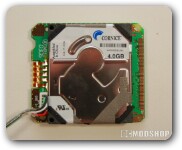
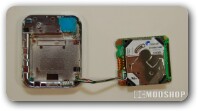
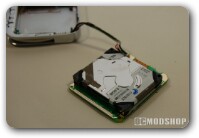
The hard drive drive itself is essentially an IBM microdrive cushioned inside a plastic shell, and has the benefit of being extremely light. Such as ants do not fall to their deaths from a 2-story drop, this drive isn’t susceptible to gravity’s cruel laws like traditional hard drives. Unfortunately, it is not solid state, so an accidental wash cycle will destroy this drive, whereas a traditional flash stick could survive.
Flash memory can have only so many writes, so is intended not to change very much. Since it’s solid state, they can take an accidental wash cycle. Flash memory chips are called “flash” because in order to write to it, the memory is loaded, and then a signal is sent to the memory circuitry that says “remember this”. Once the memory has been “flashed”, power can be completely removed and the memory will retain whatever was written to it.
The “problem” is that memory can be flashed only so many times. I’m finding numbers between 10,000 and 100,000 times – though as with anything, I’m sure that is increasing over time as well. Regardless, there is a limit. When that limit is approached, some portion of the memory may not properly remember what was written to it, resulting in corruption. It may only take a single bit of information to be wrong, or to “wear out”, for the entire contents of a flash memory chip to be lost.
Frequent access can shorten the life of flash drives, but they have been known to survive the occasional wash cycle. Just dry it out and it works good as new! Lexar has created a program “PowerToGo” that claims it can make any windows application portable. I would love to be able to have all of Photoshop CS2 on a flash drive (along with all my plugins)!
The USB dongle can be a bit of a pain, and it is a bit bulkier than a USB memory stick, so it’s not like you can keep it on your keychain.
Testing
The Verbatim Store’n’Go USB HD was tested on a Dell Inspiron 8500 laptop, as this device will most likely be used in conjunction with a laptop. We ran our tests using HD Tach version 3.0 and compared several different storage devices, all using the same powered USB Hub.
- Pentium 4 Mobile 2.4Ghz
- USB 2.0 powered hub
- 1GB single-channel DDR RAM
- 60GB laptop hard drive (4200 RPM)
- nVidia GeForce4 Go integrated graphics card
| Media | Burst | random access (ms) | Avg. MB | CPU % |
| 60GB laptop HDD | 83.9 | 20.2ms | 23.3 MB | 4% |
| Sandisk Cruzer 1GB | 10.6 | 17.4ms | 10.0 MB | 14% |
| Vantec Nexstar 120GB USB | 25.1 | 14.7ms | 23.7 MB | 18% |
| Verbatim Store’n’Go 4GB HDD | 12.2 | 37.4ms | 7.6MB | 8% |
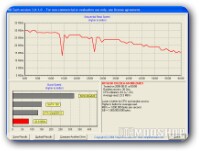 |
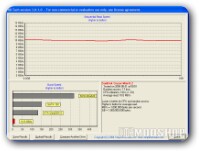 |
| External USB Hard Drive | Sandisk Cruzer 1GB |
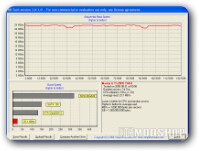 |
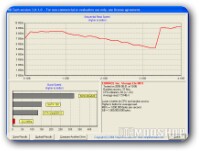 |
| Internal 60GB HDD | Verbatim Store’n’Go 4GB |
The Vantec Store’n’Go HD is the worst-performing device. It edges slightly ahead in the burst speed and CPU utilization, but in real-world use the drive has nearly double the random access speed and half the throughput. Since the device is an actual hard drive, the data output varies depending on its physical location on the platter. At best you can expect 7.6MB a second, and at its worst the drive serves up 5MB a second.
