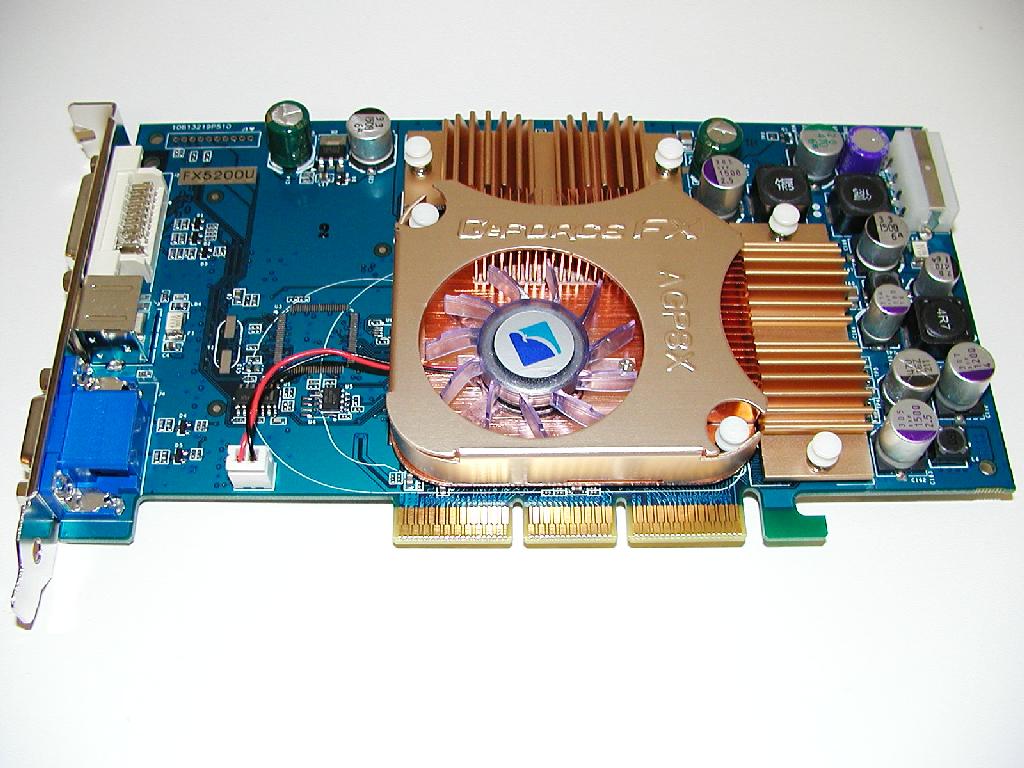
Albatron’s GeForce FX 5200 Ultra uses a 325MHz core clock and 650MHz DDR RAM, being the baby brother of the NV3x architecture. Every major technology feature is still intact, but at a performance cost. The only thing missing is the core elements of the Intellisample technology (mostly color compression and anisotropic filtering). Below is a chart outlining the differences between the FX line of video cards.
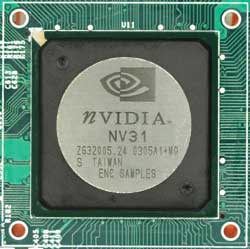
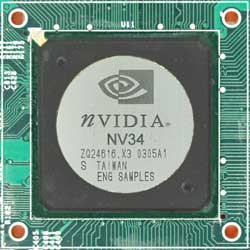
| FX 5800 (NV31) | FX 5600 (NV31) | FX 5200 (NV34) | |
| Manufacturing Technology | 0.13 micron | 0.13 micron | 0.15 micron |
| Transistors | 125 million | 75 million | 47 million |
| Chip frequency | 400MHz / 500MHz | 350MHz / 300MHz | 325MHz / 200MHz |
| Memory Controller | 128bit DDR II | 128bit DDR | 128bit or 64bit DDR |
| Memory frequency | 800MHz (DDR 400) | 700MHz (DDR 350) | 650MHz (DDR 325) |
| Max memory | 256 MB | ||
| AGP interface | AGP 3.0 4X/8X | ||
| Pixel pipelines | 4,8 | 2,4 | 2 |
| Max # of textures | 8 | ||
| Texture filtering types | bi-linear anisotropic tri-linear tri-linear + anisotropic |
||
| Max anisotropy level | 8 | ||
| Pixel shaders | v.2.0+ | v.2.0+ | v.2.0 |
| FSAA methods | Supersampling Ordered grid multi-sampling |
||
| Hidden Surface removal | yes | ||
| Frame-buffer compression | yes | yes | no |
| Z-buffer compression | yes | ||
The 5200 basically uses a lower core clock speed and slower memory, and has less than half of the transistor count of an FX5800! That is gonna cost some performance! Other 5200 cards are can use a 64bit memory architecture, but this Albatron model utilizes the full 128 bit memory controller.
The Board
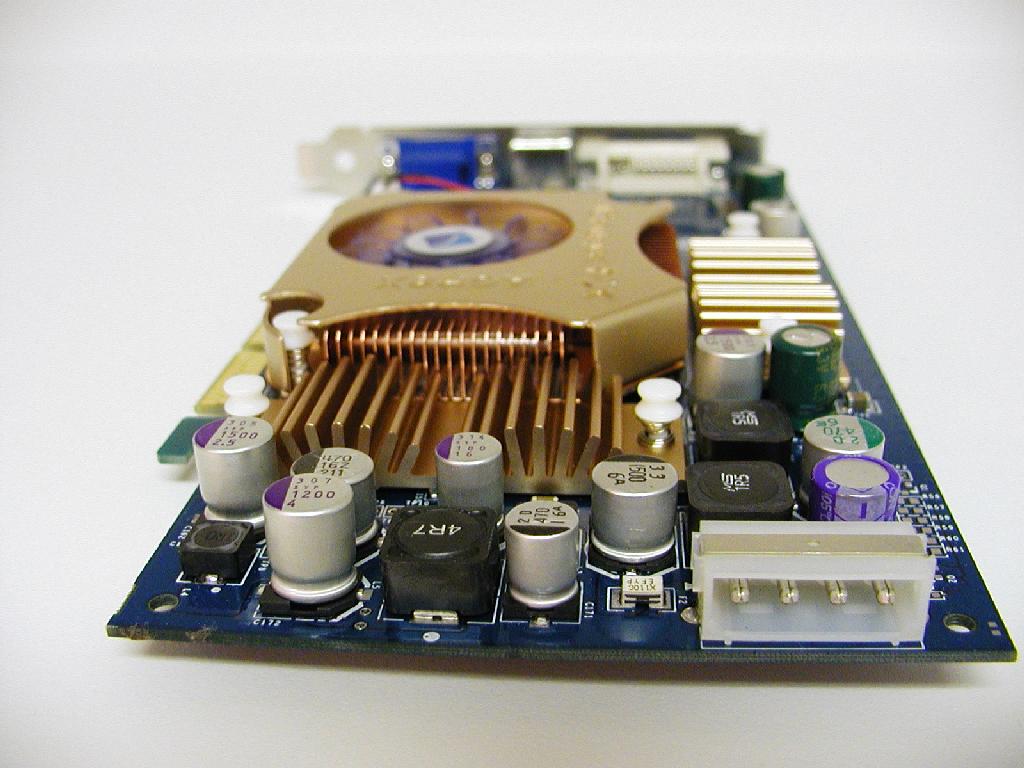
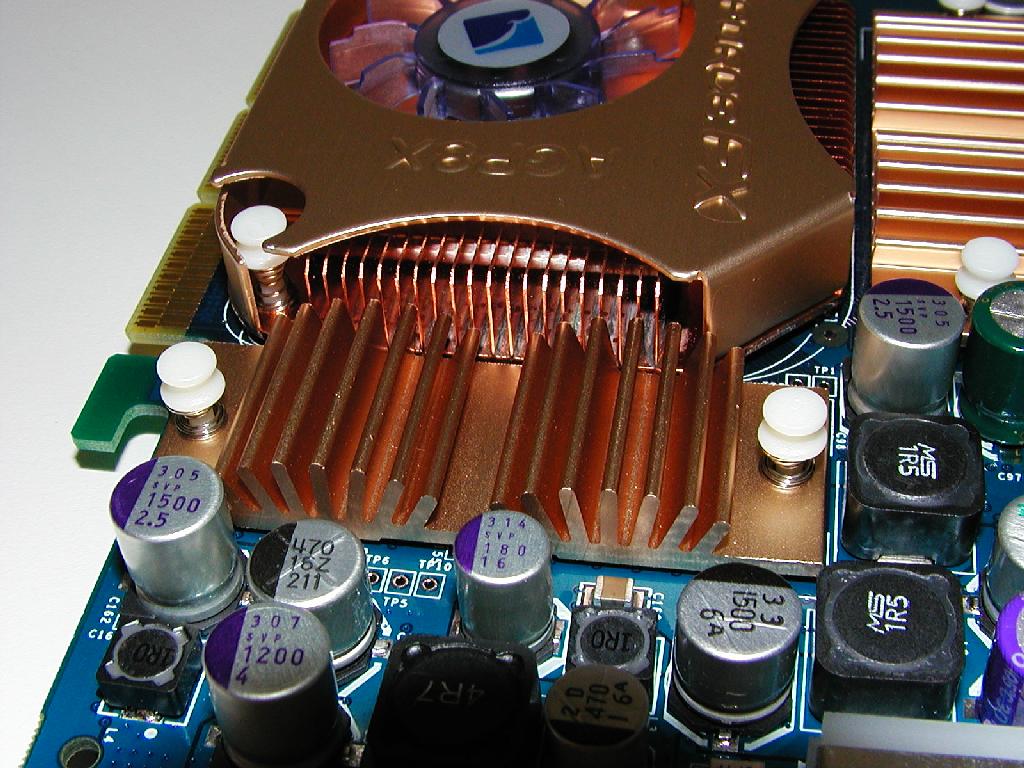
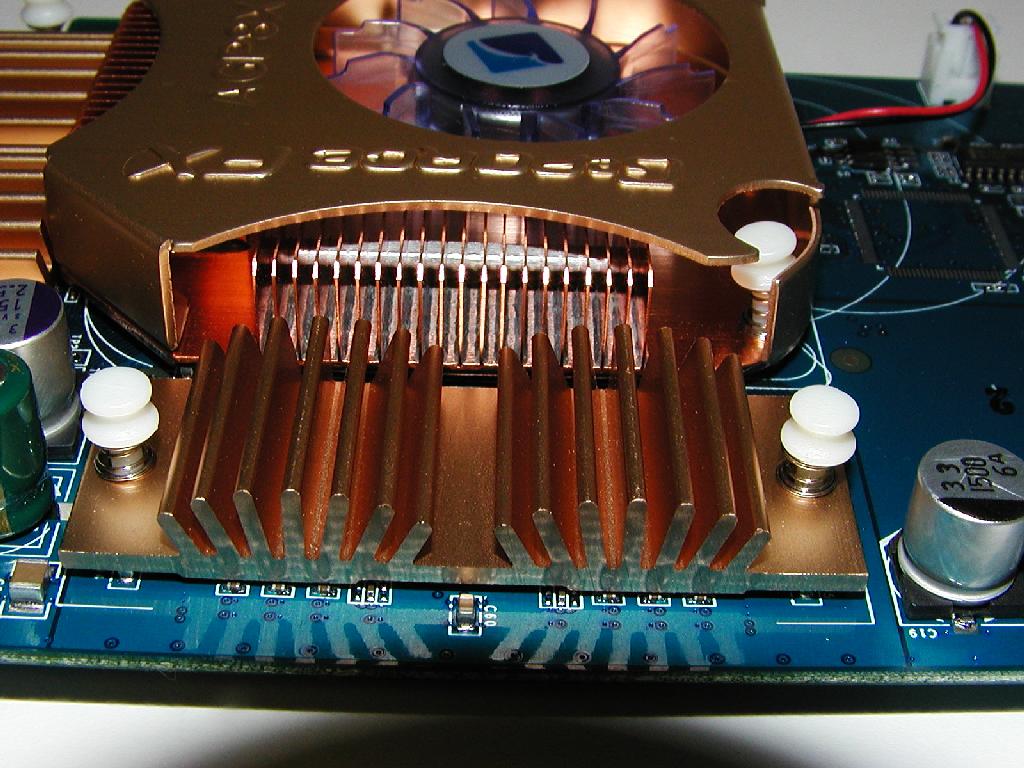
The board has a layout similar to nVidia’s reference design, but Albatron has made several quality enhancements, such as replacing the default aluminum heatsink with a more efficient copper one. The card’s 128MB of DDR memory is covered with passive aluminum heatsinks, but are anodized to appear copper. The fan on the copper core sink uses an interesting and efficient idea: the fins are bent in such a way as to push air to the side, much like a blower. Not only does this design make the fan quieter, it ensures that air is blown out across the copper fins, and not wasted on the flat bottom. Not many other card owners can say they have a kickass albatross sticker on their fan either, can they? Albatross! Get your albatross here!
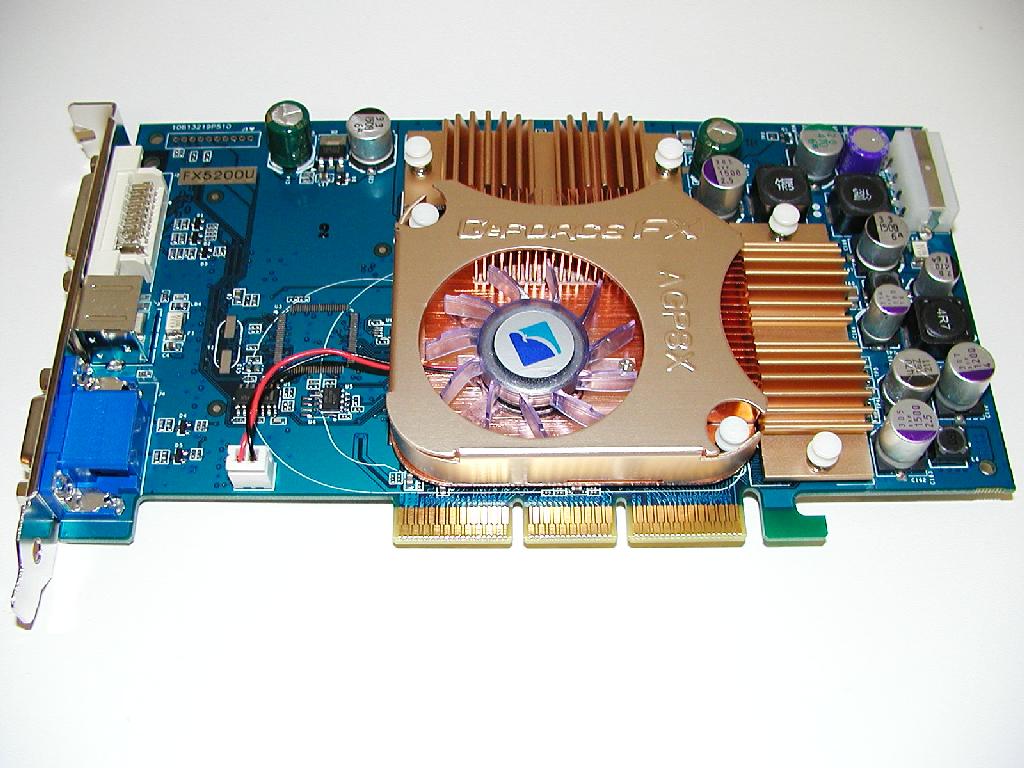
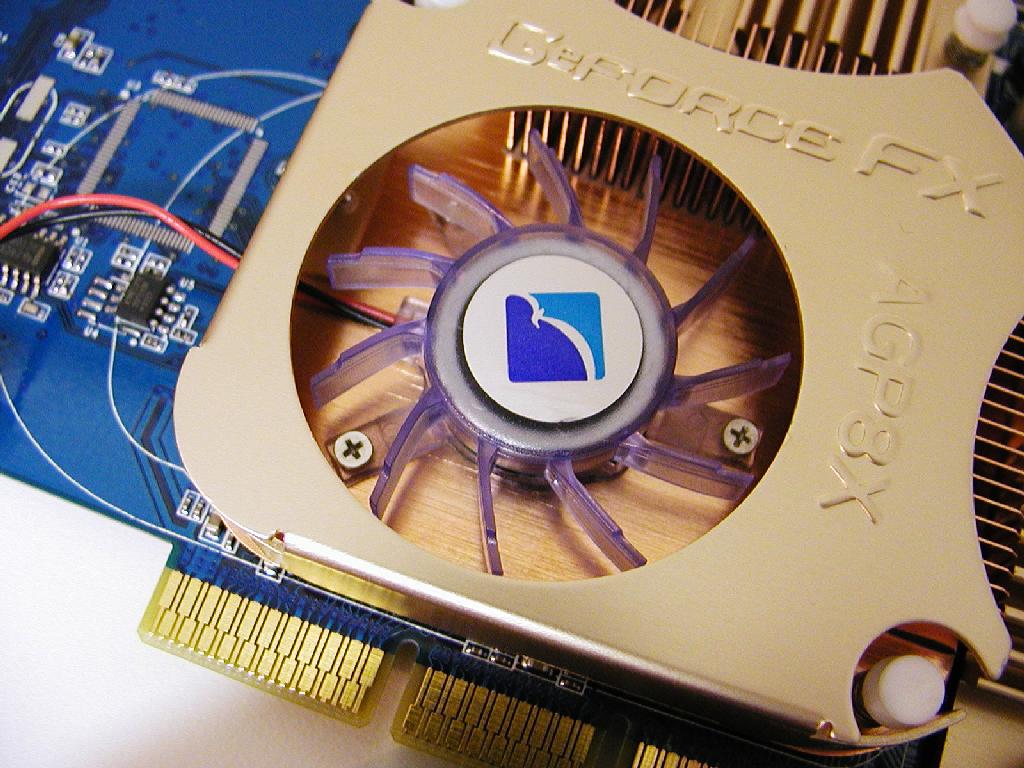
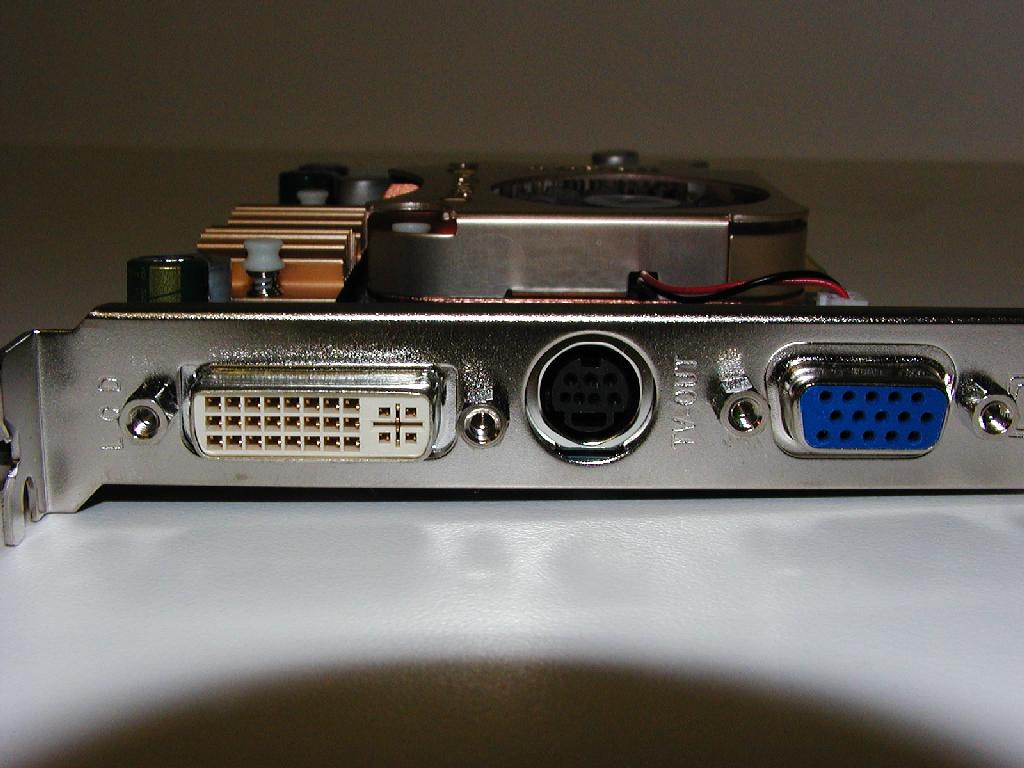
The board itself is silkscreened a nice blue color, is nice and thick, and has an overall quality feel to it. The heatsinks make this board rather heavy, which adds to the quality feel. The back of the board sports a standard VGA connector, an S-video connector and DVI (Digital Visual Interface) connector. The S-video jack cannot accept an input signal, as this card is not designed for video capture. The VGA and DVI connector can be used simultaneously for multi-monitor support.
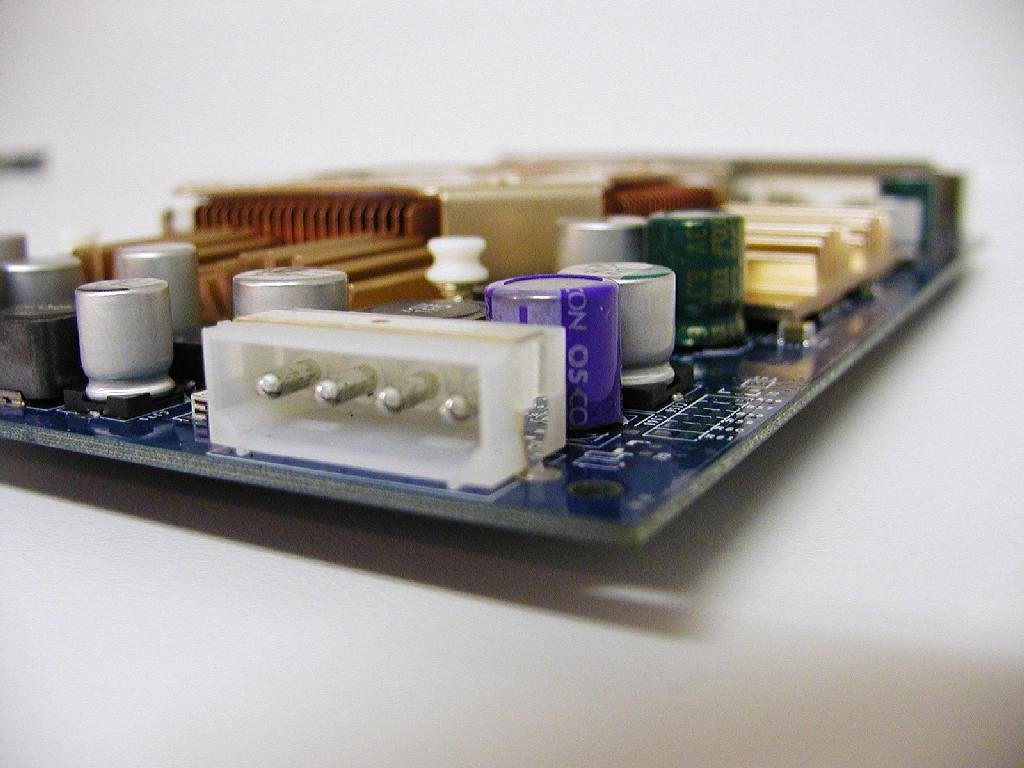
Moving to the other side of the card is a standard 4-pin molex connector. The NV34 chip consumes more power than is safe for an AGP slot, and thus requires this extra voltage to run at full capacity. The card can be used without plugging a power supply in, but will throttle itself down to the point of being unusable as a gaming card. This chip gets very hot, especially considering that other more powerful cards do not have the same steep power requirement.