
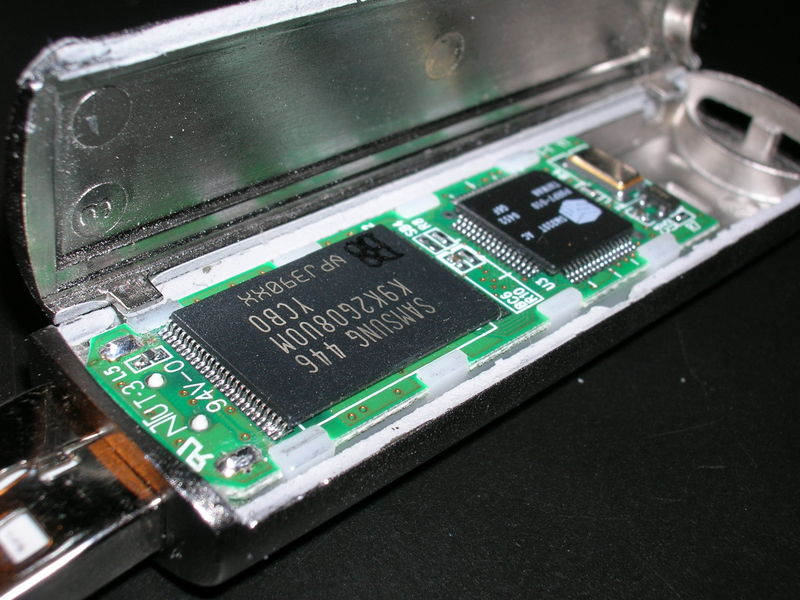
In addition to the memory devices buried inside of the manufacturers’ products consumers can’t get enough of the rugged, portable storage – memory cards, flash drives, SD, Memory Sticks, CF, MMC and other cute names/acronyms.
This year the CEA estimates that U.S. consumers will purchase over $4.5 billion worth of the devices. It may not surprise you that a lot of people use these expensive chips for permanent storage because…well let’s just say because.
The answer to your question – before you ask – is that they have a data life equivalent to quality CD/DVD media…50+ years. This sounds great for the chip manufacturers but production investments are tremendous …Toshiba is investing close to $15 billion just to keep up with the technology advances. And…profit margins are razor thin!
That’s great news for consumers but sure has to suck for manufacturers who have to second guess what demand will be two-three years from now! Since semi memory has a lot of desirable features like I/O speed and low power consumption the chip manufacturers see absolutely no reason why they shouldn’t replace hard drives.
To them and Klytus, it is obvious… “Most effective, Your Majesty. Will you destroy this Earth?” They see semi memory…everywhere!
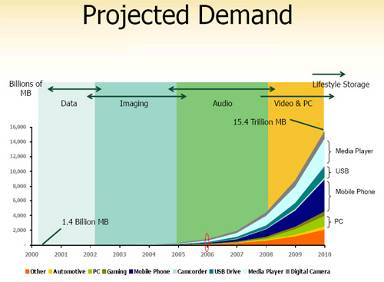
Figure 5 – Conquer New Worlds – Memory chip manufacturers have visions of their devices in anything, everything. And the potential for the small chips continues to rise along with the higher capacities and sinking prices. But the storage market next year will be valued at about $100 billion and it includes all storage solutions – HD, optical, semi and yes even tape. Source — SanDisk
The economics work in their favor in lower capacities – up to 10GB – and by 2010 it should be more than price competitive up to 64+GB. Thanks to people’s impatience in accessing their information and bloated stuff like Vista flash is being designed into HDs to buffer data. Seagate, the king of HDs, sees a place for flash in their traditional spinning disk market so they have begun their own programs.
In the meantime the folks at SanDisk, Toshiba and others want to completely replace the HD at least in your notebook and in a number of enterprise applications.Works great where factors like battery life, IOPS (I/O operations per second) and space or prime considerations.
Despite the logic of 32 – 64GB being sufficient for their notebooks, people still want more storage space for their stuff. Ever meet someone who went into a store to ask for a smaller HD? Cripes no! Our kid had to have 160GB for his multimedia notebook so he could store all of his music, his photos, his videos/TV shows and all of the stuff he downloaded from everywhere.
That’s in addition to the flash drives he carries…and loses.
The biggest problem/challenge for corporate IT today is the fact that everyone uses these small storage devices. Two years ago – before they became so ubiquitous – more than 100,000 of these devices were found in Chicago cabs.
Today it’s worse. Because people are beginning to use these memory devices as virtual computers, companies like Migo and others are delivering software that puts your personal operating environment and key data on 1-4GB drives. Use the device on anyone’s system, remove it and leave no trace of your activity behind.
Of course that doesn’t protect your content when you lose the little sucker so the industry is developing a whole new breed of data protection including cryptography, passwords and certificate protocols.
Semi memory manufacturers are sure they have the answers for you – all of the answers! We hear them cheering like the robot… “Long live Flash! You’ve saved your Earth. Have a nice day.” Only problem is content doesn’t die.
We create it. We capture it. We replicate it. We store it again and again!
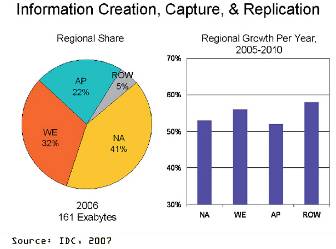
Figure 6 – It’s Alive – Once created, content – documents, data, photos, video, audio – never really dies. People grab it, store it, enjoy it and store it again…and again…and again. For the first time in history we have more storage than storage capacity. So somewhere in the clouds your content is flying. Source — IDC
In fact, according to IDC this year we have more stuff than we have storage. Not really certain how that is possible unless there are petabytes of content sitting in the cloud waiting for someone to sell/buy more capacity but…
There’s a demand – a huge demand – and need for more semi storage out there and it is only going to grow.

Photo 1 – Follow Me Dale — While you may think Flash Gordon wanted Dale with him for obvious reasons you’re wrong. She had the MP3 player and he hadn’t had time (yet) to copy it onto his system…his phone…his PMP…his whatever. And…he needed a backup. Source – Universal Studios
Klytus may have said – “No one – but NO ONE – dies in the Palace without a command from the Emperor” – but content doesn’t die. It simply gets copied…again and again!