

High-brightness LEDs continue to make inroads into lighting applications dominated by incandescents and other light sources. Their use in traffic signals, automotive brake lights, architectural lighting, and full-color displays keeps growing, as designers are finding ways to improve these versatile semiconductors. LEDs promise significant reduction in power consumption compared to incandescents, as well as longer life and greater reliability. Moreover, LEDs are increasing their light output, making them brighter and cheaper than other sources.
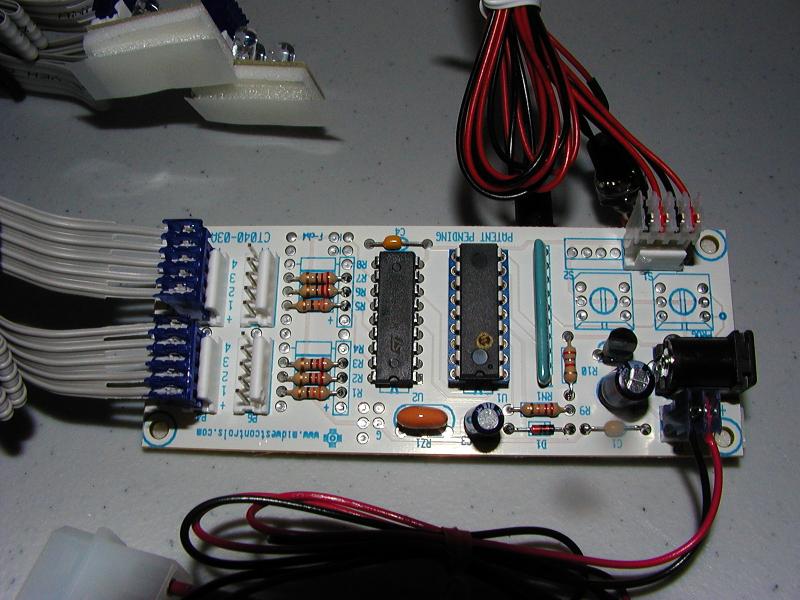
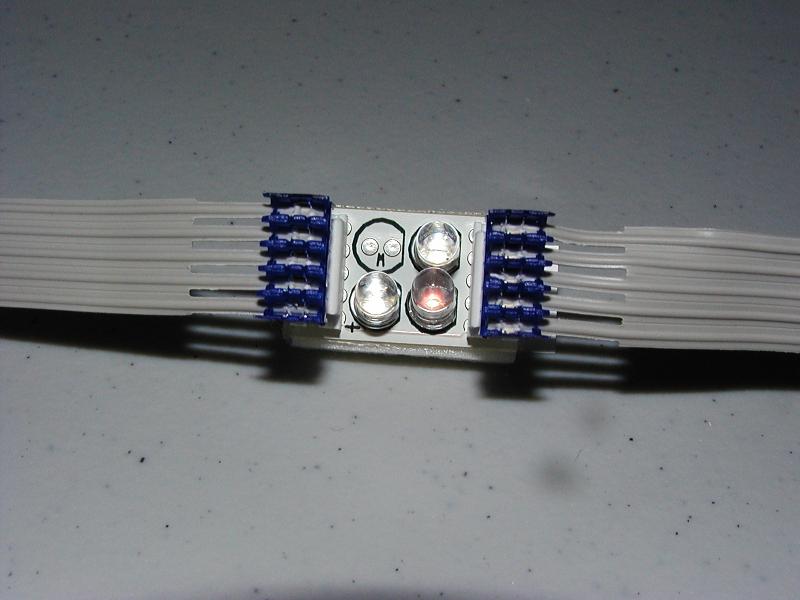
Madlights are a small kit that uses twelve super-bright LEDs (4 banks of red, green, and blue). The controller board uses these three colors in many combinations to create an array of effects and color combinations. One can select between 7 solid colors to fill their case (red, green, blue, orange, aqua, purple, and white) or choose between the pre-programmed effects, such as fading between colors, fading all in and out, random colors, etc.
The kit actually contains several PCBs, the main controller unit, and smaller ones that house the LEDs. The board houses 2 controller chips, 4 LED bank sockets, and various electronic components. Upon closer inspection of the board, it appears that it could handle another LED per bank, but there is a missing resistor for it.
The kit comes with 2 LED strips, so two sockets are left unused. The strips worked on all ports, so I see no reason why 4 strips could not be running at the same time. There are also places for potentiometers, which have been left unsoldered. A single Zenier diode appears to regulate the power to the LEDs, keeping the current steady whether the regulated 12v molex is used, or an unregulated 9v adapter.
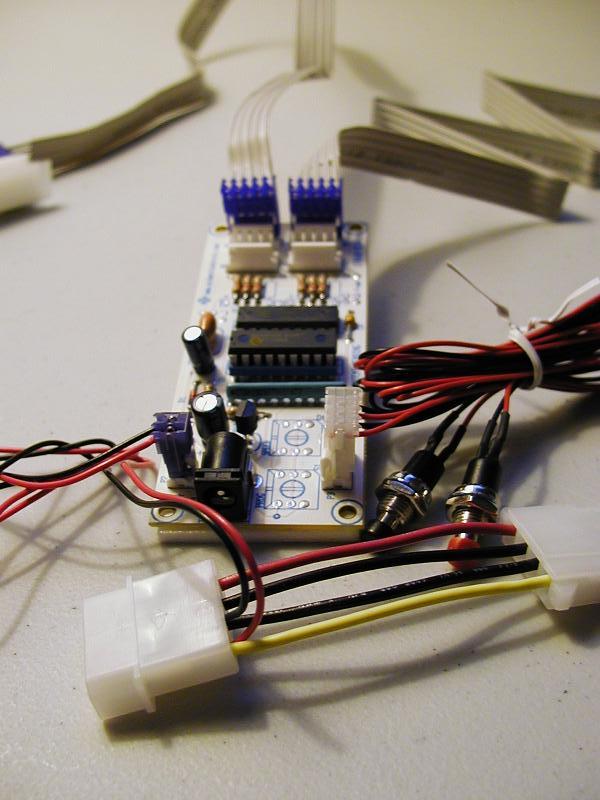
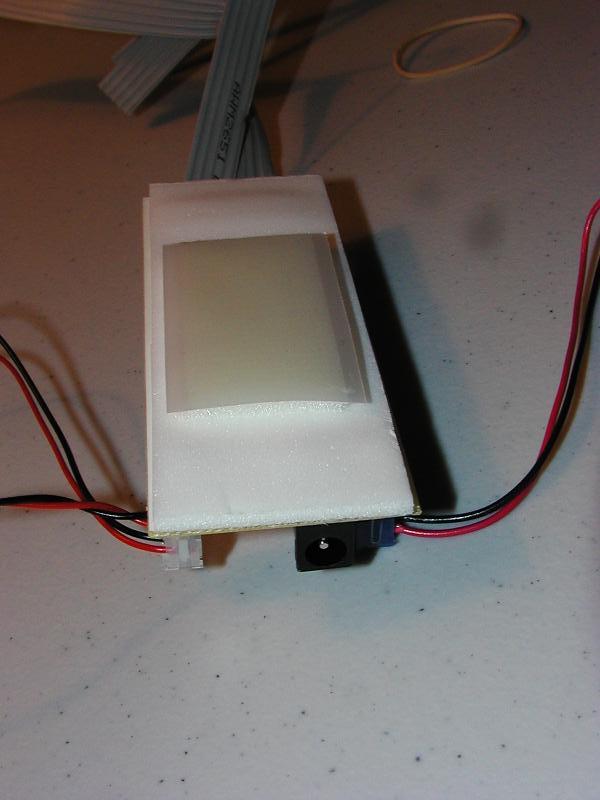
The LED boards are stringed together with flat grey ribbon cable consisting of 5 wires (red+, green+, blue+, an unused LED+, and a common ground-). The ribbon cable has angle brackets at each end, is very pliable, and with pretty much retain the shape that you bend it to.
Two standard-issue Radio Shack buttons (red and black) are fashioned to a pluggable lead, and connect directly to the controller board. The red button is used to switch between the various modes, and the black button toggles between 5 different speeds for each setting. Pressing both buttons together will turn the unit off.
The board receives power from a line run from the 12v lead of a Molex extension. This lead can easily be cut and connected to a baybus switch, and for this purpose I used the Zalman ZM-MFC1. The board has a socket for a 9 volt adapter, which makes the product usable outside a computer case. Imagine the looks you would get cruising down the highway with this thing blinking away in your car!

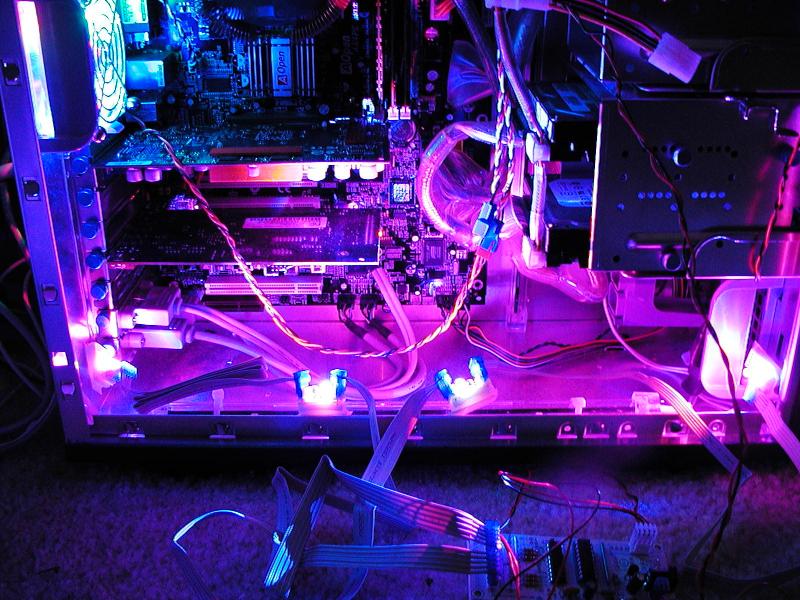
The 12 Ultrabright LEDs consume less than 1 watt of power (0.8 to be exact). Madlights calculates that this kit produces about twice the brightness for about ¼th of the power. LEDs produce their light about 99% efficiently, and therefore no practically measurable heat is generated (The LEDs measured the same as room temperature). In contrast, the average cold-cathode temperature measured was 101°F!
The LEDs are rated for 100,000 hours of continuous usage, or 12 years. Each LEDs averages between 5,000 and 8,000 mcs (millicandellas) With all LEDs combined, the Madlights kit produces over 60,000 mcd of lighting. Adding 2 more LED strips could raise this to 120,000 mcd (over the level of cold cathodes). Madlights is not ready to sell additional clusters yet, but they should be coming soon.