
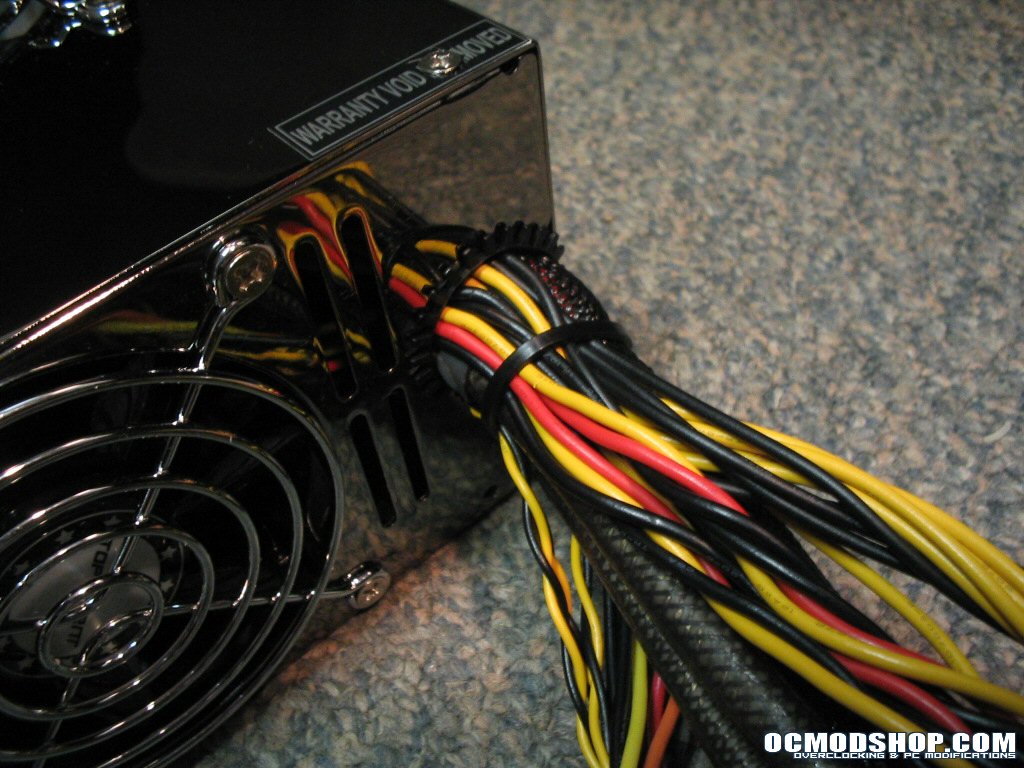
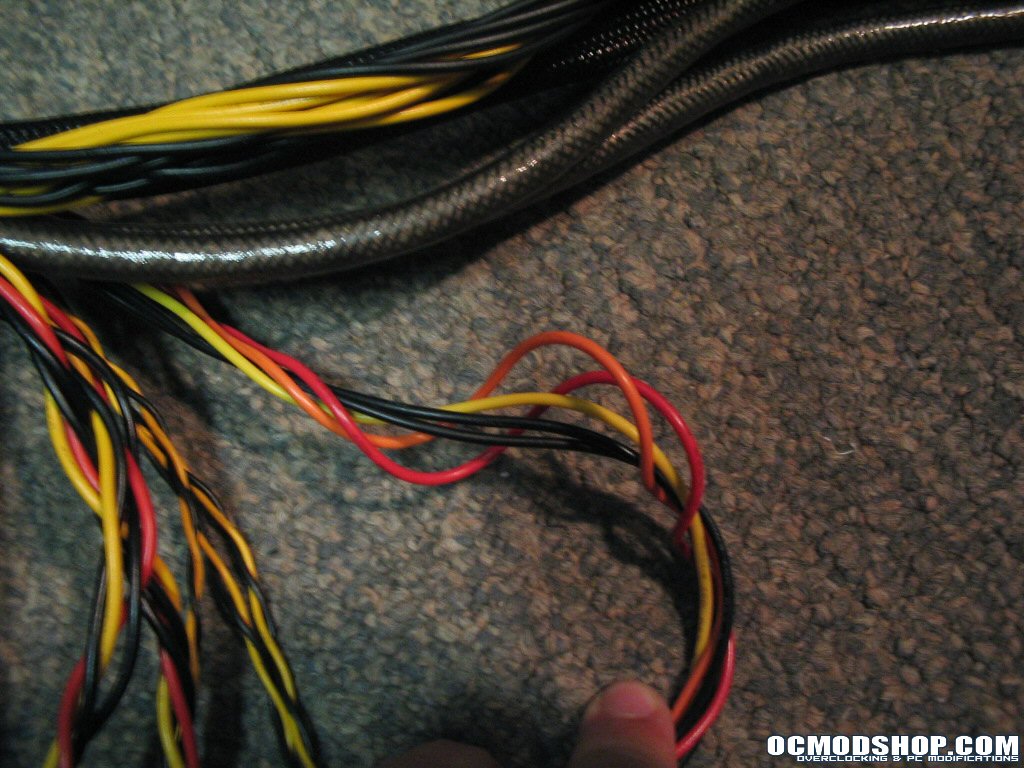
This power supply boasts a wide array of cables and connectors listed below. The ATX power cable is sleeved in black with black heat shrink, and the lengths of the cables are perfect for those with larger sized cases. You should have no problem reaching any particular area which needs power. However if you plan on putting this into a smaller case, keep in mind you may have a lot of excess cabling to deal with.
|
Cable
|
Quantity
|
Length (in)
|
|
24-Pin ATX
|
1
|
23
|
|
20-Pin ATX Adapter
|
1
|
4
|
|
6-Pin Power
|
1
|
23
|
|
4-Pin Power
|
1
|
23
|
|
Fan Headers
|
3
|
29
|
|
Serial ATA
|
1
|
17
|
|
4-Pin Molex
|
2
|
18
|
|
Shielded VGA
|
2
|
20
|
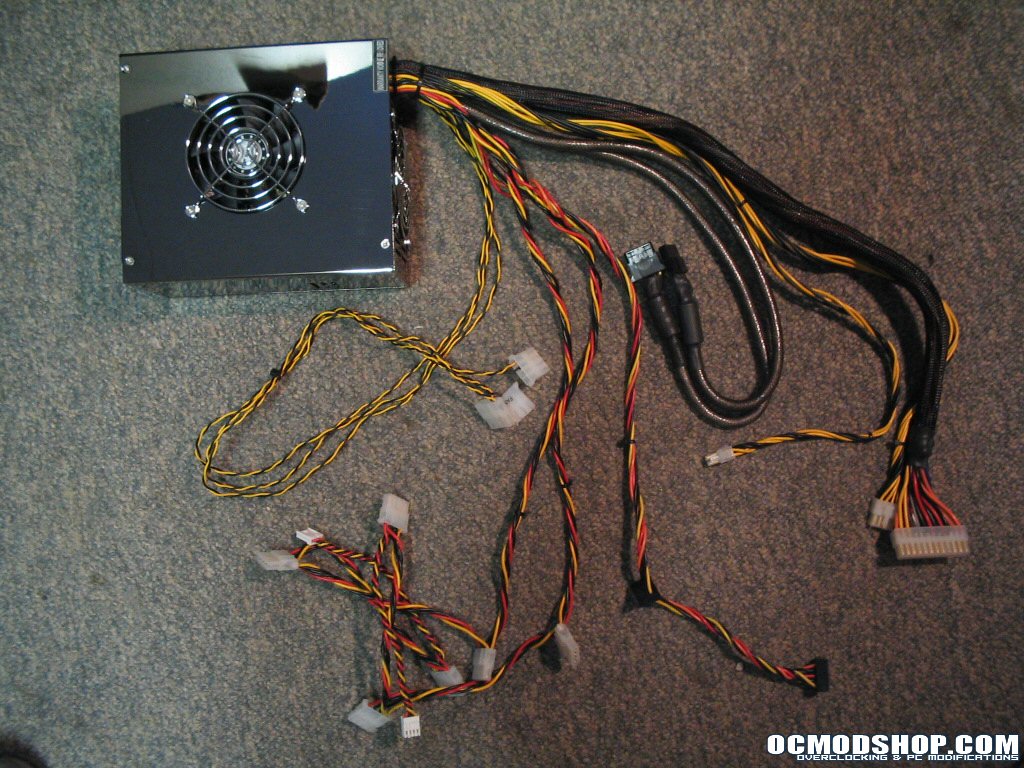
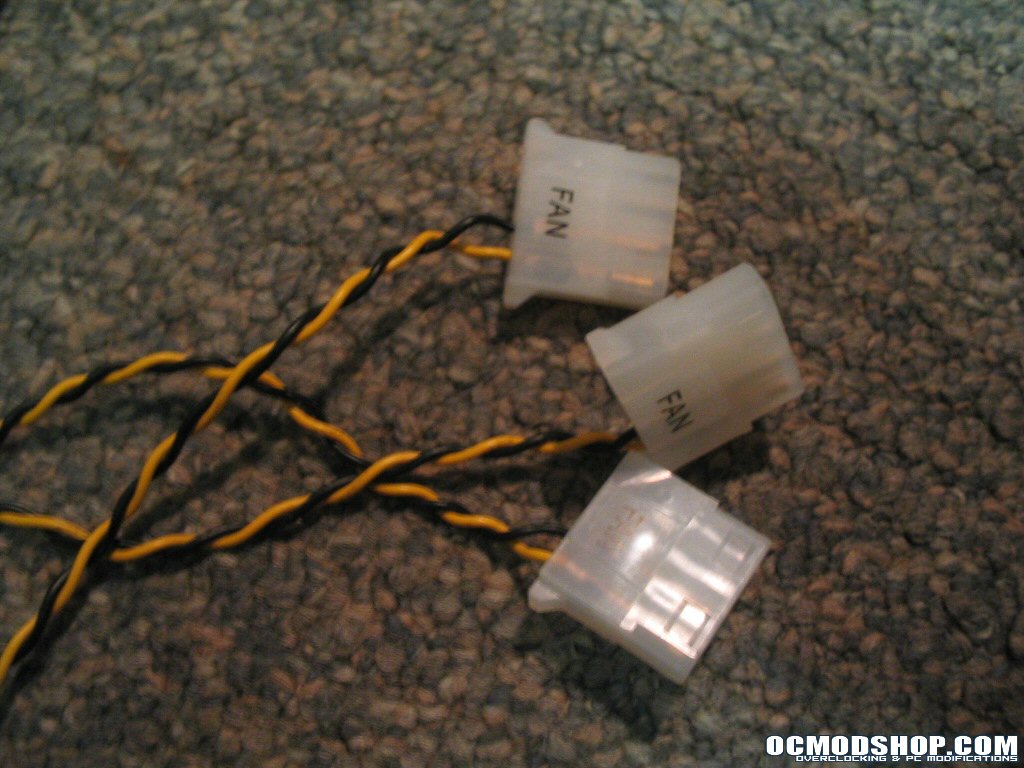
Some key things to mention include: pre-twisted cables, the 3 separate fan headers (for the ECASO system), and the special attention given to two of the 4 pin Molex connectors. These cables have the same shielding and line conditioners that were included on the power cable for the supply itself. Underneath the black heat shrink there are small capacitors to help further clean ripple in the lines and Iron Ferrite cores to reduce electro magnetic interference.
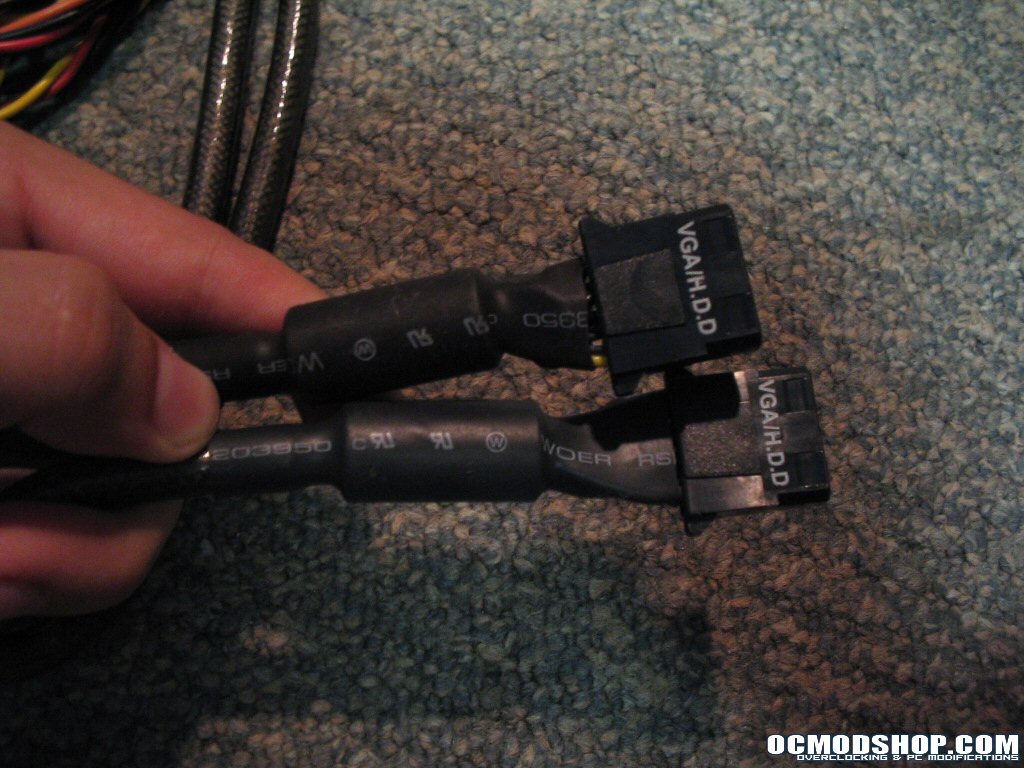
Overall the cables looked good. One way to tell how much thought and effort a company puts into their cabling is to look close to the power supply housing itself. The cables were easily separated at this point and weren’t tangled as you may see with many low end budget power supplies. The only problem I saw was some excess length of cable on one of the SATA connectors. This is a minor cosmetic annoyance.
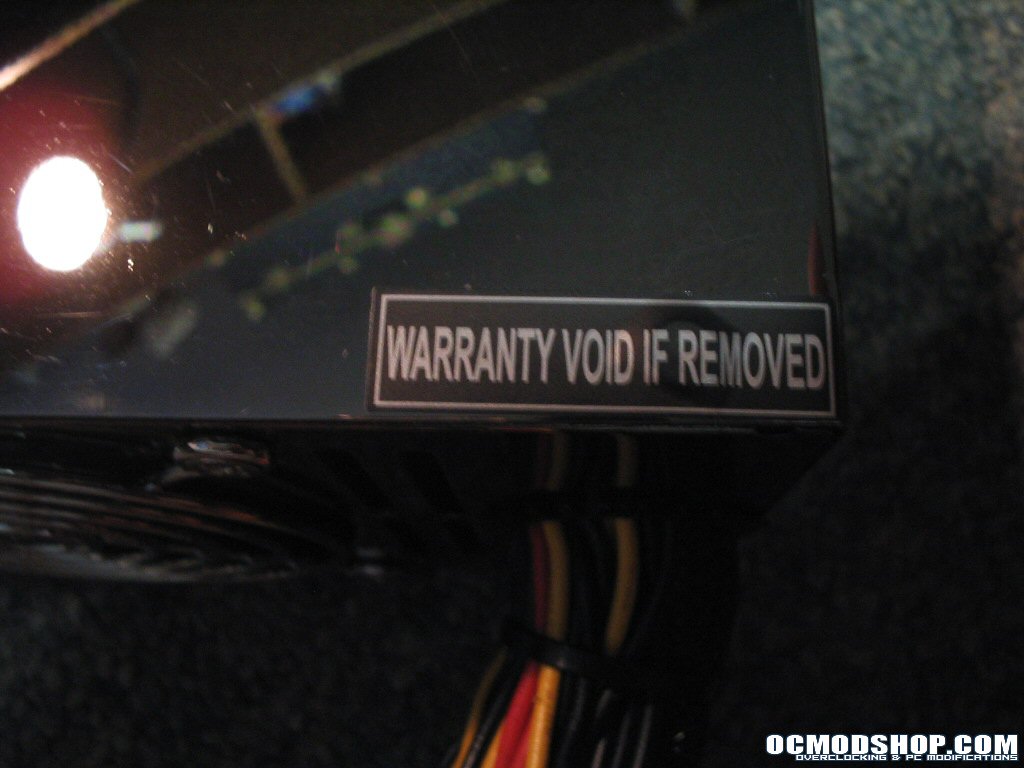
Warning: Removing the cover of your power supply is dangerous and will void your manufacturer’s warranty. There are high current and high voltage sources inside of a power supply that can cause serious electric shock and even death. Ocmodshop.com is not responsible for any broken hardware or injury due to unsafe practices with computer hardware.
Moving on to the interior of the power supply, the layout is orderly and clean, short of a few straggling wires. There is some open space near the intake fan and through the center of the supply, so there shouldn’t be any major dead zones in airflow through this supply. The transformers are pretty well isolated between the two massive, large surface area heat sinks. These are some of the most complex heat sinks I have seen in any power supply. They are aluminum and louvered in several directions, if these don’t keep the supply running cool and stable I don’t know what will. You can also note the blue relay switch for the external auxiliary 110v plug nestled between the massive sinks.
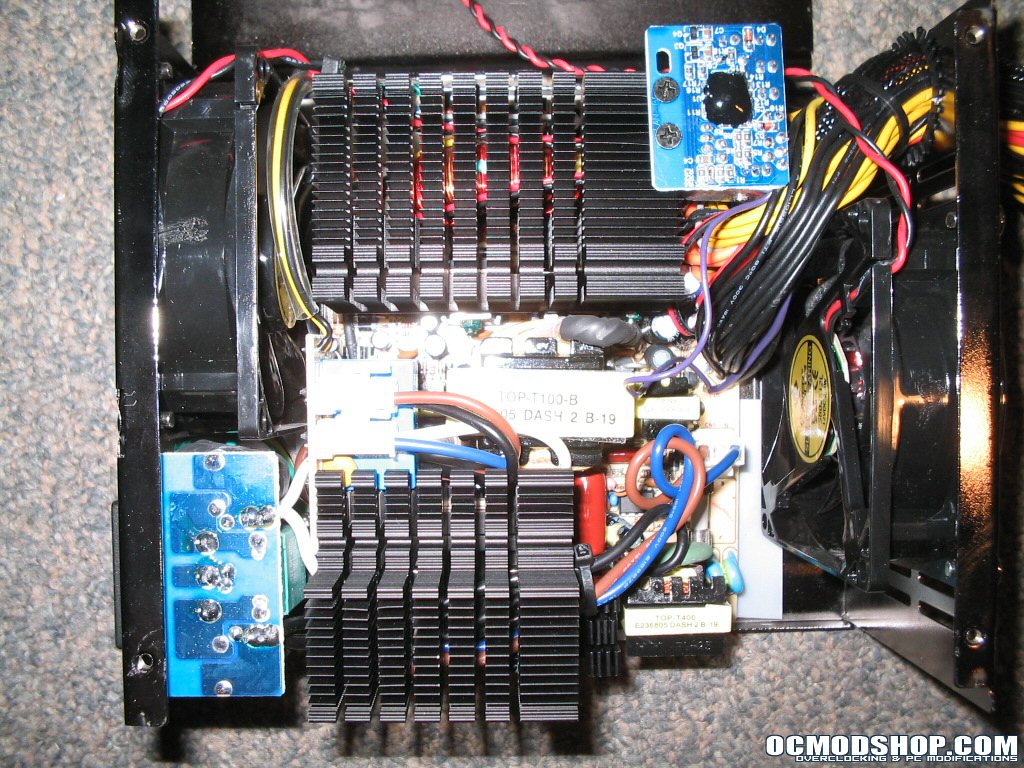
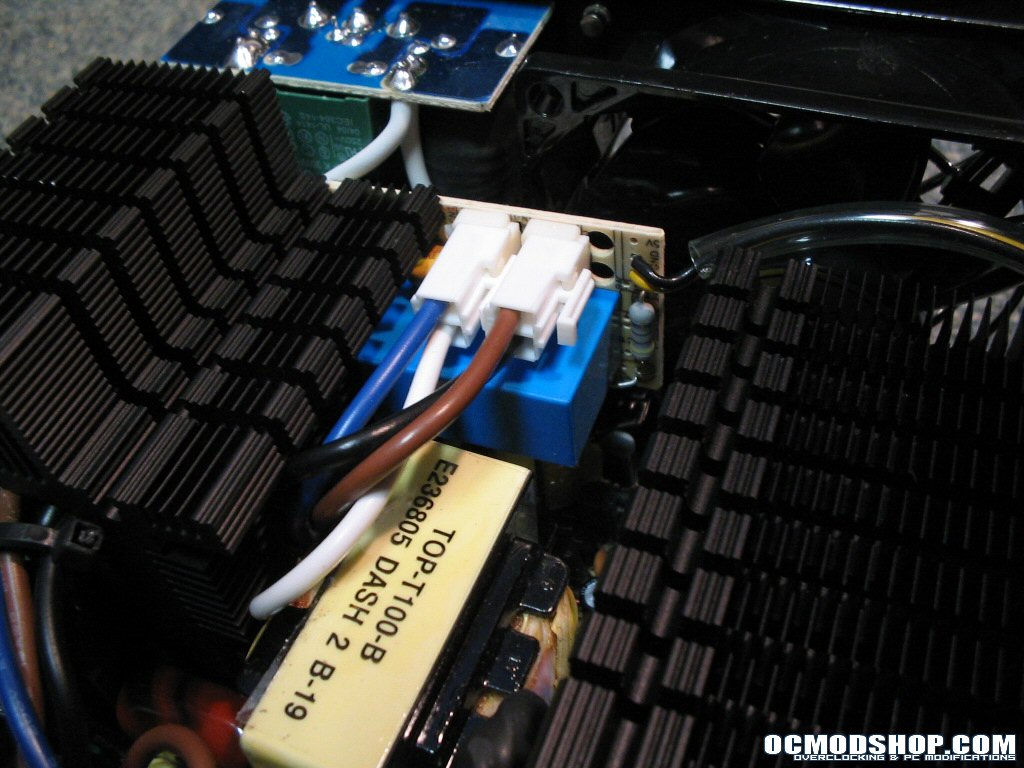
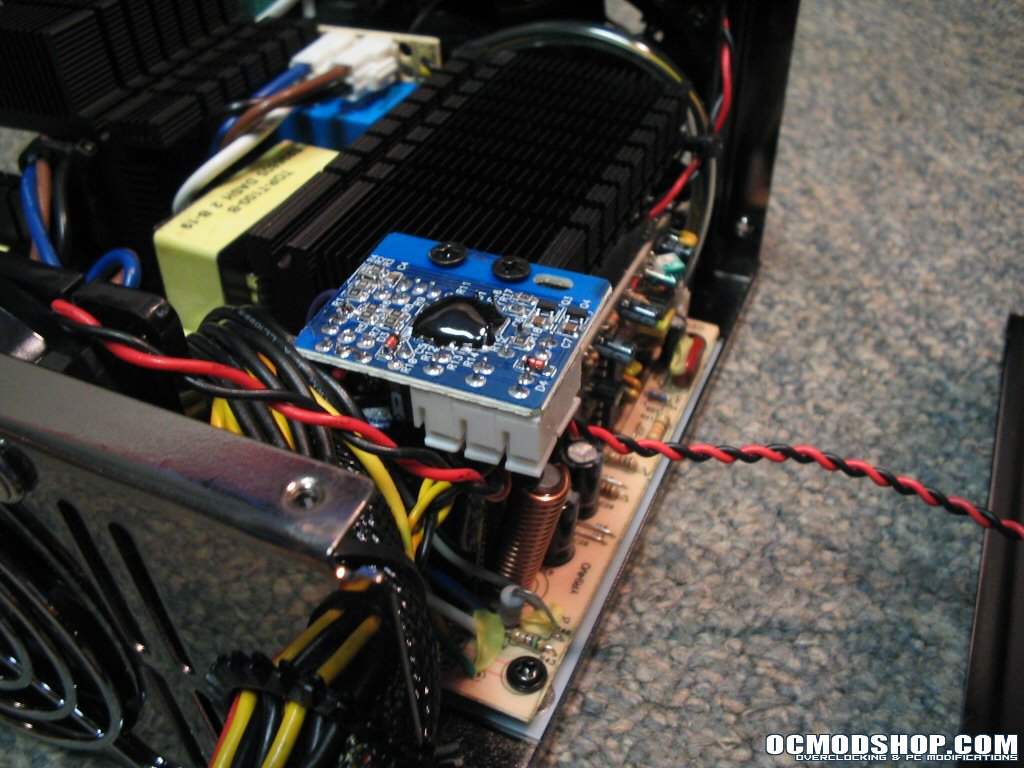
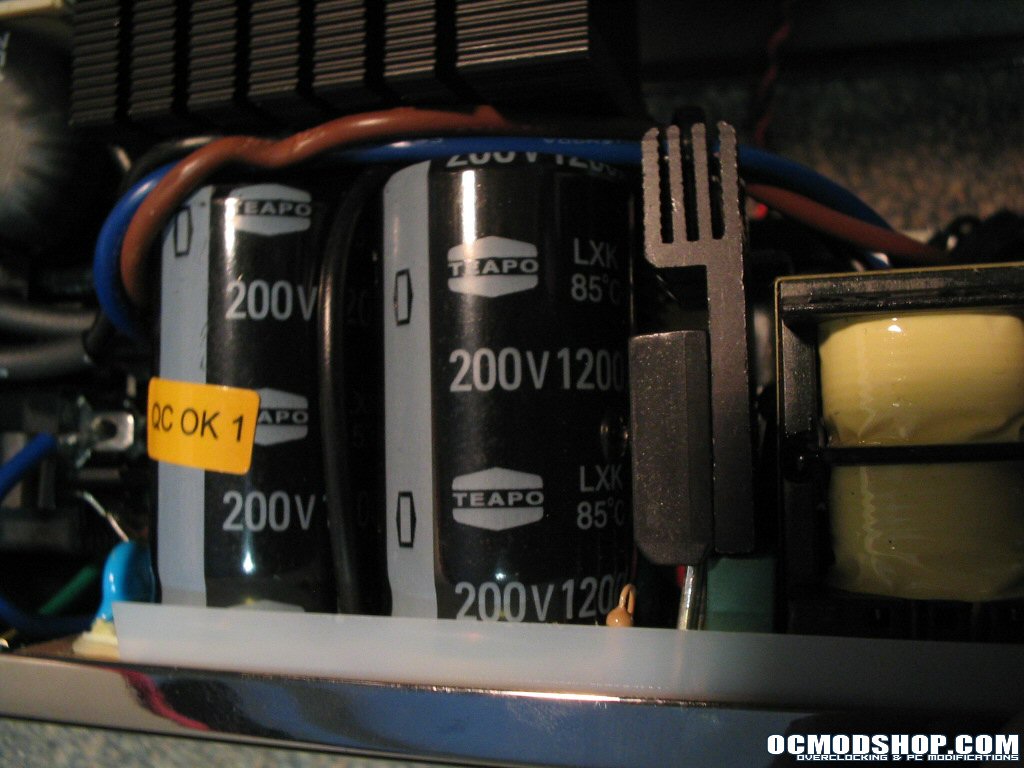
Some other key areas inside of the supply are the fan controller on the blue PCB and the dual 200v 1200mF Capacitors to help store up energy for power on demand and line conditioning.
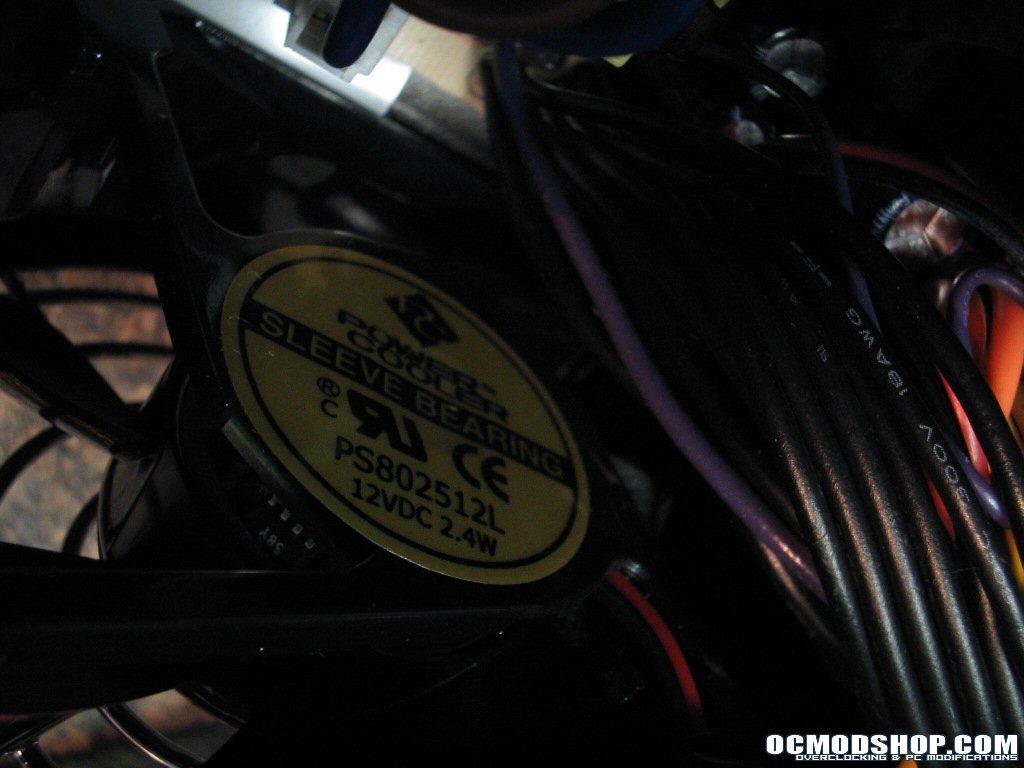
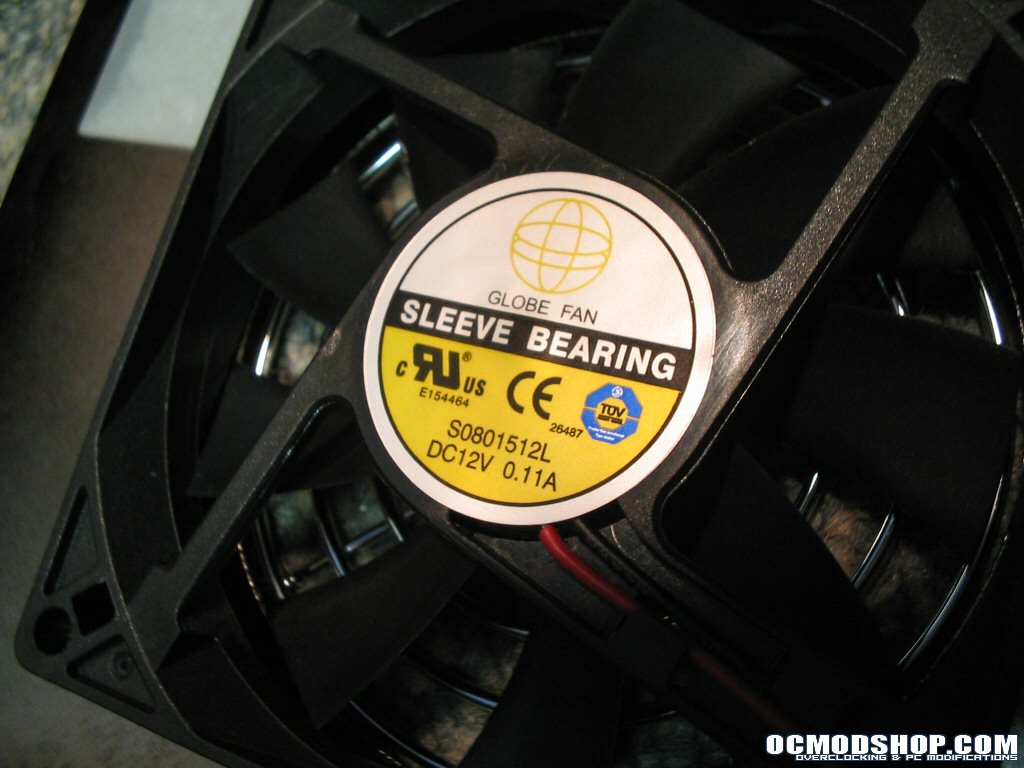
The fans provided in this power supply are from two separate companies. Two are 80x25mm units from Power Cooler and one is a 80x15mm un it from Globe Fan. These fans are mounted using rubber bushings to help reduce vibrations and their performance numbers are listed below.
|
Model
|
Dimensions
|
Voltage
|
Current
|
Power
|
RPM
|
CFM
|
Noise dB
|
|
Power Cooler
|
80x25mm
|
10.2-13.8
|
0.1A
|
1.2W
|
2000
|
21.5
|
20.3
|
|
Globe Fan
|
80x15mm
|
6.0-13.8
|
0.1A
|
1.2W
|
2000
|
19.9
|
18.0
|
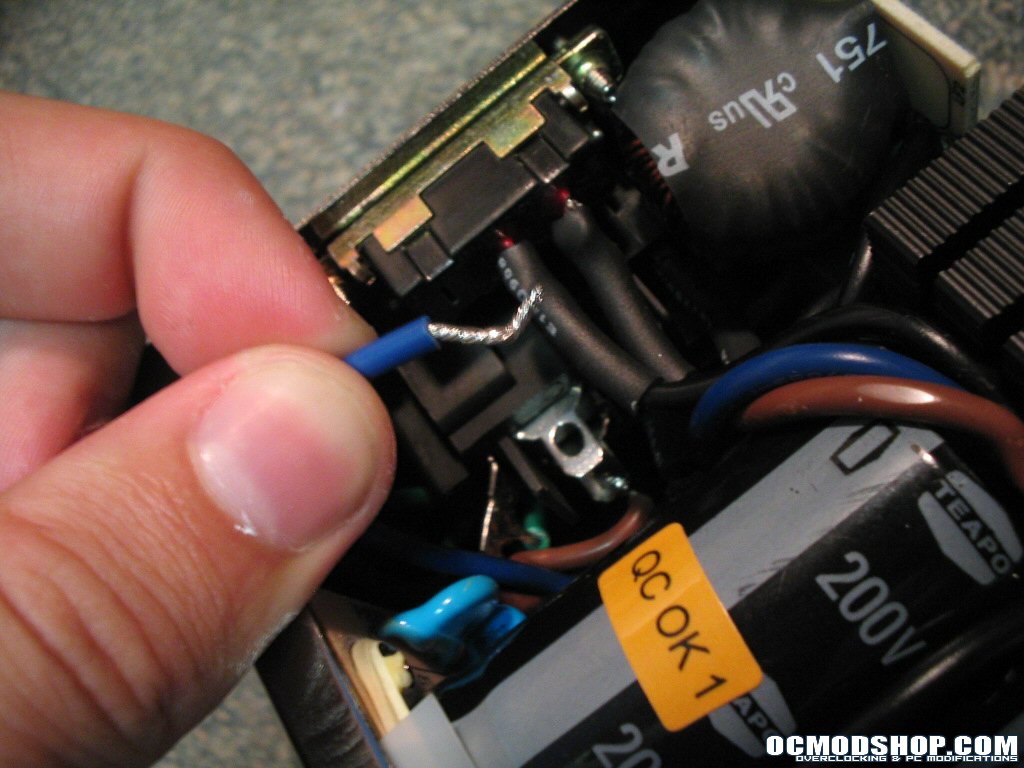
One thing I have to mention however about this power supply is that on further inspection I found a lead to the auxiliary 110v plug completely unsoldered. This is a serious quality control issue and should have been caught on inspection at the factory after assembly. After tossing the power supply around for installation or shipping, this lead could have come loose and shorted major components inside the supply leading to at the least a dead power supply and at the most a fire. I have to say I was shocked that this type of thing was overlooked.