

The unit is made mostly of black plastic, but has an aluminum ventillation grate positioned on the lower two-thirds of the top surface. There are three rubber pads which help keep your laptop in place. The unit is bulged so there is a decent hollow cavity on the inside to allow airflow from the fans, which are positioned on the underside. These fans don’t blow air down, but instead introduce cool air to the underside of your laptop. While the cooler will accomodate today’s large notebooks, anything over 15″ will hang over the sides slightly.
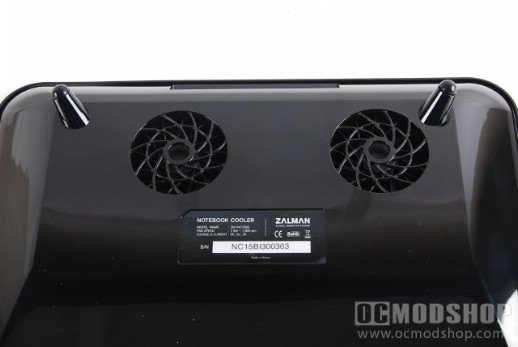
The back of the unit has several controls. There are two USB ports (one to power the fans, the other used as a passthrough), a power button, power LED, and a small black dial, which adjusts the fan’s RPM (and thus noise). It is good to see a traditional red power LED when the fans are switched on. Since the cooler’s fans are very quiet, it can be hard to tell if the unit is actually on.
Installation is rather simple. Basically all you do is plop your notebook onto the top of this cooler and insert a USB passthrough cable from one of your free USB ports to this cooler and turn on. The fans will start to whirr and you can adjust the fan’s speed to obtain a balance of noise and cooling.

Many notebook coolers like to use an extra USB cable, but these are easily lost. It would have been better if the cooler had a permanent USB dongle, or a retractable one to power the fans. The rubber pads do a good job of keeping your laptop snug, but there is no physical lip, which makes sure there is no slippage and provides additional wrist support like the Enermax Aeolus (reviewed here).
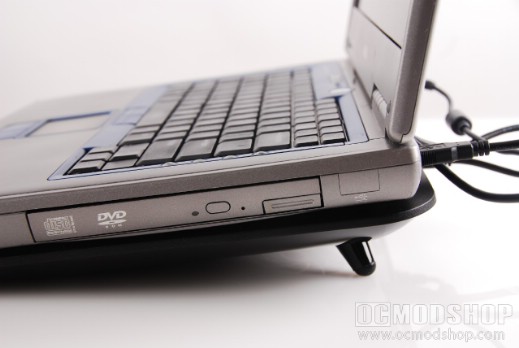
Another issue of this cooler is the lack of foldable feet. While the design makes sure there is plenty of room for the fans to gather air, it would have been nice to see a design that did not force an additional tilt to your laptop. The design of this cooler introduces air to the bottom of your notebook, which is where many laptops have their air intake vents. It is possible that expanding the airflow grate to the entire surface could help performance, but we’ll know for sure during testing.


