

There are a few drawbacks to being an early adopter of USB 3.0 right now. For one, the cards are relatively expensive and have limited connectivity options. USB 3.0 requires new (and expensive) cables, and as such are not ubiquitous on most computer cases. There are only a handful of USB 3.0 devices, and most of them are hard drive enclosures. Most people use a USB hard drive because every modern computer has USB ports, but this is not the case with USB 3.0. If you tote your drive between home and work then you’ll either need to purchase two adapters or make do with USB 2.0 speed. Right now eSATA is more common than SuperSpeed USB, so you might as well go that route.
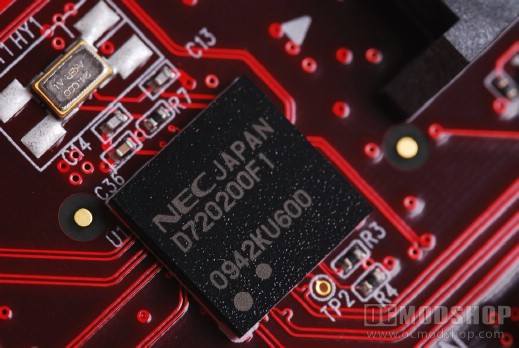
The NEC D720200F1 chip only supports 2 USB 3.0 ports
Some people may want to purchase USB 3.0 devices to future-proof their computer. This new technology isn’t exactly a shoe-in as the next-generation connectivity standard, even if it does have “USB” in the name. I once predicted that HD-DVD would win over BluRay just because it had greater market recognition (it had “DVD” in the name for crying out loud), and the common person could understand that. SuperSpeed will only win if vendors start coming out with a lot of peripherals that support it.
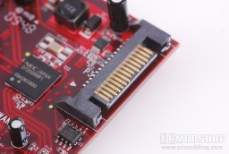
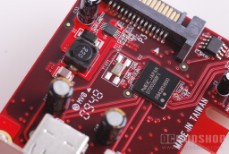
The Vantec SuperSpeed USB 3.0 card is definitely fast. It can supply enough bandwidth for SATA hard drives to work at their full potential, and works much better than the chipsets on many motherboards. While testing USB flash sticks in our test labs, we have discovered that the quality of the chipset on the motherboard greatly affects the USB throughput. Even if you don’t need the extra bandwidth right now, the NEC D720200F1 chip on the SuperSpeed card provided the best performance we have seen on all of our existing USB 2.0 devices. So if you think you’re not getting the most out of your USB devices, then it’s probably your motherboard’s USB chipset and you may want to upgrade to the new technology.
I would recommend Vantec’s SuperSpeed USB 3.0 card to any PC enthusiast, but I have a few improvements for the next generation of cards:
- Support more than 2 USB ports (preferably with no additional chips).
- Include pins for internal USB devices and front-panel ports.
- Lose the additional power requirement.
- Come down on the price a little.
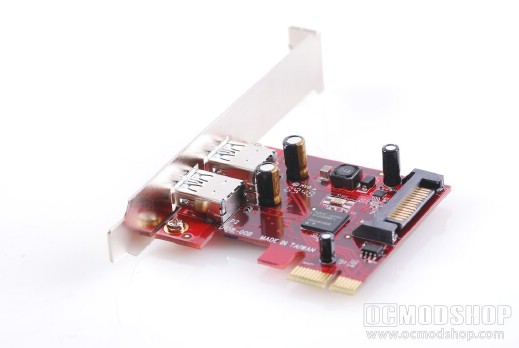
Once I got past my minor gripes, I can’t help but be impressed with the card. It is now the standard interface we use when testing USB devices. It will be interesting to see if there are performance variations once “generic” USB 3.0 chipsets are implemented on new motherboards (some motherboards do offer SuperSpeed support, but only a maximum of two ports because of the limitations of a single D720200F1 chip).
For now, the Vantec SuperSpeed USB 3.0 is one of the few options you have to experience the next generation of PC connectivity, and it appears to be a solid card performance-wise. It should serve you well, even when this new technology is standard on all new motherboards.
 |
 |
 |
|||||||||||||||||||||||||||
|
|
|
|||||||||||||||||||||||||||
 |
|
 |
|||||||||||||||||||||||||||


1 comment
Thanks for the review. Good stuff.
One aspect you didn't comment on: impact on system CPU load when using this PCI-e host.
USB 2.0 tends to consume more CPU cycles while doing real work. You don't compare how using this card affects CPU consumption. When compared against the ICH7 or comparing the PCI-e host CPU consumption comparing USB 2.0 against 3.0.
Comments are closed.