

These are the fun tests you get to use to train your prefrontal cortex. Only three are given at the start, but here are all of them.
Calculations x 20
Here is my copy and paste from the quick play section:
Only one exercise here, Calculations x20. You do know how to do math, right? No derivatives, or areas, or square roots. Just addition, subtraction, and multiplication. The highest number I remember was 81 (9×9), and the lowest 0. So it ain’t hard. The ability to input numbers is really good, the only problem is that you are on the clock. Expect to have five seconds added a few times, or to get a few right too, as the game is not perfect. The software will accept the first correct answer, but if you put down something wrong you will have only a few mili-seconds to hit erase. Also, if you get the problem wrong, you don’t have to correct it.
Another thing, the game will try to trip you up. Example: one equation may be 6+5, and then the next is 6-5. Or: 8×6, and then 6×8. Doesn’t seem like much, but when your brain is racing it does get in the way.
My tip is to look at the next equation, answer the current one, and keep that pace going. I know it sounds hard to write and not look at what you’re writing, but you will get use to it, I hope.
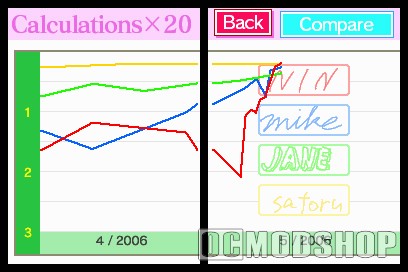
Anyway, you are scored on time, and each missed equation adds five seconds to your total time. I can get 16-20 easy. I don’t know how to get rocket speed. I guess you got to do each problem at .5 seconds.
Calculations x 100
This is the last test x 5. Shoot for 90 seconds to unlock Hard mode.
Reading Aloud
Oh great, my favorite test. Listen, unless you really want to read little phrases from timeless classics, avoid this test. You don’t have to read aloud, but whatever.
Read. Read fast. That is all I can say.
Low To High
This is a cool game. You will have only a brief moment to look at the boxes on the screen and try to memorize where the numbers are. When the boxes are closed you get the time to poke the boxes from low numbers to high. Easy right? Wrong. After eight, good luck. And sometimes there is a bit of luck involved.
I have no advice for this. I guess just try to remember where the highest number is, and then count up from the lowest. Of course this all must be done in the period of about one second. I’m not sure if time matters, I don’t think it does.
I’m also not sure how the total is figured. If you get past eight, you did good.

Head Count
This test is really good. The goal is to keep track of how many people are crammed into the little house, of course as some leave and some enter.Easy? No. You get five chances, and the tempo is upped each time.
The trick is to interpret each group as a number value. Example: 3 in the house and 3 enter, 3+3=6. Or: 4 in house, 3 leave, 4-3=1.
Don’t let 2 coming in and 2 going out trick you, it means no net gain or loss.
Also, it is hard to keep track when more than three are moving. Just know that the maximum number in a group is five.
Five times, and a score from zero to five, that’s it.
Hard is very hard.
Syllable Count
This test is easy. If you know where each syllable is, and I could see how some wouldn’t, all you need to do is recognize each syllable and keep a tally of each (whether it be mental or out loud). I get tripped up when there are a whole bunch of syllables, so count carefully.
Speed counts here, so be quick. And each incorrect answer takes 20 seconds from your total time.
Triangle Math
Okay, this is how it goes: if you got two + signs, add the first two numbers and the last two, and then add those two answers together. It is usually addition for the first eight, and then subtraction is thrown in for the last two. Take the minus signs as you would in normal math. Example: 5-6= (-1). And a minus sign in the bottom will also change the second answer.
The only really hard thing about this is keeping track of both numbers as you use both in a second equation. Basically half the equation is in your head.
Don’t worry if you fudge up the first time.
Time is the factor here, wrong answers add 20.
Time Lapse
This is really tricky. First off, remember that you are going from top to bottom; secondly, don’t get the four hands mixed up. The goal is to find out the difference in time from the top clock to the bottom one.
I figure out the minutes hand first. I find out where the difference will put the top minutes hand, and then find out where that puts the top hours hand. If the hours hand is moved to a different hour, then I put my stylus on the new hour. Then I count (not touching the screen, duh) the hours until I reach the hour displayed on the bottom screen. I know, it sounds complex, but I really struggled with this test until I used this system. I would usually miss by only one hour, so it is tricky to do this from the hip.
Speed and wrong answers affect your score, have fun.
Power to you if you got something better.
Voice Calculation
This test is okay. The only differences from the written portion is that this time you must say the answers, duh, and it adds division. So freshen up on your division and you are good to go.
My only beef with this test is that is somehow mistakes my 8s for 3s. I don’t know why. It did it everytime! Weird.
