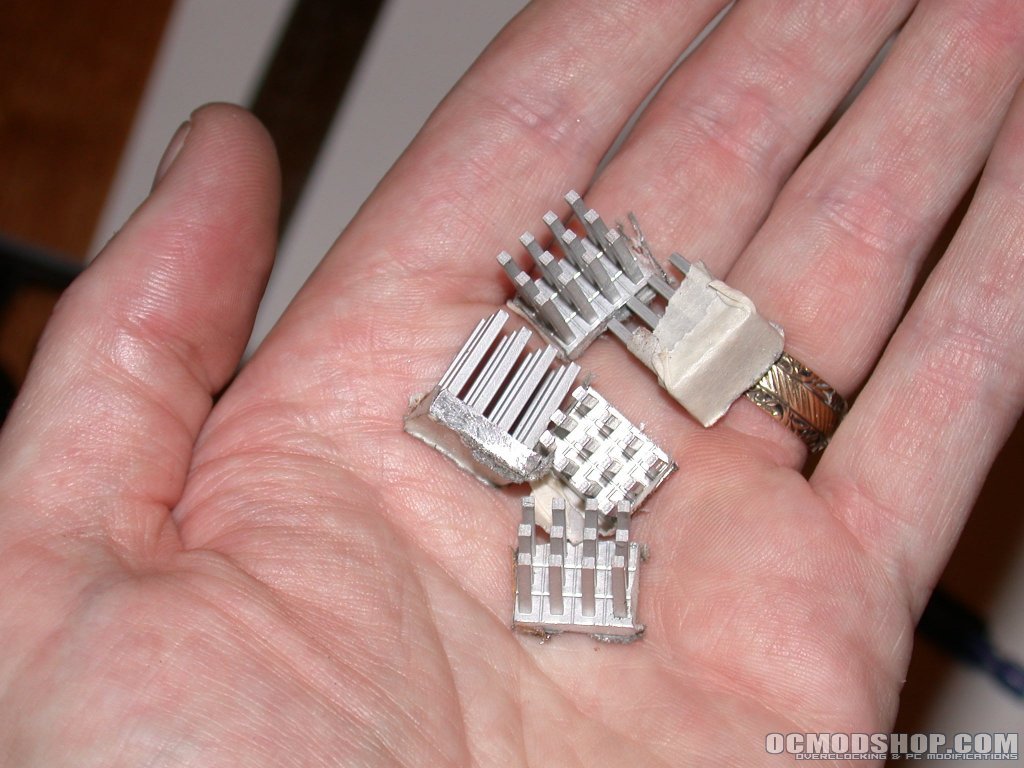
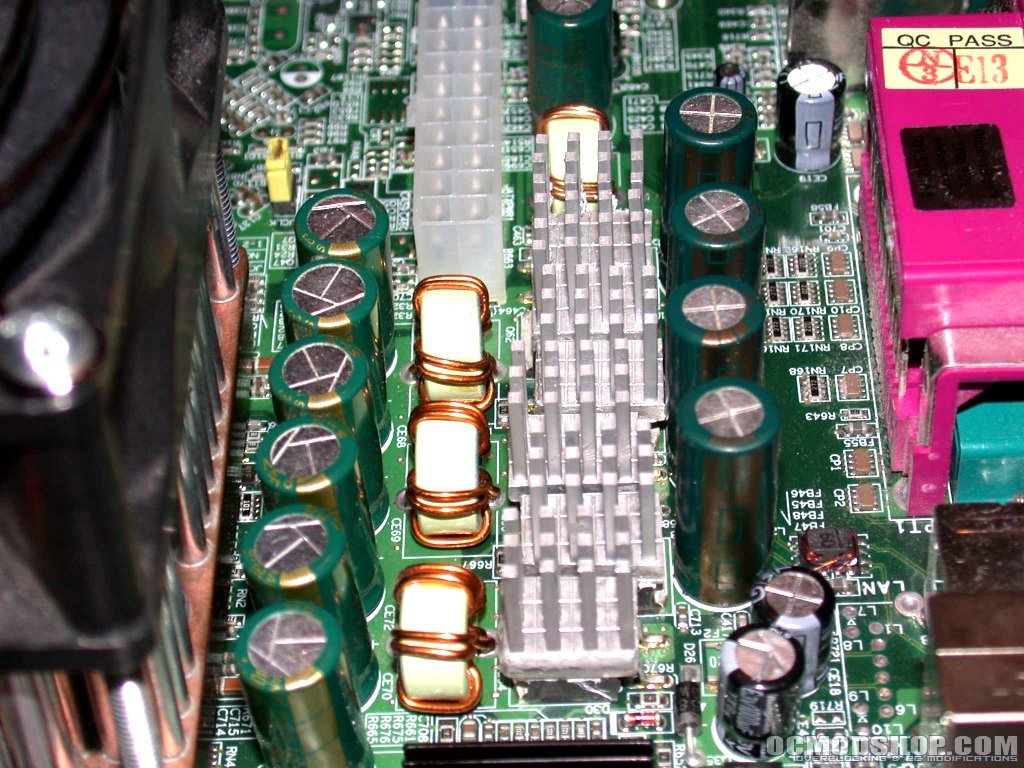
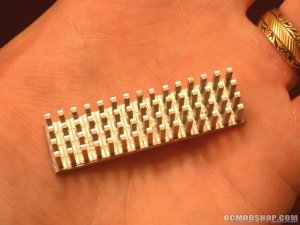
The sinks that I used for this were originally from a kit I had gotten to cool the memory on an older video card. They are old school aluminum Alpha pin sinks. The only problem I had with using these sinks was their length. They were originally intended to cover two memory chips on a video card that were spaced about a centimeter apart and that made them far too long for my purposes.
Now, some will take a sink this length and just epoxy it across several of the mosfets under the idea it will effectively cool all of them. However, most mosfets are not the same height and this will lead to too much space between some of the mosfets and the base of the sink. The best way to handle this problem is to chop the sink down to the correct size (i.e. the base of each sink will be approximately 11mm x 11mm which is the size of the top surface of the mosfets on this board).
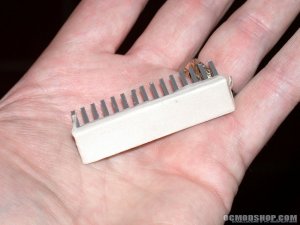
A Dremel or other rotary tool equipped with a high speed cutoff wheel is the best way to cut the sinks but a hacksaw with a good sharp blade will work if necessary. To keep the base of the sink from being damaged, it should be covered with masking tape to avoid any unnecessary scratching of the sink’s surface. Once the sink is masked, it can be placed in a vise (or held with a pair of vise grips or pliers if necessary – the sink will get extremely hot during the cutting process so bare fingers are out of the question) and cut with a cutoff wheel.
Note: Always wear proper eye protection and a proper filter mask when using a high speed cutting wheel. Cutoff wheels often break during use and they can throw extremely sharp pieces of the wheel (as well as the material being cut) with enough force to cause serious eye damage or even blindness. Cutoff wheels also produce a dust that is a mixture of the wheel compound and the material being cut and it can be very irritating to the respiratory track.
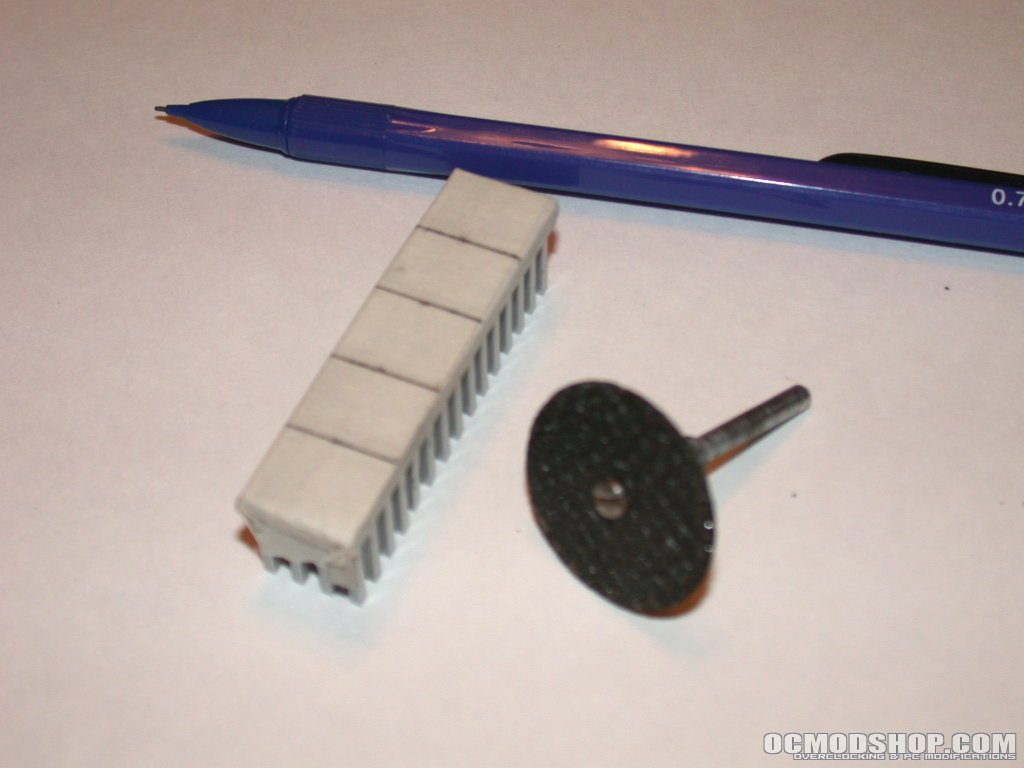
In order to make sure each sink ends up being the correct size, the masking tape should be marked at approximately 11.5mm intervals (the extra .5mm accounts for the amount of material that will be lost in the cutting process) for the mosfet sinks. The sink for the v-reg chip is a little thinner but longer than those used for the mosfets – mine measured right at 18mm x 10mm with a slight bit of overhang on the length. After the sink is mounted in a vise, the lines on the masking tape should be carefully followed with the cutoff wheel to produce fairly smooth cut lines and reduce the amount of cleanup that is needed before mounting the sinks.
| Cut lines added to the masking | Cutting the sink with a cutoff wheel |
 |
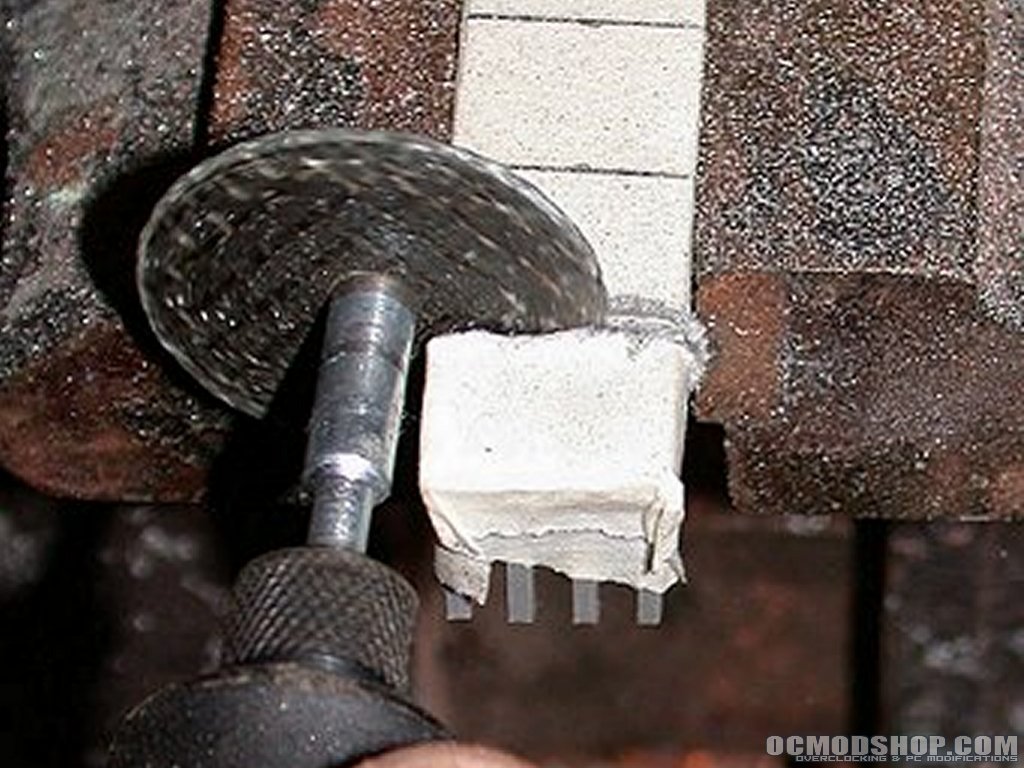 |
Once the sinks are cut and the masking tape is removed, the rough edges can be smoothed off with either a needle file or some 600 grit sandpaper. After the edges are satisfactory, the sinks should be cleaned with alcohol to get rid of any debris left from the cutting or smoothing. Note the amazingly rough edge on the sink near the top left – that is what happens when a right-handed jedi-dremel-master tries to cut a sink using his left hand while the right hand is attempting to take a picture of the entire process without resorting to a tripod…that is not a recommended cutting technique
Rough cut homebrewed mosfet sinks