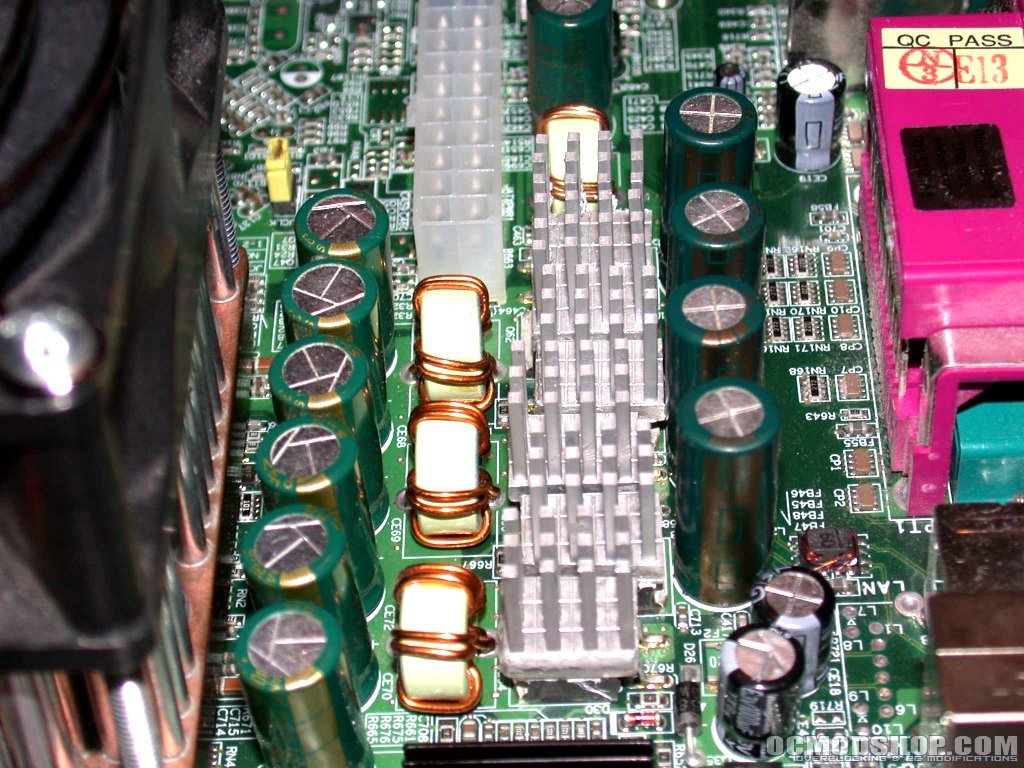
To attach the sinks to the mosfets and v-reg chip, double-sided thermal tape can be applied to the base of the sinks and they can then be added to the mosfets in the same manner as used for the factory-made sinks covered above. A more secure method of attachment requires the use of thermal epoxy.
I used Arctic Alumina thermal epoxy as it does not present a risk of shorting out the mosfets if the epoxy winds up on the mosfet pins or the v-reg chip’s pins and it is a good thermal conductor. If added protection against any possible shorting of the mosfet or v-reg pins is necessary, the pins can be covered with a light coating of clear acrylic nail polish to insulate them from the epoxy. This is not necessary with Arctic Alumina but it is a good idea if a more electrically conductive epoxy is used to attach the sinks.
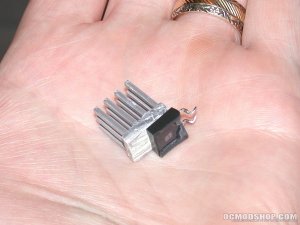
When mixing thermal epoxy to mount sinks that might later be removed, I normally mix the epoxy according to the manufacturer’s instructions and then add a small amount of regular thermal grease to the mixed epoxy. The thermal grease slightly weakens the bonding strength of the epoxy and makes removal at a later date possible. With Arctic Alumina, I mix the epoxy and add an amount of Ceramique thermal compound that is equal to about a third of how much mixed epoxy I have.
Then I stir it for a few seconds to get a uniform mixture. The final mixture will be strong enough to where the sink will not fall off but it will not result in any damage if the sink is removed. I was testing the so-called freeze method for removing sinks from mosfets that were applied with full strength thermal epoxy when I managed to produce the following gem.
Luckily, I was using a board that was long since dead for the test. The scratches on the side of the sink came from various attempts to twist and pry the sink from the mosfet after super-cooling it with component chiller spray. So, add a little thermal grease if later removal might be necessary.
Once combined, the epoxy mixture will dry fairly quickly so the epoxy and the sinks have to be added very quickly or only enough epoxy for a couple of mosfets should be mixed in each batch. Once the epoxy is mixed, an even, paper-thin layer should be added to the top of the mosfet with either a flat-edged plastic applicator or a finger covered with plastic cling wrap.
After adding the epoxy, the sinks are pressed onto the tops of the mosfets + the v-reg chip and given adequate time to dry. I normally let them cure for about 4 hours before moving the motherboard but they often dry much faster than that. If they are not quite straight, the sinks can be slightly repositioned during the first 5-10 minutes after mixing the epoxy by carefully sliding them into proper position. Repeat until all of the sinks are mounted on the mosfets and the v-reg chip.
| Mosfets & v-reg chip with a thin thermal epoxy layer | All of the sinks mounted on the mosfets |
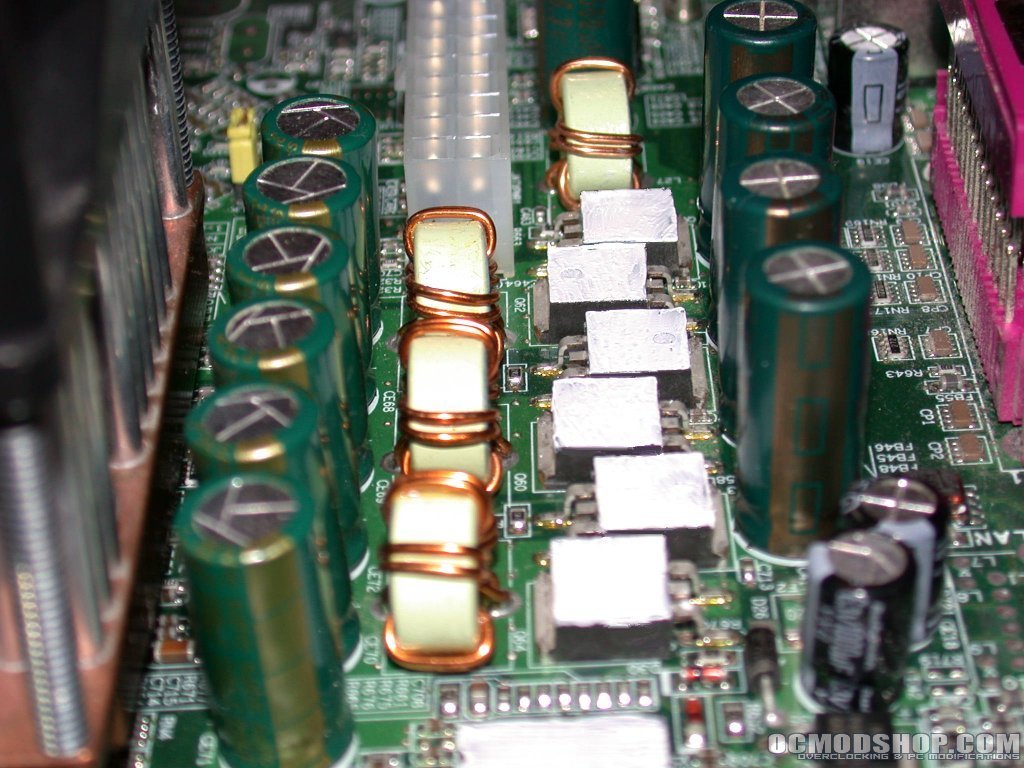 |
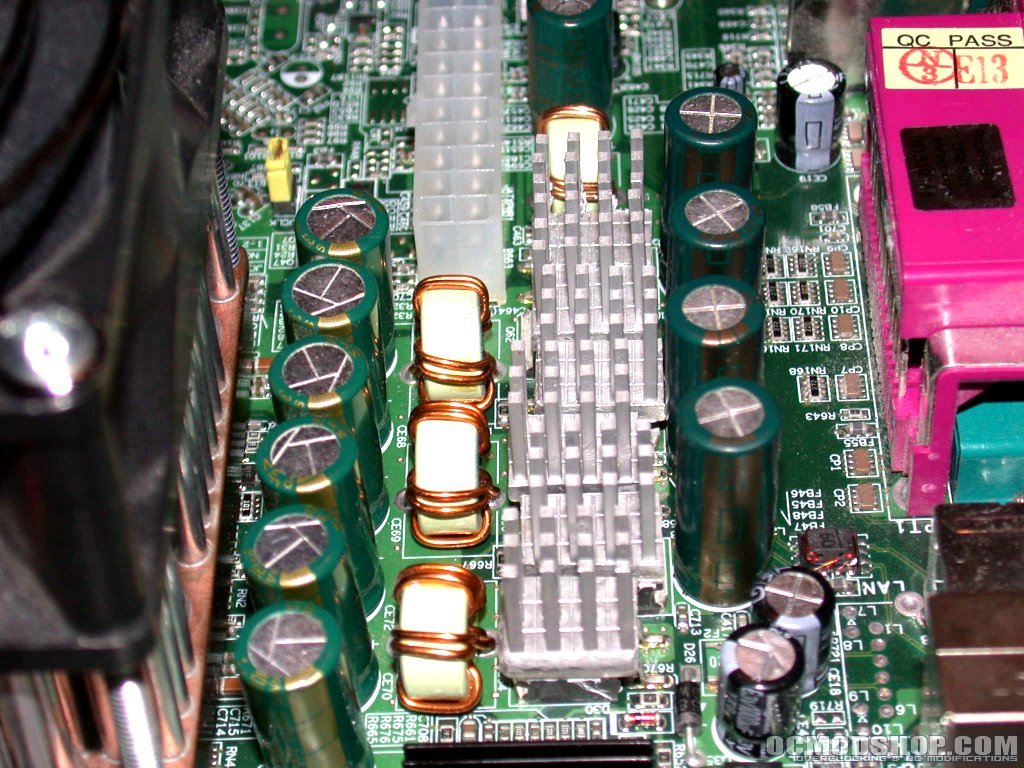 |
Granted, they do not look as nice as the factory-made sinks but they will keep the mosfets and the v-reg chip cool. After installing the sinks on this particular motherboard, there was a noticeable decrease in voltage fluctuation. If voltage fluctuation was still an issue after installing the sinks, the power supply and then the surge protector or outlet used for the system should be checked for irregular power levels.
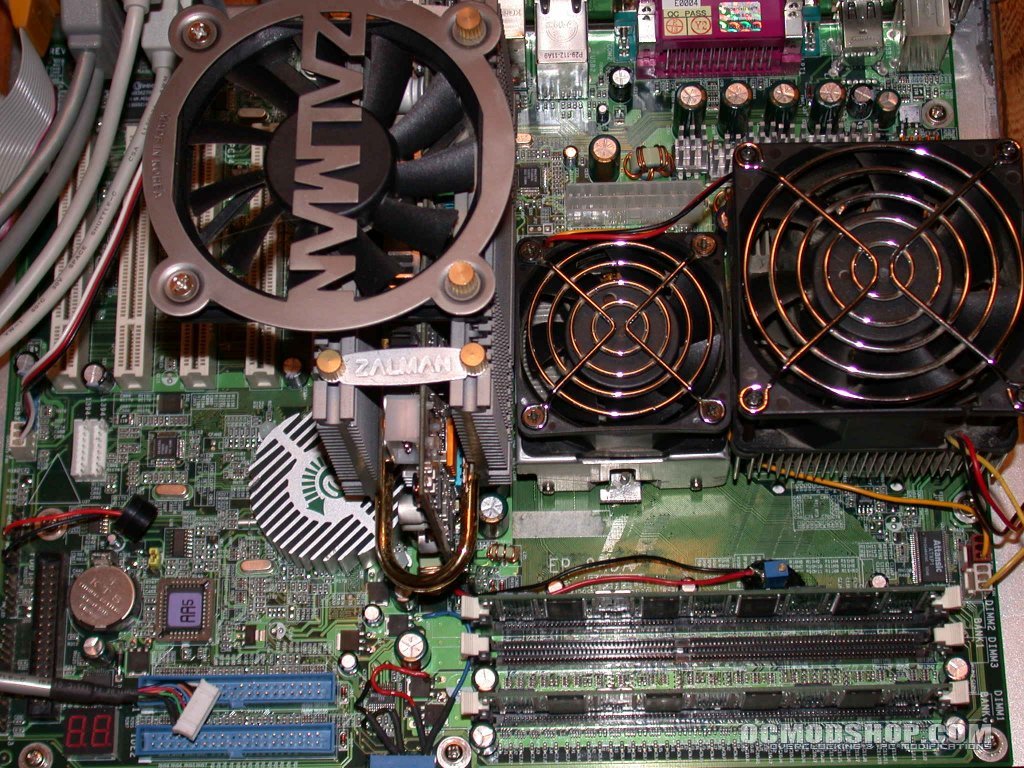
I once spent hours trying to track down the cause of odd voltage irregularities only to discover it was a bad surge protector that was causing all of the problems. In the event that the local power company just supplies irregular levels of juice, a good battery backup will often tame down the problem and help stabilize a quirky system. For all the fans (pun intended) of air cooling, the following is my brothers volt-modded, heavily air cooled, but not quite finished, EPoX 8RDA+.
Volt-modded & air cooled EPoX 8RDA+
Conclusion
Adding additional cooling to mosfets and the v-reg chip in the form of heatsinks is a mod worth performing on almost any motherboard that will be overclocked. The value of the additional cooling is increased with higher voltages and no motherboard that has been volt-modded should be without mosfet and v-reg chip sinks. In addition to keeping power fluctuations to a reasonable level, properly installed sinks can greatly improve the appearance of the board.