
Not content to cast you as just another badass killer, FEAR’s protagonist possesses psychic connections that let you see visions and even experience full-blown hallucinations. This explains the disturbing unrealities I witnessed at the ladder and throughout the game that help create a pervasive sense of dread during periods of non-combat. These sequences feel more like survival horror (à la Resident Evil) than first-person shooter because of the use of horror film techniques: lights flicker, objects move on their own, and supernatural entities unexpectedly appear. You’ll come across the gruesome remains of former Armacham employees and US Special Forces and wonder if whatever was responsible still lurks close by. The eerie music of the soundtrack fosters suspense and subtly increases the tension. The horror in these segments is actually light on survival because 98% of the apparitions you glimpse can’t actually hurt you, especially in the earlier levels, and yet the game immerses you so effectively in the environment that even jaded gamers will be startled at times and enjoy the creepiness of their surroundings. Although these shooting-free sequences sometimes stretch too long, the majority are perfectly paced with escalating tension that pays off when you encounter the next group of enemy forces.
 |
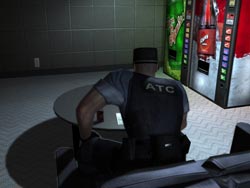 |
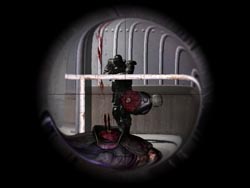
| Headshot! | No, no… don’t get up |
Of course, these areas of relative inaction would be pointless if you weren’t anticipating the next violent encounter—an area where FEAR excels. While your psychic talents enhance the horror aspect of the game, you are also endowed with heightened physical gifts that are integral to the core shooting gameplay. Extreme reflexes allow you to move and shoot faster than usual, although what effectively happens is that the world around you appears to slow down. This ability is activated manually and has a meter that is depleted the longer you leave it engaged. It is basically the same mechanic that Max Payne used, but instead of killing people to replenish the power, it steadily refills whenever deactivated. This slow motion gives you much more deliberate control in the middle of the numerous chaotic gun battles.
 |
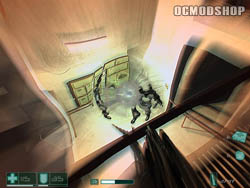 |
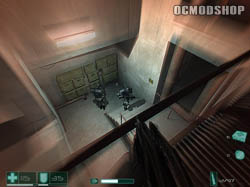
| Life Cycle of a grenade – Projection… | …Detonation… |
In fact, you’ll need and want to slow down time often to contend with the vicious enemies FEAR throws at you. The most frequent combat scenario pits you against a group of at least three soldiers in a small area who work together as a team to take you down. The AI is the game’s greatest advantage over its peers in the genre. Soldiers feature realistic situational awareness as they can hear you moving, see the beam of your flashlight, and take note of the carnage you wreak on their fellow clones. Their radio chatter fleshes out the feeling of cognizance because they note your position, alert others that you’re trying to flank, and desperately call for reinforcements when you’ve sufficiently whittled them down. Aside from coordinating their attacks on your position, enemies can manipulate the environment to create cover and reach you quickly. It is a thrill to think you’re safe behind cover only to have soldiers leap over railings and dive through windows to reach you. While the soldiers’ AI is impressive, FEAR could have used more variety in its enemies. Most of the time, these standard soldiers, with some variation in armor, armament, and appearance, are all you fight and your tactics for dealing with them remain fairly constant. Of the seven enemy types, I would have especially liked more encounters with the Heavy Trooper. This enemy moves slower but is mostly covered in bullet-proof armor and carries more powerful weapons. The reward for taking one down is his beastly death cry and the panicked sound of standard troops exclaiming in disbelief, “He took down the heavy!” While more variety wouldn’t have hurt, the different enemies that are present are distinct in their attack strategies and the amazing AI keeps fights from becoming boring or happening the same way twice.
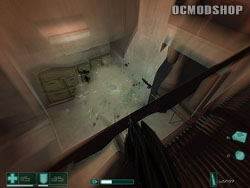 |
| …Satisfaction |