

Most people aren’t in their right minds during the holidays (which is the only possibly explanation for surges in electric shavers and holiday sausage baskets) so people may not think about some simple things they can do to curb energy costs. If these tips seem like common sense to you then I’ll send you your complimentary “I’m a freakin’ genius” medal so everyone will know when you enter a room.
When my wife and I are in the Christmas mood, we like to have holiday music blaring throughout the house. It is a lot easier to tune DirecTV to channel 801 (XM’s holiday channel) rather than hooking up an iPod. The problem with this is that TVs use up a lot more electricity than a personal stereo… to the tune of about 200 Watts more. If you have external speakers in your home theater rig, then turn off the TV when you listen to music, especially if it’s just “background music”.
Battery power?
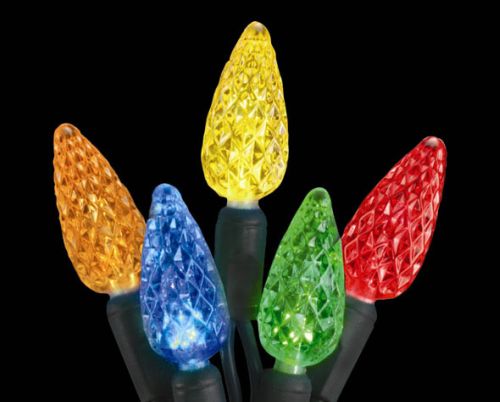
You would think that you could augment electricity usage by using string lights with battery power. My wife bought a few such devices, but they were incandescent bulbs and drained the two “C” batteries in about a day and a half… not a very good use of our money. If you do need the convenience of battery-operated lights, then make sure they are LEDs.
Enjoy the ambience
If you’re like me, then you can’t get enough of the romantic soft glow of Holiday lights. As a matter of fact, I have a string in my office. My wife and I made a cute display using a few strings of lights on top of our kitchen cupboards, and they provide enough light that we can do just about everything without flipping the light switch. The electricity usage of string lights is so much less than overhead halogen bulbs that we can run the string lights for 19.2 hours for the cost of 1 hour of having the overhead lights on.
You can actually SAVE money by using your holiday lights in lieu of harsh overhead lighting. Sure there are less daylight hours, but that just means you get to enjoy the cozy feeling of your multi-colored blinking friends.

Get a timer
When you discover how much juice your holiday displays actually suck up, then you’ll quickly come to the conclusion that you can’t run them all day. Our modest outside display consumes over 600 watts (elaborate displays can use 2000W and more), and we don’t really want to go outside and unplug them. Some people hook them up to a lightswitch, but they are still very easy to forget about, especially when you’re tired. For this reason you should invest in a cheap timer. If you want to go high-tech then you can even get a light strip with a motion sensor so your tree lights up only when someone is in the room.
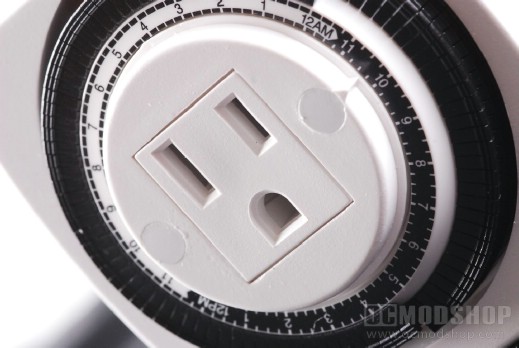
A mechanical timer is more durable and cheaper, but not as accurate
There are two types of electric timers: mechanical and digital. Mechanical devices usually have a dial with numbers and the dial turns once every day, just like a clock. The dial is surrounded by tabs (four tabs for each hour: one tab is 15 minutes), and you press down the tabs for the time you want your holiday lights on. This way you can turn your lights off and on different times of the day. Digital timers are more accurate but the cheap ones only allow you one Off and On slot, and are not programmable. More elaborate digital timers can be programmed and can different programs for different days. Most digital timers also use small watch batteries to keep their clocks and programs, but the cold outside can reduce their life.
I turn my lights on at 4:00pm (when it gets dark) and turn them off at 10:00. By doing this, I save $8.37 a day (or $251 a month). Still, even with this savings, the outside lights are costing us $83 alone. You can see how the investment of a $5 timer pays for itself in less than a day.
Outside lights are usually the brightest (and most expensive), but all of the indoor decorations accumulate, too. The indoor decorations may not seem like much, but when added together total 635 Watts, which is the same as the expensive outside lights! Without timers, running these for the entire month of December will cost $300 over our normal electricity bill. We live in one of the few states where electricity is cheap (7¢ / KWH) but the average is 12¢ and can be as high as 23¢!
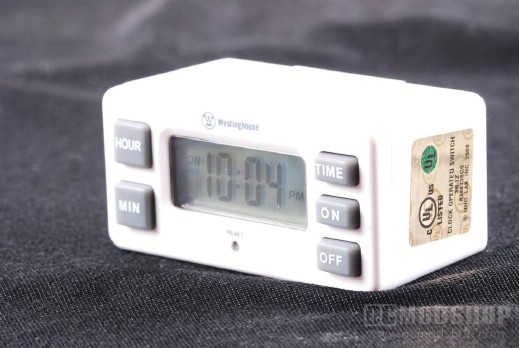
A cheap digital timer. One program state and no grounded outlet
Based on these figures, you can see that you need some indoor timers, as well. These can range from $5 to $20, but the average should be about $10. It may suck to add an additional $40 to your holiday decoration budget, but the timers will pay for themselves very quickly, and you can reuse them next year. You may even find them useful throughout the year (like enforcing TV and video game curfew).
As mentioned in the opening paragraph: it’s what you don’t see that can kill you. By stretching your decoration budget a bit, you can assess your actual electricity costs, and manage it effectively so that it doesn’t cost you an arm and a leg. With the ability to measure you can make smarter choices in your holiday lights. I’m not interested in saving Mother Earth so much as keeping money in my wallet.
“Given the state of the economy”, why wouldn’t you?


