

The goal of defense is to make the offense do as much work as possible. No, it’s not to prevent them from scoring because even the worst of teams can put points on the board. So what does “do as much work as possible” mean? It means pressure. The worst thing you can do is let the opposing QB sit back there in the pocket and pick you apart. If you let him do that then what is the difference between letting them march down the field to letting them break a big TD pass? The difference is that if they score on a long pass it is because you applied pressure and the defender covering the receiver made a bad tackle. The tricky part is that on the same kind of play the QB could throw a pick out of panic and your defender could run it back to the house.
Marking Your Zone —————–
Zone Coverage – Let’s get this out of the way first. On Heisman I have never had success with this. The little success I’ve had is when I play a defensive end and let the CPU cover the zones.
This coverage means your defenders back up and defend their area of the field. It doesn’t mean they are stuck there, but the scheme only works if all the defenders stick to their zones. What easily kills this scheme is that you are only rushing your four linemen and the QB can wait for a in route or any other receiver to hit the middle of the field. Even then you leave yourself open to simple run plays that will gain 5 yards by default.
If you must run a zone scheme, run zones that stay on the defensive side of scrimmage. I would only run this kind of zone if it’s late and the offense has burned my man coverage more than once, and all I’m trying to do is force them to run more plays and eat up clock. If you drop seven guys back in coverage it forces the offense to either run or throw a short pass. Of course on Heisman it may still lead to big gains.
Don’t get me wrong, if you CAN get a pass rush, play zone all the time. I’ve play DE and put moves on blockers that hurry the QB into bad passes. So zones can work, but only if the pass rush works. And there are a few zone blitz plays, hidden in the playbook.
Man Up ——
Man Coverage – This is my primary coverage. Basic man means aside from blitzing defenders and the d-line, all other defenders will follow the receivers. If there is a speed difference between the players, it will show in no time. Of course if you give the QB time this will prove to be the worst defense possible as it will result in big gains a lot.
With that in mind you should agree that rushing only four is not the best way to play this coverage. Rushing the four linemen and then one linebacker isn’t good either since all plays have five blockers, and in this game the o-line blocks un-godly well.
I have two plays that I run 90% of the time: 3-3-5 LB Ram Dogs and 4-3 Free Fire, both plays that rush six defenders. To spread the defensive line of scrimmage it is easy to shift the line to one side and the LB’s to the other. Against option-heavy offenses I simply spread out the line and keep my LB’s off the line scrimmage.
Now for the meat of it all. LB Ram is my base formation, and I only use Free Fire if the offense has short yards or is pounding the running game. You would be surprised how effective the 3-3-5 is against runs on heisman, even 3-3-5 zones work every now and then. So why do I run LB Ram Dogs 90% of the time? It’s simple, this is the only way I can create pressure against heisman level offensive lines.
*NOTE: I hope your realize 3-3-5 is strong against the pass, so if you survive the first two downs with 5 or so to go, then your chance of a stop are very good.*
There are a few other parts to my scheme as well. As mentioned I like to shift the d-line around or the LB’s. I tend to pinch the line and move the LB’s to one side, the side where the blockers are less. The other part is the coverage audibles. Against bad receivers I almost always send the coverage to press. This means that the defenders will do their best to stay close to the many receivers.
The best case scenario is that you hurry the QB to throw a bad pass and your defenders are close enough to the receiver to pick it off and run it to the house. Trust me, I’ve pulled this off many times with as bad a defense as Army, so I don’t need to tell you the blowouts I’ve had using OU. The scheme is flawless if pulled off correctly. As far as runs, only straight up the middle works, and even then a lineman usually pulls off and tackles the runner. Options, screens, and lateral runs fail 99% against this defense because the LB’s are running from all sides.
I play the MLB in this scheme and I rarely sack the QB, nor do my other five rushers. But the point is to create what I call “false pressure”, which is the only kind of pressure against heisman o-linemen. False pressure means the QB probably would have had a few more seconds after a thrown pass, but the sight of six guys coming at you forces a quick release. Alert defenders near bad passes have easy shots at INT’s, but more power to you if you can take control of that defender and make a play on the ball. Don’t forget you can make moves on blockers when they get you. The sure-fire way to force a pass is to unblock off a blocker.
*NOTE: A nice way I’ve found to open myself up, or at least cause more confusion in the o-line is to put the MLB on one side of a DE, and after the snap pull and rush inside. It usually lets someone get free if not you.*
The second thing I do, and probably only possible against the CPU, is to see the playart and look for bad match-ups. As the MLB I have power to drop back to any coverage I want. When the offense spreads into the shotgun and there are two WR’s on either side of the offensive line, it usually means a quick in/slant route over the middle would be golden if I rush. But what if I fake the rush and instantly commit to an interception over the middle? It’s a gamble, but all defensive schemes are. What I tend to fall for is a curl route for the outsdie WR, which usually leaves the middle of the field open. It’s all just learning on your own, but sitting on the middle of the field certainly isn’t the answer.
The worst thing to happen is your corners are slow or beat the press. Even then it requires a perfect pass to get the ball over the defenders, stupid defenders, or a broken tackle or ten. Trust me, for all the 60 yard TD’s you give up you will get three picks for TD’s of your own. Sometimes it’s best to let your CB’s play loose on fast receivers if they are beat a lot.
A quick note for 4-3 Free Fire. I pinch the line and then place the MLB between the DT and DE on the opposite side from the other blitzing LB. This creates a tiny gap and usually causes confusion among the o-line and forces a quick pass.
For all quick passes, and to help you play defense yourself, it requires a split second decision to switch to the defender near the receiver and then press the swat button. If you have good position you can attempt a INT, but swatting the ball yourself is probably more than the CPU version of that same defender would do.
Of course I’m not forcing you to play what I play, it’s just a suggestion. The default defense is the 4-3 cover 3, which sends defenders to defend all possible plays, but if a receiver finds the soft spots in the zones they can march right up the field if your front 4 are blocked well. Another relatively safe defense are cover 1’s, where a safety is a backup to defend deep passes as everyone else is in man. An extremely safe defense is anything that has cover 4 as it usually ignores the flats. Sure it’s weak against runs, screens, and flats, but at least your defenders are spread out.
Defenses I hate are anything involving cover 2. You leave too many soft spots unless you have the fastest secondary on earth. I also hate prevent defenses as cover three is usually good enough. I can safely say I haven’t seen a deep completion against a 3-3-5 cover 3 zone. Even if you want to defend a deep pass it is better to vacate the middle of the field to blitz, which forces a completion there and so long as someone tackles the catching receiver it will waste clock.
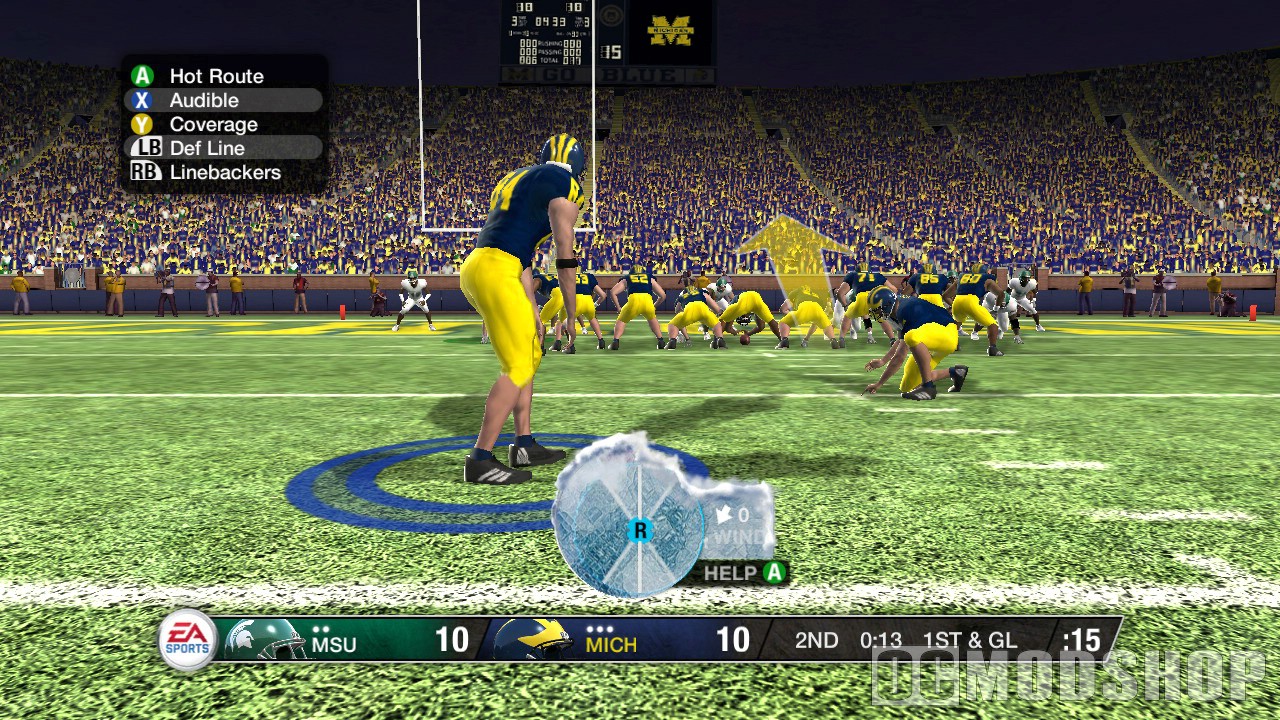
There are a ton of defenses to stop the run: 4-4, 5-2, 46, and so on. 4-4 is your best bet, and there is a LB Fire play there too if you like to blitz. What I have learned as a better way to defend runs is to play 4-3 Cover 1. I still play MLB and yes, that means I play man coverage myself. Seeing your playart will show you who you cover, but just looking at the field you can see how the DB’s line up against the receivers, or whatever, just know who you have to cover. Now instead of lining up to show blitz, I just stay where the LB’s usually stay, which is about 5 yards off the line, and as soon as the snap goes I see what my man is doing. It’s usually the HB, so if he is running I’ll be ready to follow on his cut, but if he’s staying back to block I can drop back to play zone on a vulnerable part of the field. Of course the HB can be in a slip route, so you have to be aware of that, but it’s all a gamble and you should correct your errors in time.