I will be using 3DMark2001SE, 3DMark2003, Quake 3, Unreal Tournament 2003, Serious Sam 2, and Jedi Knight II to benchmark this video card. All of the testing was done with all the eye candy turned on and everything at it’s highest. I will be benchmarking with the resolutions of 1024×768, 1280×1024, and 1600×1200. With Unreal tournament 2003 I used 1280×960 because the benchmark tool did not have 1280×1024 as an option. I used nVidia’s 43.45 detonator drivers and ran all the tests from my system which was just formatted.
Test Bed
- Abit NF7-S Rev 2.0 (review to come)
- 1800+ Athlon XP
- 60GB Seagate Barracuda IV HDD
- 80GB Western Digital HDD
- 1024MB PC3200 Corsair TwinX (review to come)
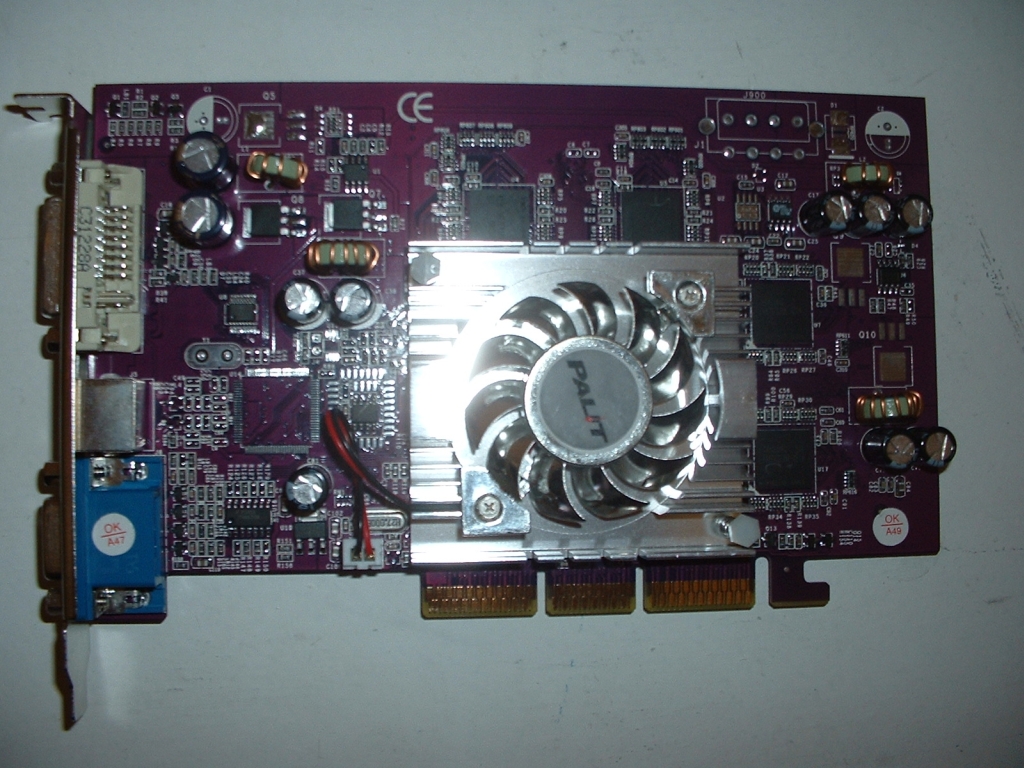
- Palit Daytona GeForceFX 5200 Ultra 128MB
- Koolcase’s Panther
- Zalman 400w APF PSU
- Plextor 40x12x40 CDRW
- Plextor PX-504A DVD+RW (review to come)
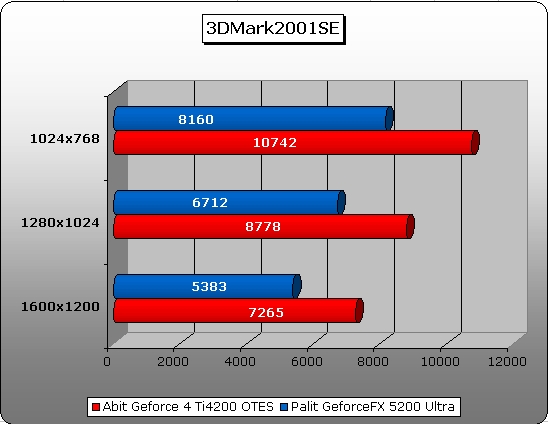
3DMark2001SE is the predecessor to 3DMark03 however I feel it is still a good benchmarking program. The 5200 Ultra did not do as well as the older Ti4200 simply because it was not faster. Even with the new features to the FX line of GeForce cards this budget 5200 Ultra could not keep up. Overall the 3DMark scores put out are not that bad, however they are not good. Even at 1024×768 the 5200 Ultra was unable to break the 10,000 mark while the Ti4200 had no problem.
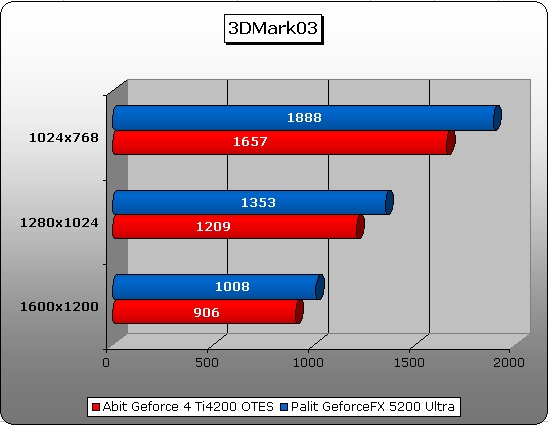
3DMark03 is one of the newest synthetic benchmarking programs from Futuremark and widely used for comparison of video cards. With 3DMark03 to get a good score you will need a really fast DirectX 9 video card. This 5200 Ultra does have DirectX 9 features however it is not super fast like a GeForce FX 5900 would be. In this benchmark the 5200 Ultra was able to outperform the Ti4200 at every resolution. The scores from the 5200 are relatively low but they are still better than the Ti4200. The problem once again with 3DMark03 is that you need a top of the line video card to get a high score.
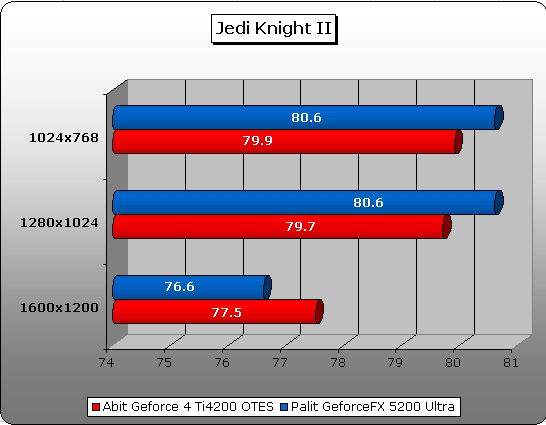
Jedi Knight II is a pretty cool video game based on Star Wars obviously, this is a really good benchmark because it is quite graphic intensive. At 1024×768 and 1280×1024 the 5200 Ulta edged out the Ti4200 by about one FPS. At 1600×1200 the Ti4200 pulled ahead by one FPS which isn’t much of a difference. As you can see in a real world application these two cards are just about equal with the benchmarking and would perform about the same if actually playing the game.