

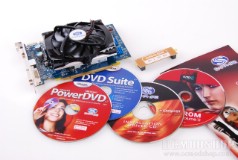
In the box, I received the card itself. Obviously. I also got the Crossfire cable, User Manual, as well as a driver disc, a copy of the PowerDVD Suite and the Ruby Rom with plenty of games to try your new card out with. Jeez, they make sure you get some swag with this one. I remember my first gaming card was an Nvidia GeForce 5500FX, and it didn’t even have the damned driver disc in there. Talk about a crappy day in my house.
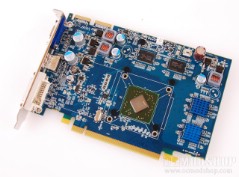
In their latest line of HD video cards, ATI has done away with the old DDR3 RAM and has upgraded to the latest and greatest, DDR4. The end result is a higher clock speed and more powerful gaming performance. The old standard heatsink and fan has been tossed and replaced with a lower profile, quieter version that is seemingly silent even with the side of the case off. The technology powering this affordable beast is a spin-off of the core that debuted in the RV770 architecture when the 4800 Series hit the shelves. The 4670’s architecture, known as RV730, consists of 514 million transistors manufactured on a 55 nanometre process and packed into 146mm squared die. Pardon my french, but that is f$#@in’ small.
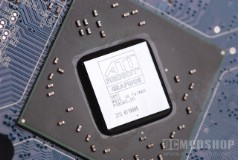
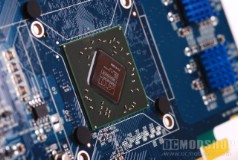
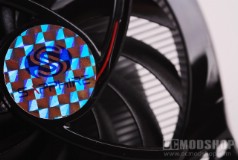
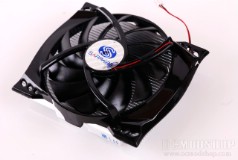
The original RV770 architecture had 956 million transistors manufactured in the same process on the same die. But by using the same process, ATI managed to make the offspring of the RV770 nearly as powerful as its forefather, capable of supporting Shader Model 4.1 and DirectX 10, making it a prime runner for a Vista-equipped machine. With the upgrade from DDR3 to DDR4, the clock speed was increased from 1000Mhz to 1100Mhz. To help keep things cool, Saphire threw on a custom job that is much more efficient and a heck of a lot quieter than the original cooling setup.
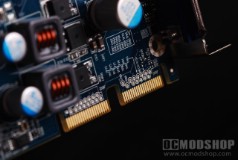
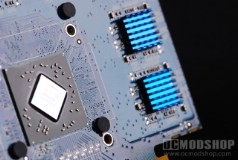
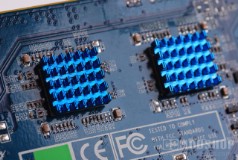
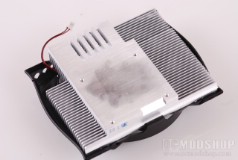
The layout of the card is pretty standard. On the top of the card are two Crossfire connectors, meaning that you can easily upgrade your gaming performance by using any ATI video card within the same chipset range. The card has 512MB of Hynix HY5FS123345A DDR4 memory. There are four chips on the front of the card, and four memory chips on the back of the card, for a total of eight. Six of the memory chips have anodized blue heatsinks applied to them, and the two above the GPU are not, due to heatsink clearance issues. Hopefully that means that these RAM chips don’t get hot enough to warrant a heatsink. The heatsink is secured with four standard screws that are spring-loaded to provide proper pressure.
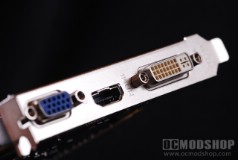
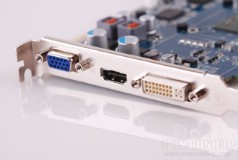
The back of the video card has more than enough standard connections to keep you happy. There is one of each type of video port: a standard VGA connector, DVI connector, and HDMI connector. Previous ATI-based cards support audio over the DVI port, but you had to use a large DVI-to-HDMI adapter to support it. With the inclusion of a true HDMI port, you can just plug this baby directly t your TV and you’re good to go.

Now, I’m not one to applaud video cards unless they come with a free lap dance, but for under $90.00, I am pretty impressed with the goodies this one offers. Designed to work with Vista, PCIe 2.0 compatible, and the latest shader support with plenty of RAM to back it up? Not to mention an increased clock speed and custom cooling? I’m certainly willing to give ATI the benefit of the doubt long enough to test it. And test it I shall.

1 comment
i installed this card and it took over the mother board sound drivers (Realtek AC97)now no sound. Control says sound is on digital plug in rear i have no plug for that to my speakers. each time i reinstall the card same thing.
Comments are closed.