
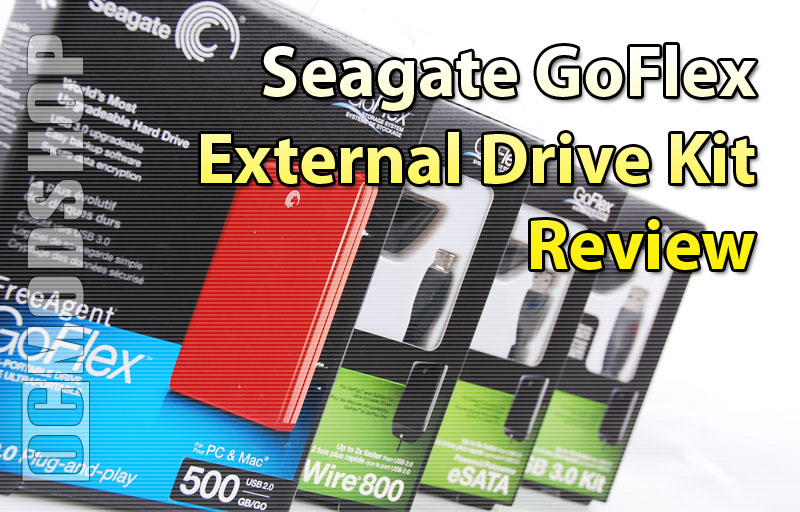
We not only tested the drive with several PCs, but with media appliances such as the Patriot Box Office, Playstation 3, and Xbox 360. We had no problems at all having the drive instantly recognized using the USB 2.0 or USB 3.0 interfaces. Because the GoFlex is so portable, we brought this along with us (along with the PBO) on overnight stays so that we could watch our favorite TV shows rather than being stuck with crappy hotel cable.
We have discovered through many test iterations that USB device performance greatly depends on the chipset used. We have found that the NEC chips used on all current USB 3.0 interfaces deliver the best performance for USB 2.0 drives, so the USB 2.0 devices were tested on this. Just to confirm, we did test the USB 2.0 cable with the each motherboard’s integrated USB 2.0 chipset, which edified our assumption. The USB 2.0 drive performance chart listed uses a NEC USB 3.0 host adapter.
 |
 |
 |
||||||||||||
|
|
|
||||||||||||
 |
|
 |
We did have a few issues getting the eSATA and Firewire 800 adapters to work. It is not specified on the box, but the eSATA adapter requires a powered eSATA port, which most PCs and laptops do not have. We tried several different computers and laptops in our lab before we found one that would power the drive. Other computers would show the drive in BIOS, but somehow the OS could not read the drive. The Firewire 800 adapter uses a square “beta” connector, which is completely incompatible with Firewire 400’s “alpha” connector, which is included on many PCs. Since this interface is mostly found on Mac computers, we were unable to test this adapter. Based on testing the other interfaces, we assume that the Firewire 800 bandwidth is sufficient enough to deliver similar bandwidth of USB 3.0 or eSATA, which is about 60MB/second.
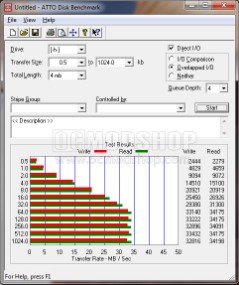
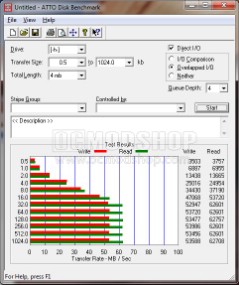
USB 2.0 tops out at 34MB/s. USB 3.0 tops out at 62MB/s
Each device’s throughput was pretty much as you expect it would be. The USB 2.0 interface is easily saturated by the laptop drive, and delivers around 32 megabytes a second. The USB 3.0 and eSATA interfaces show a greater bandwidth improvement, but the USB 3.0 version has some odd dips among the drive head as it goes across the platter. This could be due to the interface controller or drive’s firmware, and the drive peaked out at 59MB/second. The eSATA cable shows a more natural progression of the drive head, and a slightly faster transfer rate of 65 MB per second, which is about as much as one can expect from a 5200rpm 2.5″ hard disk drive.
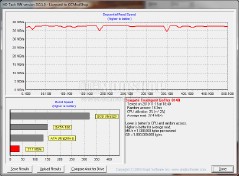
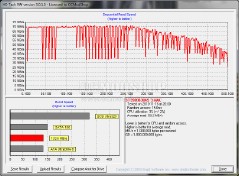
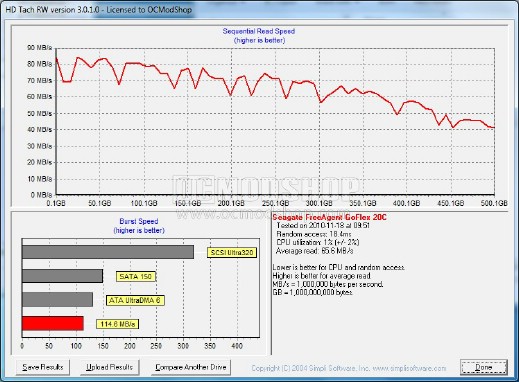
HDTach shows USB 2.0, USB 3.0, and eSATA performance
So is GoFlex worth it? Read our verdict on the next page…