

Asus’ 6800GT-based V9999 would have rendering and video problems with the stock heatsink. Although it was copper, there was not enough of it to really make a difference. A thermal probe was used to gather GPU core temperature, as the Asus V9999 has the temperature sensor disabled (or at least cannot be identified by nVidia’s OEM drivers). Our benchmark applications consist of 3dMark 2001 SE, 3dMark 2005 and AquaMark. We ran the card throughout the entire test sequence and recorded the highest sustained temperature, measured in Celcius. We were able to overclock our 6800 GT chip from the stock 350 MHz to 380 without a problem, at the cost of higher temperatures. Our test bed consisted of the following:
- Asus V9999 (Geforce 6800GT AGP)
- AMD Athlon 64 X2 3800+
- Chaintech Zenith VNF4 Ultra motherboard
- Thermax Tech thermal compound
- SilverStone LC10 HTPC case
- Lian Li V1000 mid-tower case
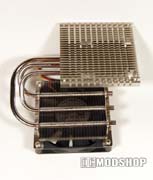
The V1-Ultra performed very well against Asus’ stock 6800 GT cooler, taming the GPU from a dangerous 84 degrees to a much safer 61 degrees, which provides some headroom for overclocking. The V-1 Ultra was far less noisy than the high-pitched hurricane produced from the OEM fan.
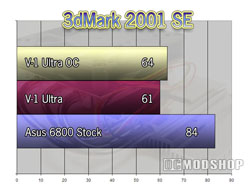
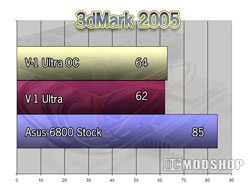
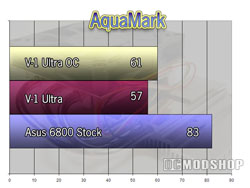
Thermalright has led the way for high performance, and the V1-Ultra VGA cooler does continue this performance trend. Unfortunately, it is difficult to install and will not fit in all cases. Other heatsink manufacturers, namely Zalman and Arctic Cooling, provide similar performance with vastly superior installation and longevity. The Thermalright V1-Ultra VGA cooler does perform well, but is hard to justify the high price for all its drawbacks.

 |
 |
 |
|||||||||||||||||||||||||||
|
|
|
|||||||||||||||||||||||||||
 |
|
 |
|||||||||||||||||||||||||||


