

A pixel is a single point of color data in an image (short for “picture element”). Some pixels may be colored red, and others green or blue, but there are no such things as red or green pixels on the sensors. A pixel is a complete pixel only when the red, green and blue values for that unique location are known.
Digital camera makers all lie about megapixels. This is fine, because all legitimate camera makers lie in exactly the same way, which makes it easy to compare cameras from different makers.
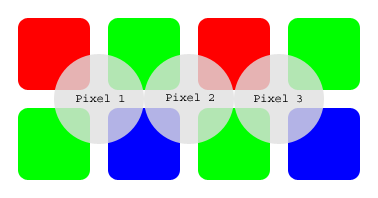
All digital cameras (except for the $30,000 ones that have three seperate CCDs) have only a third of their claimed pixels. Instead of having seperate R, G, and B sensors for each pixel location, they have a single monochrome CCD with each pixel location covered by a color filter array (CFA). The alternative RGB matrix follows the Bayer patterns (50% green, 25% red, and 25% blue, hence called RGBG or GRBG). Bayer interpolatoin in named for Kodak scientist Bryce Bayer who invented this in 1976.
Bryce Bayer’s patent called the green photosensors luminance-sensitive elements and the red and blue ones chrominance-sensitive elements. He used twice as many green elements as red or blue to mimic the human eye’s greater resolving power with green light. These elements are referred to as sensor elements, pixel sensors, or simply pixels; sample values sensed by them, after interpolation, become image pixels.
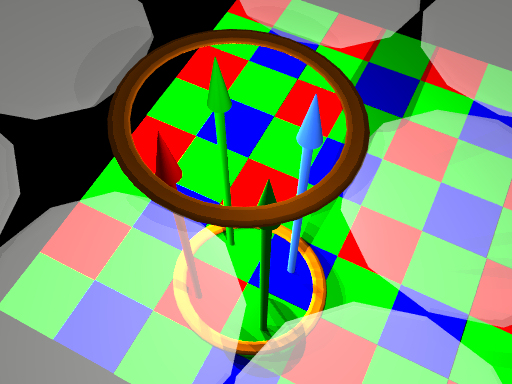
The raw output of Bayer-filter cameras is referred to as a Bayer pattern image. Since each pixel is filtered to record only one of three colors, two-thirds of the color data is missing from each. To obtain a full-color image, various demosaicing algorithms can be used to interpolate a set of complete red, green, and blue values for each point.
Different algorithms requiring various amounts of computing power result in varying-quality final images. This can be done in-camera, producing a JPEG or TIFF image, or outside the camera using the raw data directly from the sensor.
Remember that before this interpolation that there is physically only a single monochrome pixel on the sensor. The algorithm creates values for each of the three colors at every location by averaging (interpolating) each set of partial R, G, and B vlues to create values at each location.
Different camera manufacturers vary the algorithms, which is why some makers have higher percieved sharpness or color saturation.