

7. nVidia NV1 (Diamond Edge 3d)
When the Diamond Edge 3d debuted in 1996, it appeared to be one of the most innovative products on the planet. It incorporated a new powerful 3d chip from a newcomer nobody had ever heard about (nVidia). This card not only had 3d technology superior to 3dfx at the time, but also functioned as a soundcard, MIDI synthesizer, and gamepad contoller all at once (at the time each of these functions were handled on a seperate card). The card would even use standard Sega Saturn controllers direclty on the card, and many reviewers dubbed this a “console on a card”.
The boards are PCI-based and sport a digital gameport for precise joystick control, as well as two video gameports that allow specialized, multi-player versions of Sega Saturn titles, such as the arcade hit Virtua Fighter Remix, to be played on Windows 95 PCs.
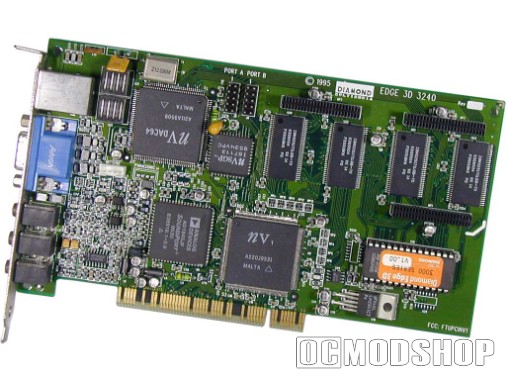
With Diamond Edge 3D accelerators, game developers could support resolutions as high as 1024×768 (The Voodoo2 could only do this in SLI mode) with 65,000 colors while still achieving fast, realistic action.The Diamond Edge 3D delivered fast 2D Windows acceleration at resolutions as high as 1280×1024, color depths to 1 billion and refresh rates of up to 120Hz.
The 3D functions of the Diamond Edge 3D were designed specifically for the consumer multimedia market where the primary application was interactive entertainment. Traditionally, 3D graphics were created by drawing large numbers of successive polygons using the CPU, which resulted in a tradeoff between detailed graphics and speed of interactivity. With the Diamond Edge 3D, the hardware engine accelerated polygon rendering of real-time, texture-mapped 3D images at the highest possible frame rates without unduly slowing the CPU. In addition, the Diamond Edge 3D could create realistic 3D graphics by using nine control points to create a curved surface, called quadratic texture mapping (QTM).
Unfortunately, there were several things that went wrong. The card was designed to work with Windows 95, which had just come on the market and was still struggling with industry acceptance. It was one of the first PCI-based sound cards, and the only all-in-one product. At this time, Direct3d had just been introduced, and the card did not work with the new industry standard. There were only a few games that worked natively with the card, and they were all ports of Sega Saturn titles (Virtua Fighter 3d and Panzer Dragoon).
The NV1 was just too ahead of its time, and quickly became a useless piece of $300 silicon.
6. IBM OS/2
OS/2 was originally a joint venture between Microsoft and IBM, but the project fell through. Microsoft took its technology and developed Windows NT, and IBM developed OS/2. At the time, DOS (and Windows 3.1) was the major operating system, and OS/2 was superior in nearly every way (except industry acceptance).
This great idea was not marketed properly, and there was hardly any native software available for the new operating system. While it had good support for DOS applications, it did not work with most Windows software, which was winning most of the desktop market despite its stability issues.
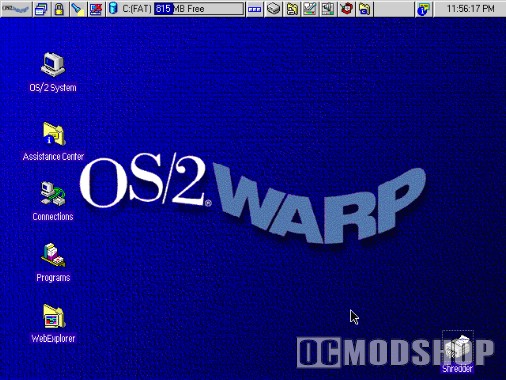
OS/2 had a loyal group of folowers, and the operating system went through 3 revisions, with OS/2 Warp (version 4) competing directly with Windows 95. OS/2 was technically superior to Windows 95 in that it did not rely on DOS, and had more technology similar with Windows 2000. There just wasn’t enough support for OS/2, and it was obliterated by Windows 95 and 98 in the latter half of the 1990s.
5. NeXT Computer
 Steve Jobs resigned from Apple back in 1985 to start a new company called NeXT. The NeXT computer would be the most affordable UNIX super computer of its time. Running a Motorola 33-MHz 68030 processor, enclosed in a black case, there was no doubt this was the hottest and most powerful computer of its time. However at $6,000 apiece, and with no software that would run on the machine, it was really a $6,000 brick. Roughly 50,000 were ever produced. The company had spent over $250 million producing them. Although a huge disaster, this was also the computer that Tim Berners-Lee would later use to create the World Wide Web, and Steve Jobs would use as the core principles behind the new OS X.
4. 3dfx Voodoo 3
The original Voodoo graphics board (and its subsequent Voodoo 2) put 3dfx on the map as the pioneers of the PC graphics industry we know today. The original products were extremely innovative, priced well, and revitalized the PC industry as a serious gaming platform. 3dfx had a few stumbles with some of its followup products (the Voodoo Banshee and Voodoo Rush), but competitors started to catch up and delivered products that addressed the shortcomings of 3dfx’s offerings.
3dfx executed a major strategy change just prior to the launch of Voodoo3 by purchasing STB Technologies, which was one of the larger graphics card manufacturers at the time; the intent was for 3dfx to start manufacturing, marketing, and selling its own graphics cards, rather than functioning only as an OEM supplier. This alienated 3dfx’s OEM customers, all of whom chose to switch, and source their 3D chips from other manufacturers, rather than do business with a company who was their direct competitor at retail. With the purchase of STB 3dfx created a line of Velocity boards (a STB brand) that used crippled Voodoo3 chips, as a product to target the low-end market. The chip came with only a single functional TMU, making it similar to a Voodoo Banshee.
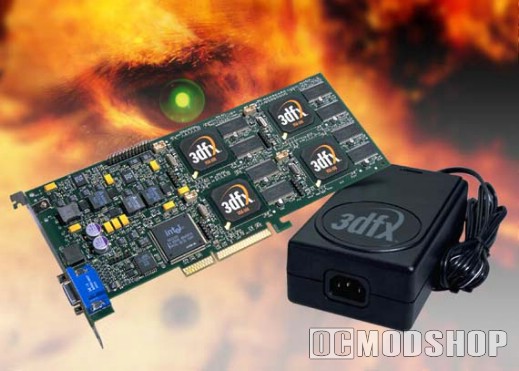
The Voodoo 3 was the beginning of the end for 3dfx. The Voodoo 3 chip was basically reused in parallel to make more powerful cards, so the Voodoo 4 and Voodoo 5 cards were really just overclocked Voodoo 3s with multiple chips running in parallel.
This strategy change was one of the main contributors to 3dfx’s downfall; the company did not sell any Voodoo 4 or 5 chips to third party manufacturers. The company was also presumably distracted by the need to focus both on the retail market as well as the OEM market, selling cards to computer manufacturers. The latter was hard-won business, but provided a steady income to fund subsequent development. A significant requirement of the OEM business was the ability to consistently produce new products on the six month product refresh cycle the computer manufacturers required; 3dfx did not have the methodology nor the mindset to focus on this business model. In the end, 3dfx opted to focus on the retail business using its own manufactured and branded products.
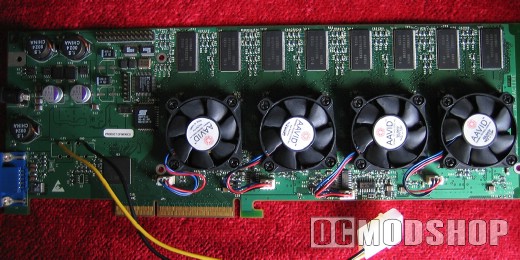
The Voodoo 3 was heavily hyped as the graphics card that would make 3dfx the undisputed leader but the actual product was below expectations. Though it was still the fastest by a small margin, the Voodoo 3 lacked 32-bit color and large texture support, features that fledging rival NVIDIA included in the competing Riva TNT2. While at the time, few games supported large textures and 32-bit color, and those that did generally were too demanding to be run at playable framerates, the features “32-bit color support” and “2048×2048 textures” were much more impressive on paper than 16-bit color and 256×256 texture support. The Voodoo3 sold relatively well, but was disappointing compared to the first two models and 3dfx gave up the market leadership to NVIDIA. Ironically, 3dfx’s actions in the STB buyout had turned a lot of its former board partners into NVIDIA-exclusive suppliers (ATI did not start outsourcing its products until 2002), giving NVIDIA a major advantage in the marketplace.
As 3dfx attempted to counter the TNT2 threat, they were caught off guard by NVIDIA’s GeForce 256, which took the performance crown by a wide margin, making it superior to the Voodoo 3 in all respects. 3dfx missed a product cycle as they attempted to match the GeForce.

1 comment
Comments are closed.