

3. Bigfoor Killer Network Interface Card
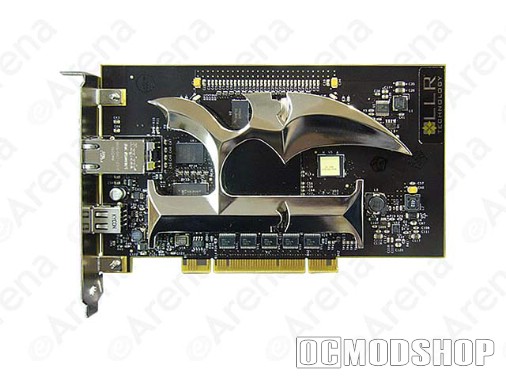
The Bigfoot Killer NIC is another example of an innovative product, but the sad fact is that it just doesn’t work for its intended purpose.
The card has more processing power than any other network card, and even runs a dedicated Linux kernel (complete with its own bash prompt used for configuration). This dedicated network coproecessor (in theory) takes on all network tasks, freeing up your main processor for other tasks. This card is marketing heavily to PC gamers, promising higher framerates and lower lag.
While this sounds great on paper, the truth is this expensive card just doesn’t work. For onling gaming, your speed is mostly limited by the speed of your Internet connection (and all the routing in-between), so there is very little the network card can do. This card is rather expensive, and offers virtually no benefit.
2. Waffer Aircon PAC 400
Waffer’s PC Aircon is one of the most useless computer cooling products ever invented. The Waffer PC AirCon is essentially a small air conditioner, but instead of using a compressor to change the phase of a coolant, the unit uses Peltier technology to introduce cool air into your PCs chassis.
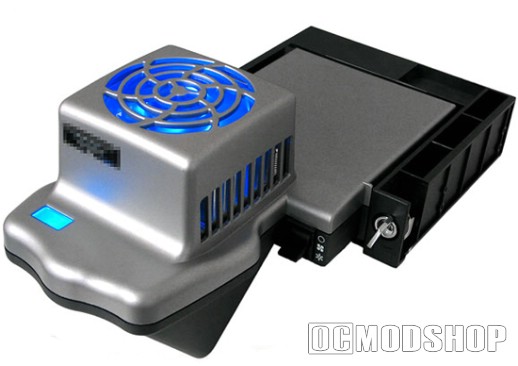
Not only did the unit suck up hundreds of watts of power (virtually killing an average power supply), but it only marginally cooled the air, and had absolutely no impact on a case’s internal temperature. In addition to its utter ineffectiveness, the unit also took up 3 5.25″ drive bays, and was extremely loud.
1. IBM DeskStar 75GXP Hard Drive
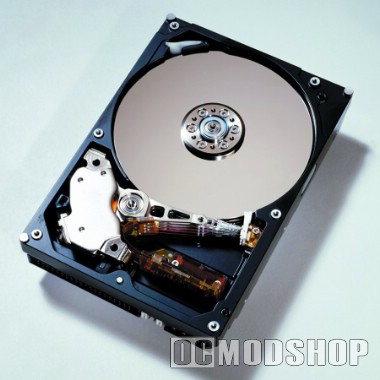
The IBM Deskstar 75GXP, and several other models made around the same time, became infamous for their reportedly high failure rates. This led to the drives being colloquially referred to as “Deathstars”. The sumptoms of this sudden death is a regular “scratch-click, scrath-click” noise coming from the hard disk. Once it starts the drive will frequently not appear in the BIOS, and the fault is known as the “click of death”.
The cause of the failure are usually the Giant Magneto Resistive read/write heads used by the drive, and the way they interact with the data stored on the hard disk. Internal problems within the disk cause contamination, which in turn produces the infamouse “click of death”. A further problem noticed with the IBM Deskstar line is the corruption of data contained on one of the integrated circuits on the controller board.
Despite failures being reported within the manufacturer warranty period (3 years), a class-action lawsuit is underway to claim refunds from Hitachi for all affected drives. The decision of this lawsuit will provide the best indication as to whether there is actually a manufacturer fault with these hard drive models.
IBM eventually recognized some of the fundamental problems with its drives, namely possible data corruption due to a problem with SMART background operations, and application of wear levelling to avoid the heads hovering too long over the same area. IBM released a microcode update to address the issues, but too little too late.
The drives were also known for commonly head crashing, possibly due to the combination of two relatively new technologies (at the time): GMR (Giant magnetroresistance) heads and glass platters. GMR is a quantum mechanical effect observed in thin film structures composed of alternating ferromagnetic and nonmagnetic metal layers.
IBM subsequently sold its hard drive division to Hitachi in 2002.
Research for some of the items in this article was obtained from Wikipedia and PC World (http://www.pcworld.com/article/id,125772-page,1/article.html)

1 comment
Comments are closed.