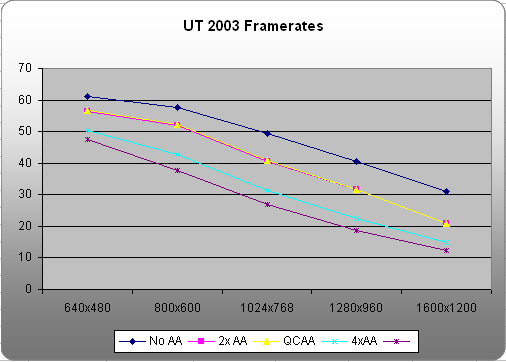
So how does the card compare at different resolutions? Is this card powerful enough to play today’s games AND have good visuals? To test, we ran Unreal Tournament 2003 through different resolutions and anti-aliasing settings. The results are in the chart below. The results suggest that the game is pretty CPU limited at 640×480, and that QuinCunx anti-aliasing (nVidia’s pseudo-4X AA model) performs as well as the traditional 2X AA setting. If you want to see great visuals without the framerate cost, then QuinCunx(couldn’t they come up with a better name than that?) is your best bet.
If you are buying this card to play the anticipated Doom 3 or Half-Life 2, then you had best save for the GeForce FX 5900 or ATI 9800. The card does have support for DirectX9 visuals, but cannot render them quickly enough to be playable. The Albatron FX 5200 Ultra has a lot of power for the price, and will compete nicely at your local LAN party.
Conclusion
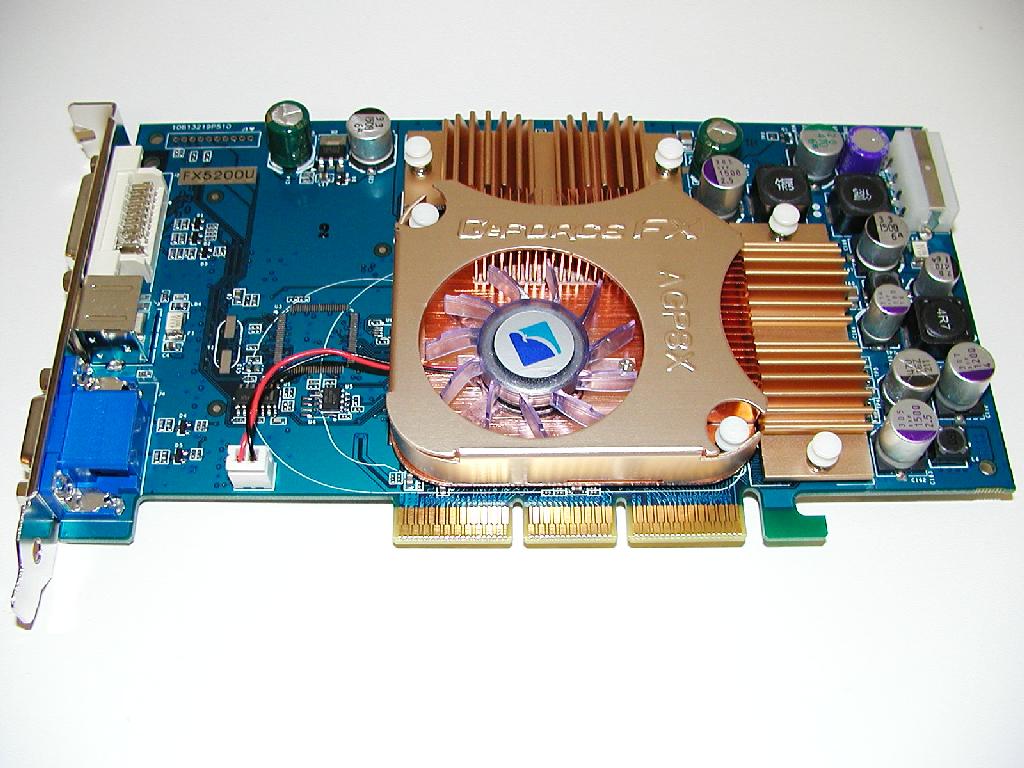
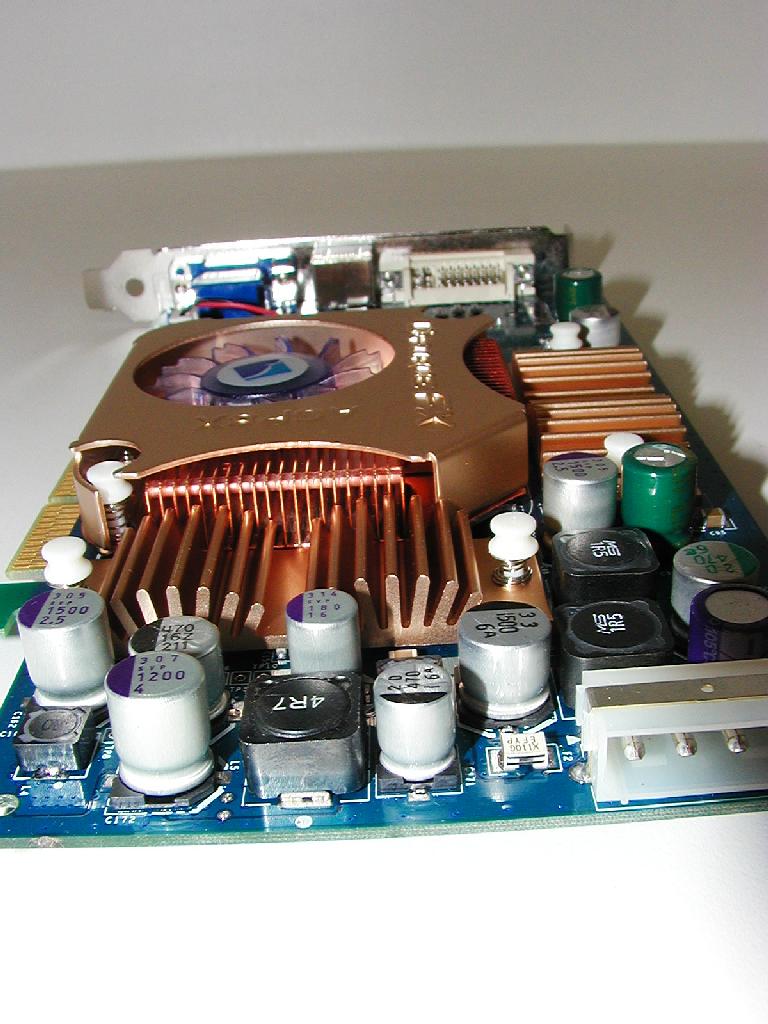
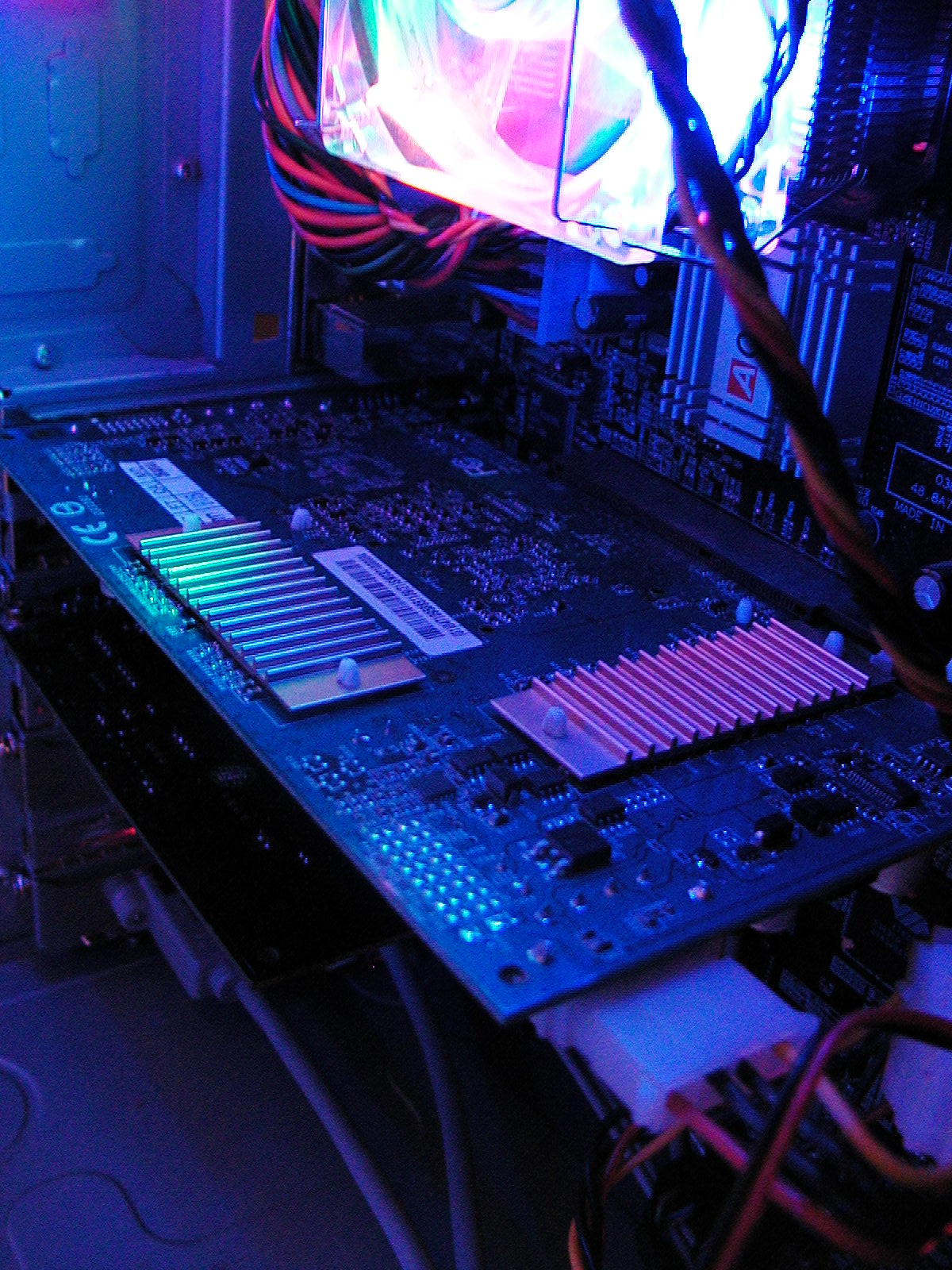
Albatron has done the best it can with the NV34 chipset: the board is the highest quality you will find for an FX5200 card. The card does not break any framerate records, but this is a budget card, and is definitely more powerful than what $100 would buy last year. It has enough power to play today’s games adequately, but will probably require an upgrade once DirectX 9 game hit the shelves. Any consumer looking for an FX5200 based card cannot do much better than the Albatron FX5200 Ultra (if only video capture support was included). This card is competing against the many other FX 5200 cards in the market, and is one of the best quality builds in its class, easily landing a 9.5 out of 10 and the OCmodshop Seal of Approval.
Pros

- Good stock cooling
- Performs better than other FX5200 cards
- Excellent build and component quality
- Quiet fan
- Competitively priced
Cons
- No video capture support