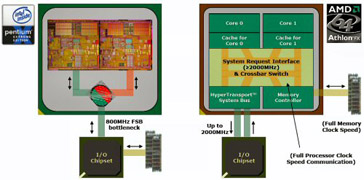
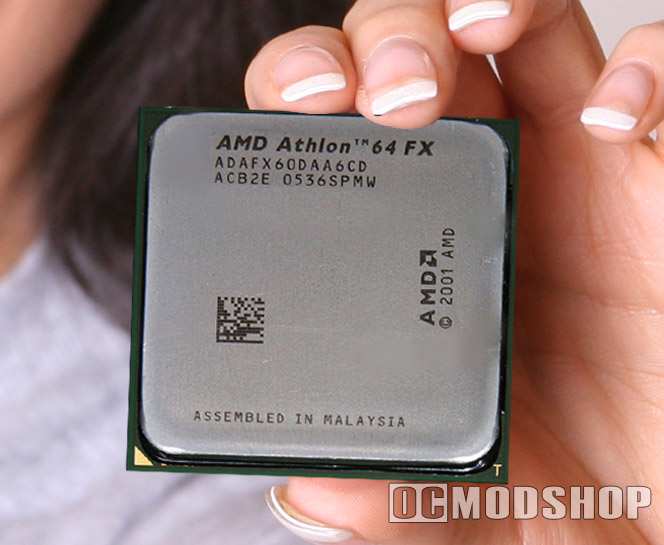
As can be seen in the chart below, the FX-60 shares many of the same features of the 4800+ and FX-57, but there are a few differences. Because the 4800+ has two cores, there is double the total amount of cache on-die. The die is actually quite large at 199mm2, which is only a little larger than the older Athlon 64s using .13 micron process.
Nothing about the memory controller has changed. It is still 128 bits wide and works with 400Mhz DDR memory, for a maximum of 6.5GB per second. HyperTransport is still 1GHz, providing 8GB of bandwidth to the bus. The transistor count is upgraded from the FX-57 at 233.2 million transistors. The FX-60 is 200MHz faster than the 4800+ but with a lower thermal barrier, so any heatsink that works on a 4800+ should also be adequate for the FX-60.
 |
 |
 |
||||||||||||||||||||||||||||||||||||||||||||||||||||||||||||||||||||||||||||||||||||||||
|
|
|
||||||||||||||||||||||||||||||||||||||||||||||||||||||||||||||||||||||||||||||||||||||||
 |
|
 |
||||||||||||||||||||||||||||||||||||||||||||||||||||||||||||||||||||||||||||||||||||||||
Power Consumption:
AMD reduced the power consumption, and thus the thermal power of the FX-60, which allows it to reach faster clock speeds at a lower core temperature. Many new motherboards are not designed for any higher power, so AMD may have been forced to reduce power requirements to push the current manufacturing process any further. This may be another reason for the upcoming form factor, as the newer AMD chips are rumored to have a thermal power of 125W. Cool’n’Quiet helps by reducing the voltage to 1.1 and operating frequency to 1.2GHz, reducing the thermal power to 47W.