
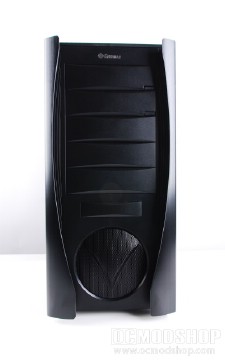
The Enermax Phoenix Neo gaming case is black, just like many other gaming cases today. The main part of the chassis is steel that has been painted black, and the drive bay covers are black plastic. The front bezel is flanked by interesting flares, which are made from thick aluminum which has been anodized black. The front bezel has fve exposed 5.25″ drive bays, and has two stealthed optical faceplates. The optical faceplates flip down and use straight springs rather than hinge springs, and in my opinion just looks sloppy. Every optical drive faceplate should have hinged springs… period. There is a single 3.5″ faceplate, and below that is a circular hole covered with black mesh for the inside 120mm intake fan.
The left side of the case is one of the more noticable features, as it has a big honkin’ 250mm fan integrated into it. The fan is covered with black mesh, and has a contoured shape which looks like a phoenix, including a blue “eye”. To the right of the fan are external controls that allow you to adjust how this monster fan operates. There is a variable knob that allows you to adjust the fan speed from 600 to 900rpm. Below that is a switch that toggles which way the fan spins, thereby making it an intake or exhaust fan. Below that is a pushbutton that toggles the fan’s integrated blue LEDs.
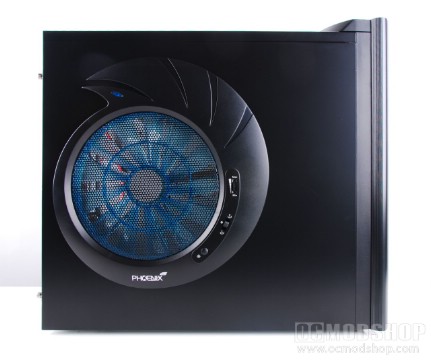
Very noticable and stylish 250mm side fan!
The top of the case is featureless except for the very front, which has all of the external ports many gamers look for. This front panel has an illuminated power button, four USB ports, an eSATA port, microphone and headphone jacks, hard drive activity light, and a reset switch. The power button glows blue when the PC is powered on to fit the rest of this case’s theme.
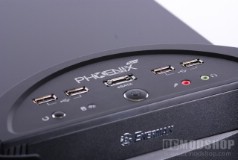
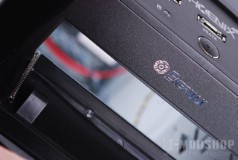
The front panel and straight-springed faceplate
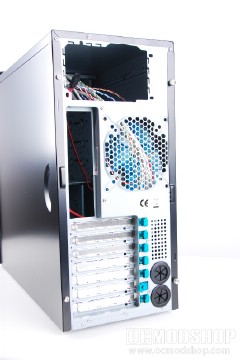
The back of the case is pretty standard fare. There is a cut area for a standard power supply and motherboard I/O panel. Above the IO panel is a stamped grate for either a 92mm or 120mm fan. Below this are seven standard slot covers, each of which have a turquoise tooless fastener. Above these slots are two rubber-grommeted holes that can acommodate tubes for an external watercooling unit.
The next page we take a look at the innards…