
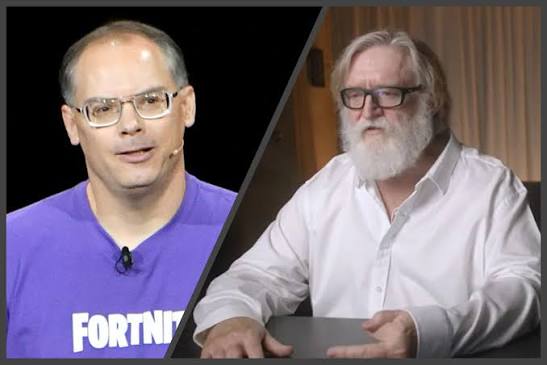
If there’s one issue that sits at the center of this rivalry, it’s the famous 30% platform fee.
For many years, Steam’s standard revenue split meant that Valve received 30% of a game’s sales, while the developer or publisher received the remaining 70%, before other costs and contractual arrangements.
Now, from Valve’s perspective, Steam provides a tremendous amount of value. It handles distribution, payments, downloads, updates, community features, customer infrastructure, and access to a massive audience.
For developers, being on Steam can mean reaching millions of potential customers. But Tim Sweeney believes that 30% is too much. His argument is that digital distribution is not the same as selling physical games in a retail store.
There’s no physical inventory, no warehouse full of boxes, and no traditional retail distribution network. Digital distribution has become much cheaper and more efficient.
So why should a storefront continue collecting such a large percentage? Sweeney has argued that the costs of running a digital storefront don’t justify a 30% commission, particularly for smaller developers.
And he has a point worth discussing. A small independent studio might spend years creating a game. It then has to pay for marketing, development tools, salaries, contractors, and other expenses. Giving up 30% of revenue to a storefront can make an already difficult business even harder.
But here’s where things get interesting.
Valve actually changed its revenue structure in 2018. For games earning more than $10 million, Valve reduced its share to 25%. For games earning more than $50 million, its share drops to 20%. However, those thresholds mean smaller developers generally remain on the standard 70/30 split.
And this is something Sweeney strongly criticized.
In fact, he wasn’t particularly polite about it.
In emails revealed through legal proceedings in 2024, Sweeney criticized Valve’s decision to offer better terms to the most successful developers. He argued that Valve was effectively giving special treatment to the companies that needed the discount the least.
He even wrote:
“Why not give ALL developers a better deal?”
And in another message, he referred to Valve’s leadership as “you assholes.” Well, that’s certainly one way to open a business negotiation. Imagine emailing your competition and starting with that. I’m not sure that would go over particularly well in most corporate environments.
Valve’s COO Scott Lynch reportedly forwarded the message internally with a simple response:
“You mad bro?”
And that pretty much tells you how friendly this relationship was becoming. But the 30% commission was only the beginning.