

If you’re not concerned about your boss snooping on you, then you should be. 9 out of 10 employers snoop on their employee’s electronic activity. Many have used a computer’s cookies, history, and browsing cache to justify employee termination. In today’s society of expendable employees, it is wise to always contain your worktime browsing’s evidence to your own personal property. This will not stop a determined employer if they really want to fire you, but weeding through traffic logs takes a lot of time and research. When looking to can somebody, the easiest first place to look is the files stored on the employee’s PC first.
Because of this, it is helpful to keep all of your browsing cache, history, favorites, and other browsing collateral off of your work PC, but this device offers no IE support. Internet Explorer is heavily integrated into Windows, and thus there is not a standalone U3 version of it. Ceedo would allow you to store all your IE settings, cache, history, and files to the drive, but U3 apparently does not support this. You can download a U3 version of Mozilla Firefox, which stores all temporary files on the U3 drive. Browsing on the drive is a little slower, but if you’re using Firefox then you’re already used to a degraded browsing experience… ;)
 Verbatim Store’n’Go 4GB HDD |
 Typical laptop HDD |
 Verbatim’s U3 2GB |
 SanDisk Cruzer 1GB |
 External 120GB USB HDD |
|
Testing
We ran tests on a Dell Inspiron 8500 laptop and on a modern desktop PC.
The contenders
|
Dell Inspiron
|
Desktop rig
|
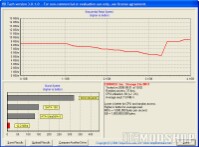
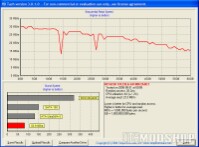
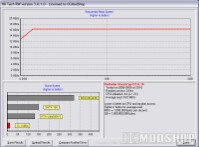
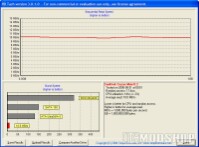
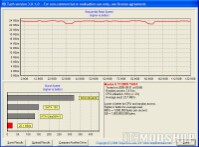
The flash memory version of the Store’n’Go is much speedier than its cousin (the Store’n’Go 4GB USB HDD): more than twice the read and write speed. There are also a lot more U3 applications currently available, and there are rumors of a program that will let you package up nearly any program for U3. I can’t wait for the U3 version of Photoshop: but untill then, ACDSee U3 will have to do. Verbatim’s U3 Store’n’Go flash memory is faster than any other portable flash device tested (around 13MB / second). It easily beats the microDrive solution (5 MB/sec), and has a 3MB/sec lead on SanDisk’s Cruzer. Of course, we compared the drive’s performance with an external USB HDD, which achieved around 25MB/second. Curiously, when we plugged the U3 device into our desktop unit, it achieved 16MB / second. Clearly the USB interface is also a factor in the device’s performance, not just raw flash memory speed.

1 comment
How do you erase data on flash drive to
upload new data please.
Comments are closed.