
We’ve tested a few gaming headsets and even audiophile equipment, and one thing we’ve noticed with gaming headsets is the lack of bass. One would think that kicking bass would be a prerequisite for a gaming headset, as there are usually booming explosions and other loud noises that the set must reproduce.
We tested the bass frequency response of the Logitech G930 against the GameCom 777 5.1 (reviewed here)and a TekNmotion PulseWave (reviewed here). We also threw in two entry-level audiophile headphones: the JBL Reference 410 Headphones (check prices) and Bose In-Ear Headphones (check prices) to see how they perform in comparison.
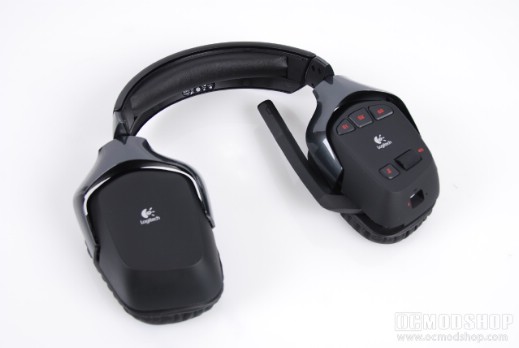
Other gaming headsets performed adequately for their price range, but the G930 appeared to have slightly better quality. The bass is good, but just not as punchy as I think a gaming headset should have. All of the headphones’ volumes began to drop at around 30Hz, and all had similar signal strength at 15Khz and higher. The other gaming headphones showed their true colors when mixing bass frequencies, as obvious clipping occurred, but not in the case of the G930. The Logitech headphones did not produce any crackling or other clipping when mixing bass frequencies as the other gaming headsets in this lineup, and each individual sine wave could be heard, which is similar to the audiophile pairs included in this comparison.
The only complaints I have about the sound is that the bass could be a lot better. It isn’t as punchy as an audiophile set, which can easily cope with the explosions and gunfire found in many PC gaming titles. When the G930’s bass gets too loud, then it can begin to distort. Most of the time this doesn’t happen, but there are a few sequences in Left 4 Dead that has such overwhelming bass that it sounds like major distortion, and I have to take the headset off.
Some expensive products either have amazing quality or lots of features, but rarely both. I’m actually surprised that the G930 sounds as good as it does, as most of the price of this set are in the features and wireless technology.
| 11Hz | 15Hz | 20Hz | 25Hz | 30Hz | 50Hz | notes | |
| GameComm 777 | – | very weak | weak | weak | strong | very strong | severely loses volume at 30Hz, bad clipping and pulsing when mixing bass frequencies. |
| JBL Reference 410 | – | weak | strong | strong | very strong | very strong | Accurate bass sine wave reproduction. No clipping |
| Bose Earbuds | – | very weak | weak | weak | strong | very strong | Loses volume severely at 30Hz. No bass clipping |
| TekNmotion Pulsewave | very very weak | very weak | strong | strong | very strong | very strong | sounds like banging on a drum rather than sine waves. Can actually hear frequencies as low as 3Hz |
| Logitech G930 | – | weak | weak | strong | very strong | very strong | loses volume around 20Hz, but no clipping when mixing bass frequencies. |
We also tested the positional sound accuracy of the headphones. Bear in mind that directional audio perception is very subjective, and in my opinion directional audio from a headphone isn’t very obvious. It “kinda” sounds like something coming from the left or right, but most of the time things just sound “ethereal” and not truly directional. Some games are better than others. Left 4 Dead is really horrible at this, while the audio from the Call of Duty series is more believable. We also tested with several BluRay movies, and 5.1 DVD audio tracks. Keeping within headphone directional audio comparisons, the G930 does a very good job.
Now we weigh all the pros and cons and render a verdict on the next page…