

Testing the board’s maximum HTT clock at a 1:1 memory to CPU ratio, I found the board to max out at 271MHz. This was attained while dropping the CPU multiplier to x5, the HTT multiplier to x3, and relaxing the timings on the Crucial Ballistix Tracer PC4000 to 3.0-5-5-10. Above this speed the system refused to post correctly. The speed attained by the Asus A8N-SLI Deluxe is nothing to scoff about, however with the MSI K8N Neo2 Platinum a maximum speed of 294MHz was attained using the same hardware and settings.
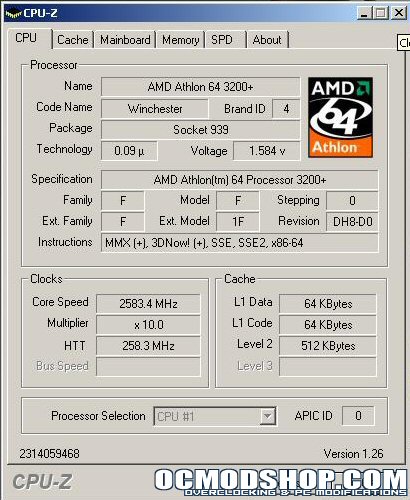
Over the course of several weeks of testing and tweaking a final overclock was attained with the following settings and using a Thermalright XP-90 heatsink: 258MHz x 10 (2.5-3-3-9), 1:1 memory to CPU ratio, x4 HTT. At these settings the system has run rock solid stable through hours of gamming, CAD work, and audio/video encoding.
Issues
During testing several issues or minor annoyances were encountered. For one after about a week the active heatsink on the nForce4 chipset began to make an irritating grinding noise. Most likely due to the fact that the fan is close to failing and the fan blades are hitting the interior of the heatsink. DC fans are not always the most reliable and long life product on the market, but I have an issue with anything starting to fail within the first week of use. Second, the memory ratios indicated in the BIOS are either implemented incorrectly or just don’t work. Several attempts to make the board run at a ratio other than 1:1 memory to CPU ended up with the board automatically turning the dynamic overclocking settings on and running the memory well below the 200MHz mark. Thirdly, it is hard not to re-examine the issue of poor SATA performance and hope that the issue is related to software and that the chipset drivers and motherboard BIOS are still in their infancy.
Note: Asus just recently released a new BIOS version 1003.010 with some fixes. Unfortunately full testing couldn’t be completed before this article was posted. However, keep an eye on our forums for any updates. The Major changes listed are: Voltage support for 90nm chips, CPU fan control fix and added 64bit Microsoft OS support. Minor changes were not listed, but as many enthusiasts know, there can be quite a difference from one BIOS version to another.
Conclusion
Coupled with some newer chipset drivers and some BIOS updates, this board should definitely be a winner and have some great performance to boot. Looking at it overall I feel the Asus A8N-SLI Deluxe is a great product.
Asus worked hard to make this board one of the first to market sporting the newest nVidia nForce4-SLI chipset. They also added a huge list of features and accessories that would make anyone in the market for a new system drool. Although at the extreme end of overclocking, the Asus A8N-SLI was not the top dog, it still did allow for a great stable overclock.
For those not looking to overclock to the brink, I can see this board being the center of a really great AMD64 system. I am giving the Asus A8N-SLI Deluxe motherboard 8.5 out of 10. I would like to thank Asustek for sending us this new motherboard for review.
Pros
- Great features
- Additional RAID5 controller
- Onboard hardware firewall
- Good board layout
- Lots of accessories
- Stable
Cons
- NVRAID SATA performance
- BIOS seems to need revision
- Chipset fan quality control

