

First up is the Intel LGA 1155 socket, also known as Socket H2. It was released in early 2011 and was created as a replacement for the LGA 1156 (Socket H) and sports 1155 protruding pins that make contact with pads on the processor. While the 1156 and 1155 have different notches and are not interchangeable, their CPUs produce heat in similar quantities and, having the same dimensions, their heatsinks and water cooling options are interchangeable.
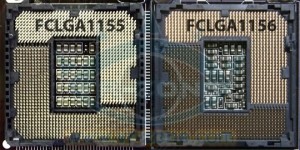
The LGA 1155 is used for the Intel Ivy Bridge chipsets as well as Sandy Bridge Original chipsets. SBO will, with the exception of Q65, Q67 and B65, accept microprocessors for either chipset if the BIOS is upgraded to support it. Ivy Bridge, on the other hand, supports processors designed for either chipset, and supports RAM up to DDR3-1600, up from DDR3-1333 of SBO, and allows the overclocking of K-series processors.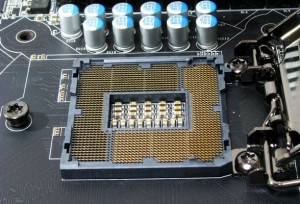
Most of Sandy Bridge Original chipsets support both USB 2.0 and 3.0, while all Ivy Bridge chipsets support 2.0 and 3.0. Below is a list of supported processors for the LGA 1155 socket:
- Intel® Core™ i7 Desktopi7-2600K Processor (8M Cache, 3.40 Ghz)LGA11553400no95
- Intel® Core™ i3 Desktopi3-2102 (3M Cache, 3.10 GHz)LGA11553100no65
- Intel® Celeron®G440 (1M Cache, 1.60 GHz)LGA11551600no35
- Intel® Celeron®G530T (2M Cache, 2.00 GHz)LGA11552000no35
- Intel® Celeron®G540 (2M Cache, 2.50 GHz)LGA11552500yes65
- Intel® Celeron®G620 (3M Cache, 2.60 GHz)LGA11552600no65
- Intel® Celeron®G630T (3M Cache, 2.30 GHz)LGA11552300no35
- Intel® Celeron®G620T (3M Cache, 2.20 GHz)LGA11552200no35
- Intel® Celeron®G840 (3M Cache, 2.80 GHz)LGA11552800no65
- Intel® Celeron®G630 (3M Cache, 2.70 GHz)LGA11552700no65
- Intel® Celeron®G850 (3M Cache, 2.90 GHz)LGA11552900yes65
- Intel® Celeron®G860 (3M Cache, 3.00 GHz) LGA11553000no65
- Intel® Core™ i3 Desktopi3-2100 (3M Cache, 3.10 GHz)LGA11553100no65
- Intel® Core™ i3 Desktopi3-2120T (3M Cache, 2.60 GHz)LGA11552600no35
- Intel® Core™ i3 Desktopi3-2100T (3M Cache, 2.50 GHz)LGA11552500no35
- Intel® Core™ i3 Desktopi3-2125 (3M Cache, 3.30 GHz)LGA11553300no65
- Intel® Core™ i3 Desktopi3-2105 (3M Cache, 3.10 GHz)LGA11553100no65
- Intel® Core™ i3 Desktopi3-2120 (3M Cache, 3.30 GHz)LGA11553300yes65
- Intel® Core™ i3 Desktopi3-2130 (3M Cache, 3.40 GHz)LGA11553400no65
- Intel® Core™ i5 Desktopi5-2400 (6M Cache, 3.10 GHz)LGA11553100yes95
- Intel® Core™ i5 Desktopi5-2400S (6M Cache, 2.50 GHz)LGA11552500no65
- Intel® Core™ i5 Desktopi5-2390T (3M Cache, 2.70 GHz)LGA11552700no35
- Intel® Core™ i5 Desktopi5-2405S (6M Cache, 2.50 GHz)LGA11552500no65
- Intel® Core™ i5 Desktopi5-2500 (6M Cache, 3.30 GHz)LGA11553300no95
- Intel® Core™ i5 Desktopi5-2500S (6M Cache, 2.70 GHz)LGA11552700no65
- Intel® Core™ i5 Desktopi5-2500T (6M Cache, 2.30 GHz)LGA11552300no45
- Intel® Core™ i5 Desktopi5-2500K (6M Cache, 3.30 GHz)LGA11553300no95
- Intel® Core™ i7 Desktopi7-2600 (8M Cache, 3.40 GHz)LGA11553400yes95
- Intel® Core™ i7 Desktopi7-2600S (8M Cache, 2.80 GHz)LGA11552800no65
- Intel® Core™ i7 Desktopi7-2600K (8M Cache, 3.40 GHz)LGA11553400no95
On the next page we look at Intel’s LGA 2011


1 comment
Comments are closed.