

In order to count what the “true” version number of Windows 8 is, we’ve laid out a handy chart with all of the major releases of Windows. As we’ve pointed out earlier in this article, it is debatable whether some versions should be considered its own version number or be lumped in as a subversion of an existing edition.
Microsoft was not consistent with how it marketed some of its versions. Windows 98 was marketed as a new version of Windows, even though it was really a subversion of Windows 95. The same thing is true with Server 2003, even though it was a subversion of XP. In the opposite direction, Microsoft named Windows NT 3.5, trying to make the public think it was in the same product line as Windows 3.1.
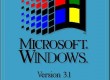
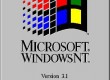
Will the real 3.1 please stand up?
So, whenever a break in the rules occurs, we mark the version as a potential increase and count it as a “Version Bump”. Whenever a version of Windows supports a new hardware architecture, it also gets a “Version Bump”.
We can now calculate the true version of Windows 8.
| version | OS Name | subversions | version bump |
| 1 | Windows 1.0 | 1.01, 1.02, 1.03, 1.04 | – |
| 2 | Windows 2.0 | 2.03, 2.10, 2.11 | – |
| 3 | Windows 3.0 | 3.1, Windows for Workgroups 3.11* | +1 |
| 4 | Windows NT 3.1 | Windows NT 3.51* | +1 |
| 5 | Windows 95 | OSR1, OSR2, USB Supplement, OSR 2.1, OSR 2.5, Windows 98*, 98 SE, Windows Me* |
+2 |
| 6 | Windows NT 4.0 | 4.0 Server*, Terminal Server, NT 4.0 for RISC** |
+1 |
| 7 | Windows 2000 | 2000 Server*, Itanium Edition** | +2 |
| 8 | Windows XP | Starter, Home, Home N, Professional, Professional N, Tablet PC, MCE 2003*, MCE 2004*, MCE 2005*, Tablet Edition, Server 2003*, x64** |
+5 |
| 9 | Windows Vista | Starter, Home Basic, Home Premium, Business, Enterprise, Ultimate, x64 versions*, Server 2005* |
+2 |
| 10 | Windows 7 | Starter, Home Basic, Home Premium, Professional, Enterprise, Ultimate, Server 2008*, Server 2008 R2, x64** |
+2 |
| 11 | Windows 8 | Pro, Enterprise, x64**, RT** | +2 |
* = subversion significant enough or marketed as new OS
** = different hardware architecture
The chart looks pretty straightforward? Not so fast… read on…



9 comments
Comments are closed.