

Version numbers are augmented all the time, which are usually set by marketing departments because the the average person assumes that a higher version number is just better. It happens all the time. The second-generation Xbox was competing with the Playstation 3, but Microsoft couldn’t just name their new console the “Xbox 3” with a straight face, so they named it the “360” because it had a “3” in the name. Subliminally, the public thinks they are now comparing the two competing consoles on a level playing field.

The same thing happened with Microsoft Word. Microsoft Word was trying to take down the most popular word processor on the PC at the time, which was called WordPerfect, who had just released their 6th version. Word was re-branded Microsoft Word 6.0, even though it was actually their third version of the word processor at the time. Again, this was done because the average person in the software store believes that “version 6” of something is obviously better than “version 3” of a competing product.
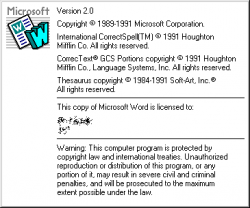
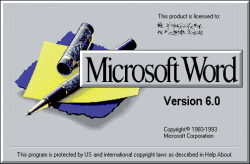
What happened to Word versions 3.0, 4.0, and 5.0?
This type of thing continued on with its Windows products, and the confusion became much worse when Windows NT was introduced to the public.
Windows NT confounded the simple version system.
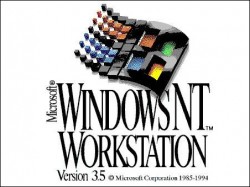
Windows NT (short for New Technology) debuted its version number as 3.1 (the same as Windows 3.1). Windows NT was superior to Windows 3.1 in nearly every way, and was marketed to professionals and corporations who wanted a real, reliable operating system. Unfortunately, marketing Windows NT 1.0 would have been a sales disaster, as the public would think that Windows 3.1 was the better product. Windows NT 3.1 was short-lived, and the new Windows NT 3.5 was marketed to differentiate it as a “better” version of Windows 3.1, even though it was a completely different operating system
There are certain logical rules when defining version numbers. A product that is written to support a new architecture gets a new version number. A product that has a lot of new features gets a new version number, such as Windows 3.0. A minor enhancement gets a subversion, as did Windows 3.1.
If we keep to these same logical rules, then we can count up what the “real” version number of Windows truly is.



9 comments
Comments are closed.